Mushroom “Scallops” over Lemon-Pea Purée
Mushroom “Scallops” over Lemon-Pea Purée: The Ultimate Plant-Based Seafood Experience
There is a quiet revolution happening in the culinary world, and it involves rethinking what we define as “fine dining.” For years, seafood has held a central place as the pinnacle of elegant, special-occasion meals. But as our understanding of plant-based ingredients evolves, we are discovering remarkable new ways to replicate and even enhance these traditional experiences. Today, we are focusing on one of the most surprising and successful transformations: Mushroom “Scallops” over Lemon-Pea Purée.
This dish is a masterclass in texture and flavor, combining the satisfying, meaty chew of seared King Oyster mushrooms with the bright, silky smoothness of a citrus-infused pea base. It is elegant enough for a dinner party, yet approachable enough for a sophisticated weeknight meal. It challenges the notion that plant-based food is restrictive, showing instead that it is an avenue for creativity and delicious discovery. Whether you are a dedicated vegan or a curious omnivore looking to reduce your environmental impact, these mushroom scallops offer an experience that is visually stunning, undeniably flavorful, and completely animal-free.
In this comprehensive guide, we will walk you through the precise techniques needed to master this dish. We will cover how to select and prepare the perfect mushrooms, how to achieve that coveted golden-brown sear, and how to create a vibrant, smooth pea purée that elevates the entire plate. Get ready to impress yourself and your guests with this stunning, on-trend addition to your culinary repertoire.
The Magic of King Oyster Mushrooms: How They Become “Scallops”
The success of the “mushroom scallop” phenomenon relies heavily on the specific type of mushroom used: the King Oyster mushroom (Pleurotus eryngii), also known as King Trumpet. Unlike common button or cremini mushrooms, King Oysters have a large, thick, fleshy stem and a relatively small cap. The flavor of the stem is mild, slightly nutty, and earthy, which provides a neutral canvas for seasoning. Their texture, however, is the real draw—it is firm, dense, and slightly chewy when cooked, eerily similar to that of a sea scallop.
To transform these fungi into delicate “scallops,” we focus on preparation. By slicing the thick stems into thick rounds (about 1.5 inches), we create pieces that perfectly mimic the shape and size of sea scallops. The key is in the searing process. We score the surface of each round in a cross-hatch pattern, which allows heat to penetrate evenly, creates extra surface area for caramelization, and gives them a visually authentic look. Cooking them on a high-heat skillet in oil and sometimes a touch of plant-based butter (the “vegan butter-basting method”) achieves the classic golden, crispy exterior while leaving the inside tender and juicy. This isn’t just a substitute; it’s a distinct culinary experience.
The Foundation: Crafting the Perfect Lemon-Pea Purée
While the mushrooms are the star of the show, they require a supporting act that offers contrast and brightness. A Lemon-Pea Purée provides the perfect counterpoint to the savory, earthy mushrooms. This base is about more than just green color; it’s about balancing fresh, sweet notes with sharp, citrus acidity.
The process is incredibly simple: quickly steam or blanch fresh or frozen peas, then blend them while hot with a creamy liquid (like plant-based milk, cream, or a little vegetable broth), fresh lemon juice, lemon zest, and perhaps a touch of herb (like mint or thyme). The key is rapid blending to ensure a smooth, velvety consistency and to maintain the peas’ vibrant green color. The lemon juice cuts through the richness of the mushrooms, cleansing the palate and enhancing every bite.
Essential Ingredients for Your Mushroom Scallop Feast
While this recipe seems high-end, the ingredient list is intentionally simple, focusing on quality and technique. To replicate that cool, professional prep feel, we suggest arranging these on your gray marble countertop before you begin.
- King Oyster Mushrooms: The centerpiece. Look for mushrooms with firm, thick stems and fresh-looking caps. Avoid any that are discolored or feel soft.
- Peas: Frozen peas are actually superior for this purée. They are picked at peak ripeness and flash-frozen, locking in their natural sweetness and color. If you have access to super-fresh, shelled peas in season, they are wonderful, but frozen peas consistently deliver excellent results.
- Lemon: Fresh lemon juice and zest are mandatory. They provide the acidity that balances the entire dish.
- Oil: A high-smoke point oil like canola, avocado, or refined olive oil is essential for the searing process, as we will be using a hot pan.
- Plant-Based Butter (Optional): Adding a tablespoon of vegan butter (one that melts well, like Miyoko’s or Kite Hill) towards the end of the mushroom cooking process mimics the classic butter-basted scallop.
- Vegetable Broth or Plant-Based Cream: Used to thin the purée. Broth adds more savory notes, while cream makes it more decadent.
- Aromatics: Garlic and perhaps fresh thyme for the mushrooms. Mint or lemon thyme for the pea purée.
- Seasoning: High-quality fine sea salt and freshly ground black pepper. Flaky sea salt (like Maldon) is excellent for finishing the mushrooms.
- Garnish: Think light and fresh. Microgreens, additional fresh herbs, a final lemon wedge, or a drizzle of good quality olive oil.
Mushroom “Scallops” over Lemon-Pea Purée Ingredients
This recipe serves two generous main portions or four elegant appetizers. Arrange your gray marble countertop for an organized workflow.
- – 2 large King Oyster mushrooms (stems about 2-3 inches thick)
- – 1 tablespoon high-smoke point oil (like avocado oil)
- – 1 tablespoon plant-based butter (optional, for basting)
- – 2 garlic cloves, smashed
- – 2-3 sprigs fresh thyme
- – Fine sea salt and freshly ground black pepper to taste
- – Flaky sea salt, for finishing
- – 10 oz (about 2 cups) frozen peas
- – 1 tablespoon fresh lemon juice
- – 1 teaspoon lemon zest
- – 1/4 to 1/2 cup vegetable broth (or plant-based cream)
- – 2-3 leaves fresh mint (optional)
- – Microgreens or extra fresh herbs, for garnish
Step-by-Step Instructions
Follow these steps closely to ensure both your pea purée and your mushroom scallops achieve the perfect consistency and flavor. Technique is paramount here.
Phase 1: Prepare the Lemon-Pea Purée
- Cook the Peas: Fill a medium saucepan with about 1 inch of water and place a steamer basket inside. Bring the water to a boil. Add the frozen peas, cover the pot, and steam for 3–4 minutes until they are bright green and heated through. Alternatively, blanch the peas in a small pot of boiling water for 2 minutes, then drain immediately.
- Blend the Purée: Immediately transfer the hot peas to a high-speed blender or food processor. Add the fresh lemon juice, lemon zest, 1/4 cup of the vegetable broth (or cream), fine sea salt, black pepper, and mint leaves (if using).
- Achieve Smoothness: Start blending on low speed, then gradually increase to high. Blend until the mixture is perfectly smooth and velvety. This may take 1–2 minutes, depending on your blender. If the purée is too thick or seems grainy, add more vegetable broth, one tablespoon at a time, until the desired consistency is achieved. Taste and adjust the seasoning, adding more lemon juice or salt if needed.
- Keep Warm: Transfer the purée to a small bowl and place it over a small saucepan of simmering water (a makeshift double boiler) or use a gentle warming burner to keep it warm while you cook the mushrooms. Be careful not to let it sit for too long, as it may lose its color.
Phase 2: Prepare the Mushroom “Scallops”
- Slice and Score the Mushrooms: Trim any dried-out ends from the King Oyster mushroom stems. Carefully slice the stems crosswise into thick rounds, about 1.5 inches in height. Using a sharp knife, make very shallow diagonal cuts across the surface of each mushroom round in a cross-hatch pattern on both sides. This creates texture and allows for even cooking.
- Season the Mushrooms: Season the scored surfaces of the mushroom rounds generously with fine sea salt and black pepper on both sides.
- Heat the Pan: Heat a large skillet (cast iron or heavy-bottomed is ideal) over medium-high heat. Add the high-smoke point oil, swirling to coat the bottom. When the oil is hot and just starting to shimmer, carefully place the mushroom rounds in the pan in a single layer, ensuring they are not crowded.
- Achieve the Golden Sear: Cook undisturbed for 4–5 minutes until the bottom surface is deeply golden-brown and caramelized. You should see the edges of the score marks taking on color. Resist the urge to flip them too early; a good sear is key.
- Flip and Baste (Optional): Carefully flip the mushroom rounds. Reduce the heat slightly to medium. If using, add the plant-based butter, smashed garlic cloves, and thyme sprigs to the pan. Use a spoon to continuously baste the mushrooms with the melted butter-herb mixture as they cook for another 3–4 minutes, until the second side is equally golden-brown. Ensure the garlic and herbs do not burn.
- Drain and Finish: Remove the mushrooms from the skillet and place them on a paper towel-lined plate to drain any excess oil. Season the tops with a final sprinkle of flaky sea salt. Discard the garlic and herbs.
Phase 3: Assembly and Serving
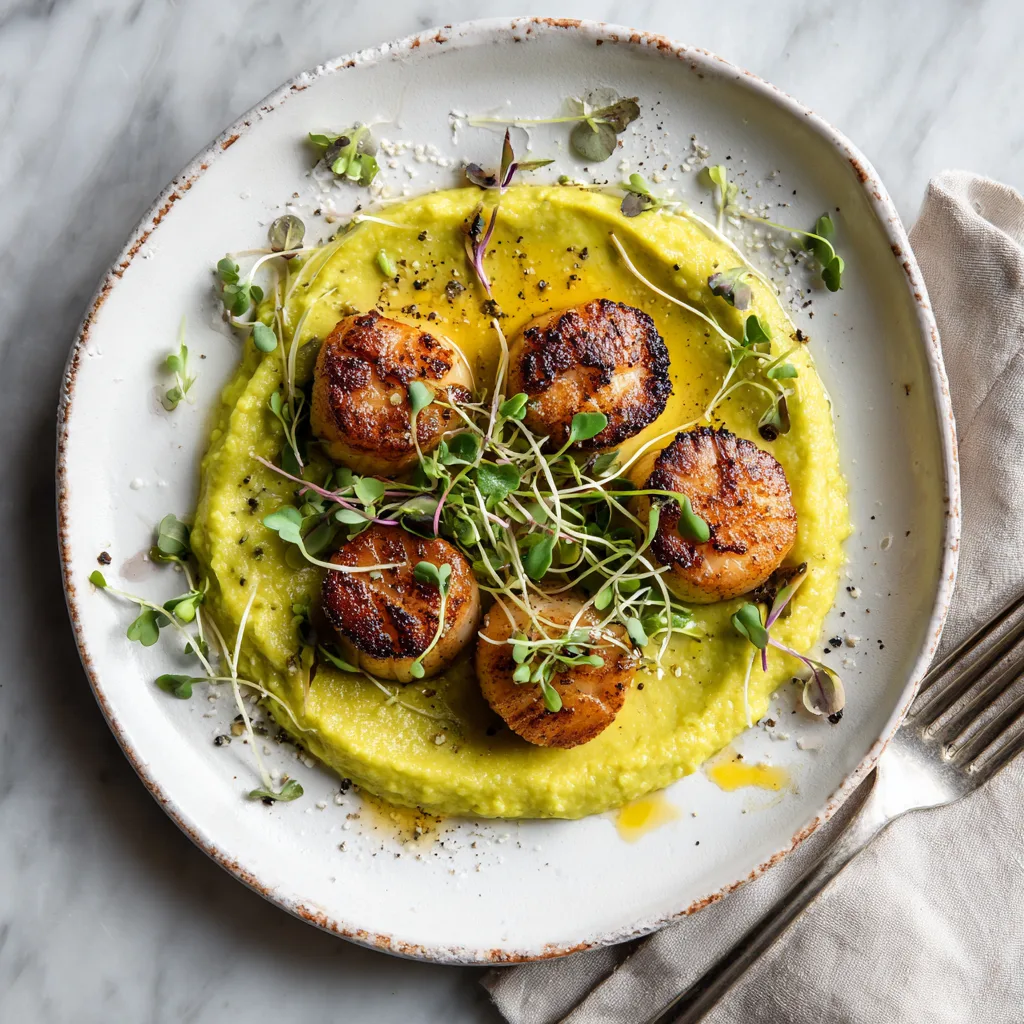
- Plate the Purée: For each serving, place a generous spoonful of the warm Lemon-Pea Purée in the center of an artisanal white ceramic plate. Use the back of the spoon to gently swirl or drag the purée, creating an attractive, wide base for the mushrooms.
- Arrange the “Scallops”: Nest three to four mushroom “scallops” delicately on top of the pea purée, positioning them to show off the scored surfaces.
- Garnish and Finish: Drizzle the plate lightly with a touch of high-quality olive oil. Scatter microgreens, additional fresh herbs (like thyme or mint), and a few extra lemon zest strands around the dish. Serve immediately, perhaps with a final lemon wedge on the side.
Pro-Tips for Mushroom Scallop Perfection
Mastering this dish means mastering the details. Keep these expert tips in mind for consistently stunning results:
- Use Frozen Peas for Color and Flavor: We cannot stress this enough. Frozen peas yield a sweeter, brighter, and faster purée. Fresh peas lose their sweetness quickly after harvesting and take much longer to cook, often resulting in a dull green or grayish color.
- Blend the Purée While Hot: Hot peas release their starches more easily, resulting in a significantly smoother and more velvety purée. If they cool down, the texture will be grainy and less appealing.
- The Sear Requires Heat and Patience: A common mistake is low heat. The skillet must be hot to achieve the caramelized, golden-brown crust. Do not move the mushrooms once you place them in the pan; this disrupts the sear. Patience on the first side is key.
- Do Not Score Too Deeply: The scoring pattern is meant to be delicate. Cutting too deeply can cause the mushroom round to break apart during cooking or absorb excessive amounts of oil, leading to a greasy final product. Aim for cuts that are less than 1/8 inch deep.
- Aromatics Matter: Adding smashed garlic and thyme to the pan (especially during the optional butter basting phase) adds incredible aromatic depth to the mild mushrooms. It makes the flavor less one-dimensional.
Creative Variations and Substitutions
This recipe is an excellent template that you can adapt to different ingredients and flavor profiles. Once you understand the core techniques, the possibilities are endless.
Purée Alternatives
While pea purée is classic, you can explore other vegetable bases:
- Cauliflower Purée: Steamed and blended cauliflower with nutritional yeast, plant milk, and maybe a little roasted garlic creates a rich, creamy, and neutral base.
- Parsnip or Sunchoke Purée: These root vegetables offer a sweeter, slightly nuttier flavor that complements the earthy mushrooms.
- Sweet Potato Purée: For a more substantial base, sweet potato purée with a touch of chili flake and lime juice is fantastic.
Seafood-Inspired Glazes
If you want to lean further into the “seafood” experience, try these glazes on the mushrooms:
- Miso-Glazed: Mix 1 tbsp of white miso paste with 1 tbsp of maple syrup, 1 tsp of soy sauce, and a splash of rice vinegar. Brush this over the mushrooms during the last minute of cooking.
- Nori-Salt: Sprinkle the finished mushrooms with sea salt mixed with finely crushed nori sheets. This adds a subtle “taste of the sea.”
- Smoked Paprika & Lemon: Dust the mushrooms with smoked paprika before searing for a subtle smokiness that pairs well with the bright lemon.
Adding Texture
Contrast the smooth purée with crunchy elements:
- Crispy Fried Capers: Pat dry 1 tablespoon of capers and fry them in 1 tablespoon of olive oil until crispy. Scatter them over the plate.
- Toasted Hazelnuts or Almonds: Roughly chop hazelnuts or almonds and toast them until fragrant. Sprinkle them around the purée.
Serving Suggestions and Menu Ideas
These Mushroom “Scallops” over Lemon-Pea Purée can anchor a variety of elegant meals:
The Perfect Elegant Appetizer
Serve 2–3 mushrooms per person on individual white plates as the sophisticated starter for a multiple-course dinner party. Pair it with a crisp, acidic white wine that mimics the lemon notes, such as a Sauvignon Blanc, Pinot Grigio, or an Albariño.
A Light and Sophisticated Lunch
Serve a full portion (3–4 mushrooms) alongside a substantial salad, perhaps an arugula and shaved fennel salad with a lemon-herb vinaigrette. This makes for a filling, vibrant, and elegant lunch.
Centerpiece of a Modern Dinner
Make this the main course. Serve the tarts with a simple but elegant side, like roasted asparagus with lemon, or a whole grain like quinoa or wild rice, which absorbs any extra purée beautifully.
Vegan Date Night
This dish is guaranteed to impress. Its visual appeal and unexpected texture make it a conversation starter. Serve it as the main attraction, followed perhaps by a decadent, plant-based chocolate dessert.
Conclusion: Redefining Plant-Based Luxury
The **Mushroom “Scallops” over Lemon-Pea Purée** recipe is more than just a passing culinary trend; it is a successful demonstration of how thoughtful technique can transform simple, sustainable, plant-based ingredients into a truly luxurious dining experience. It highlights the potential of the natural world to replicate beloved textures and flavors in an entirely ethical and environmentally friendly way.
We encourage you to try this recipe, trust the process (especially the high-heat sear and the importance of frozen peas for the purée!), and enjoy the satisfying results. It’s a versatile dish you will find yourself returning to, experimenting with new variations, and proudly serving to anyone, skeptical or otherwise. Gathering the simple, quality ingredients on your cool gray marble countertop is the first step toward redefining what luxury means to you, one delicious mushroom scallop at a time. Enjoy the process and, most importantly, enjoy the dish!
Mushroom ‘Scallops’ over Lemon-Pea Purée
Ingredients
Equipment
Method
- Prepare the Purée: Steam or blanch the frozen peas until bright green (3-4 min). Drain and immediately transfer to a high-speed blender.
- Add the lemon juice, lemon zest, 1/4 cup vegetable broth (or cream), mint leaves (if using), fine sea salt, and black pepper. Blend until perfectly smooth and velvety, adding more liquid if needed.
- Transfer the purée to a small bowl and keep warm (e.g., in a makeshift double boiler) while cooking the mushrooms.
- Prepare the ‘Scallops’: Trim the King Oyster stems and slice crosswise into thick rounds (about 1.5 inches). Score a shallow cross-hatch pattern on both sides of each round.
- Heat a large skillet (cast iron preferred) over medium-high heat with the oil. Season the scored mushrooms generously with salt and pepper.
- Place the mushrooms in the hot pan in a single layer. Cook undisturbed for 4-5 minutes until deeply golden-brown. Resist the urge to flip early.
- Flip the mushrooms. If using, add the plant-based butter, smashed garlic, and thyme to the pan. Baste the mushrooms for another 3-4 minutes until second side is equally golden-brown.
- Drain on a paper towel-lined plate. For serving, spread the purée on the plate and nest the ‘scallops’ on top. Garnish with flaky sea salt and microgreens.