Irresistible Caramelized Onion and Gouda Sourdough: The Ultimate Comfort Bread
There are few aromas more inviting than that of fresh-baked bread, but when you add the rich, sweet notes of deeply caramelized onions and the nutty, savory flavor of melted Gouda cheese, you elevate the experience to something truly sublime. This Caramelized Onion and Gouda Sourdough recipe brings together the magic of artisan bread making with the timeless appeal of classic comfort food. It’s the kind of bread that gets people talking before they even take their first bite, filling your home with warmth and promise.
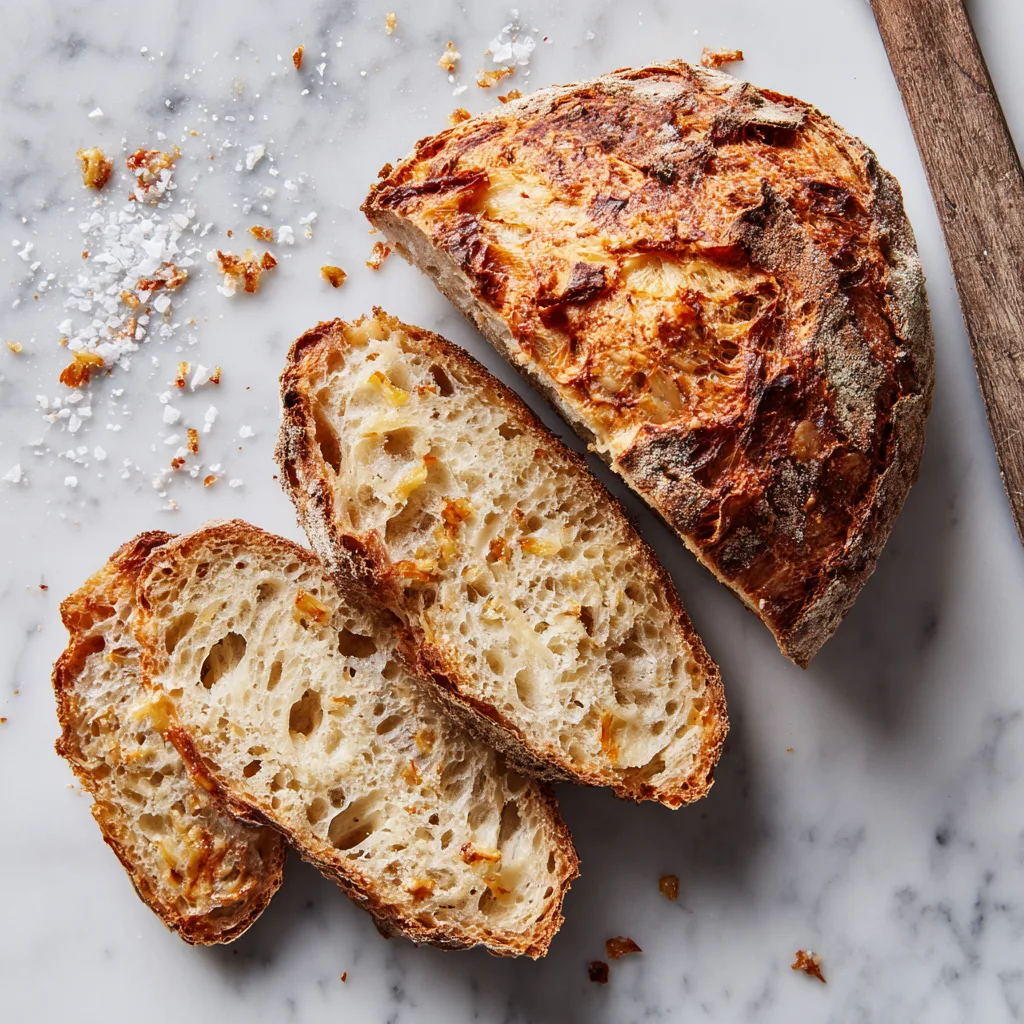
The journey to creating this savory masterpiece starts with a healthy, active sourdough starter, the heart and soul of any good loaf. Combining it with high-quality bread flour and a mix of whole wheat or all-purpose flour sets the foundation for a structure that can handle rich inclusions. We then carefully fold in onions that have been slowly caramelized to golden perfection, bringing a complex sweetness that perfectly balances the creamy, slightly smoky flavor of aged Gouda. The result is an artisan loaf with a shatteringly crisp crust and an airy, flavorful crumb dotted with pockets of cheese and sweet onions. Perfect for sandwiches, pairing with soups, or simply enjoying warm with a pat of butter, this is a bread recipe you will return to time and time again.
Ingredients
To create this savory sourdough masterpiece, you will need the following high-quality ingredients. Using organic flour and artisan cheese will yield the best results.
- 100g Active Sourdough Levain (at peak)
- 350g Warm Water (approximately 78-80F)
- 400g Organic Bread Flour
- 100g Organic All-Purpose or Unbleached Flour
- 10g Fine Sea Salt
- 150g Shredded Aged Gouda Cheese
- Group: Caramelized Onions
- 2 Large Yellow Onions, finely sliced
- 1 tbsp Olive Oil
- 1/2 tsp Salt (for onions)
- 1/2 tsp Fresh Thyme (optional)
Instructions
- **Phase 1: Build your Levain & Caramelize Onions.** (Active Prep Time: 45 minutes) Feed your sourdough starter 4-6 hours before you plan to mix, aiming to use it at its peak activity. While the levain is building, prepare the onions. In a large skillet over medium-low heat, add the olive oil and sliced onions with the pinch of salt. Cook slowly for 35-45 minutes, stirring frequently, until they are deep golden brown and jammy. Add thyme if using during the last minute. Transfer to a bowl to cool completely.
- **Phase 2: The Main Mix & Autolyse.** (Active Prep Time: 15 minutes) In a large mixing bowl, combine the warm water (setting aside about 20g) with the bread and all-purpose flour. Mix by hand until a shaggy dough forms and all flour is hydrated. Cover and let sit for 30 minutes to develop gluten strength.
- **Phase 3: Final Dough Integration.** (Active Prep Time: 10 minutes) After the autolyse, add your active levain to the dough. Squeeze it into the dough, using the reserved water to help integrate it. Then, sprinkle the sea salt over the top and continue to mix until the dough feels cohesive and slightly smoother. Transfer to a clean, lightly oiled bowl.
- **Phase 4: Bulk Fermentation and Dough Development.** (Active Prep Time: 20 minutes across 2 hours) During the first 2 hours of bulk fermentation, you will perform four sets of stretch and folds, spaced 30 minutes apart. This develops strong gluten networks crucial for holding the inclusions.
- **Phase 5: Laminating and Adding Inclusions.** (Active Prep Time: 15 minutes) After the final stretch and fold, let the dough rest for another 30 minutes. Perform a lamination: gently stretch the dough into a large rectangle. Spread the cooled caramelized onions and 3/4 of the Gouda cheese evenly over the surface. Fold the dough up like a letter, then fold it over on itself to incorporate the layers. Let rest.
- **Phase 6: Final Bulk Fermentation.** (No Active Prep) Continue bulk fermentation for 1.5-2 more hours (total bulk time 4-5 hours from mixing), or until the dough has increased in volume by about 50-70%, shows signs of fermentation like bubbling on the surface, and feels light and airy.
- **Phase 7: Shaping and Cold Proof.** (Active Prep Time: 15 minutes) Gently turn the dough out onto a lightly floured surface. Perform a pre-shape by rounding the dough. Let rest uncovered for 15-20 minutes. Then, perform your final shape (boule or batard). Place the shaped dough, smooth side down, into a well-floured banneton. Transfer the banneton to the refrigerator for a cold proof of 12-16 hours.
- **Phase 8: Baking.** (Active Prep Time: 5 minutes) Preheat your oven to 475F (245C) with a Dutch oven inside for at least 45 minutes. Carefully remove the cold dough from the banneton onto a piece of parchment paper. Score the dough with your lame or razor blade in a decorative pattern. Using the parchment, lift the dough and carefully place it into the preheated Dutch oven. Cover immediately. Bake covered for 20 minutes, then uncover and bake for another 25-30 minutes, or until the crust is a deep golden brown and the internal temperature reaches 208-210F (98-99C).
Pro Tips for Success with Inclusions
Introducing rich ingredients like caramelized onions and cheese can impact the structure and fermentation of your dough. Here are key tips to ensure success every time.
Cool Inclusions Completely: It is critical to let your caramelized onions cool entirely to room temperature before adding them to the dough. Warm inclusions will speed up fermentation and potentially degrade the gluten network, leading to a weak loaf. Likewise, use aged cheese rather than young, high-moisture cheese, which can release too much liquid during baking.
Master the Lamination: While stretch and folds work, laminating the dough is the best technique for incorporating inclusions evenly. It allows you to build neat layers that fold over on themselves, distributing the sweet onions and savory Gouda without damaging the delicate, airy crumb structure.
Adjust Fermentation Time: The sugar in the caramelized onions and the enzymes in the cheese can actually speed up fermentation. Be more vigilant during final bulk. Watch the signs of your dough—its volume increase, bubbles, and “puffiness”—rather than strictly following the clock. You may need a shorter bulk than usual.
Delicious Variations and Alternatives
The base dough of this recipe is highly adaptable. Feel free to swap the types of onions or cheeses to create your own signature savory sourdough loaf. While aged Gouda is fantastic, sharp cheddar brings a tangy classic flavor, and Gruyere adds an elegant, nutty depth.
Instead of fresh onions, you can use caramelized leeks for a sweeter, more subtle flavor. For an Italian twist, incorporate sun-dried tomatoes and provolone or mozzarella. Don’t be afraid to experiment with herbs; rosemary, fresh thyme, and roasted garlic all complement savory inclusions beautifully. To add an extra dimension, consider folding in a handful of toasted walnuts or pecans for a contrasting crunch.
Comprehensive Guide to Choosing Your Ingredients
Achieving artisan quality is all about using the best possible components. This recipe’s simplicity means every ingredient speaks for itself, so choose wisely.
Sourdough Starter: The heart of the loaf. Ensure it is very active, doubled or tripled within 4-6 hours of feeding, and smells sweet and yeasty. A strong starter is essential for lifting the dough loaded with heavy inclusions.
Flour Selection: Bread flour, with its higher protein content (around 12.5-13.5%), provides the essential gluten structure needed for a strong, airy crumb that won’t collapse under the weight of the cheese and onions. Unbleached flour avoids harsh chemical treatments, leading to better fermentation health.
Gouda Cheese: Aged Gouda is preferred over young Gouda because it has a lower moisture content, which prevents it from turning the dough into a soggy mess during baking. The crystallization and concentrated, smoky-sweet flavor pair perfectly with the caramelized onions. Shred it yourself for the best melting properties.
Onions: Slow caramelization is non-negotiable. Don’t rush this step. The 45-minute cooking process breaks down sugars to create a complex, jammy flavor that you can’t replicate with faster cooking. Stick with classic yellow or Spanish onions for their balanced sweetness and flavor.
Cultural Context and Inspiration
The combination of savory elements with enriched or artisan breads is a long-standing culinary tradition. We see it in French *boulangerie* with recipes like *pain au comté* or *chichement*, and the inspiration for pairing caramelized onions and cheese draws heavily on comfort staples like French Onion Soup. This recipe takes that deeply reassuring flavor profile and integrates it into the slow, thoughtful process of sourdough, bridging the gap between historical preservation techniques and contemporary artisan baking.
Frequently Asked Questions (FAQ)
Q: Can I bake this recipe in a bread machine?
A: No, this is an advanced sourdough recipe designed for manual handling, lamination, and baking in a Dutch oven to achieve its signature crust and structure.
Q: Why did my loaf collapse during baking?
A: This usually results from over-proofing. Over-proofed dough has a weak gluten network and cannot withstand the heat of the oven, often caused by warm inclusions or a highly active starter speeding up the process too much.
Q: My cheese didn’t melt properly and feels hard. Why?
A: Ensure you are using aged Gouda. Younger Gouda melts too quickly and separates, while pre-shredded cheese is coated in starches that prevent clean melting. Shredding an aged block yourself guarantees the best result.
Q: What if I don’t have a Dutch oven?
A: You can bake this on a preheated pizza stone, but you must create steam in the oven. Place a pan with water on the bottom rack when you load the dough, and uncover it during the last 20 minutes to achieve the proper crust.
Creative Serving Ideas
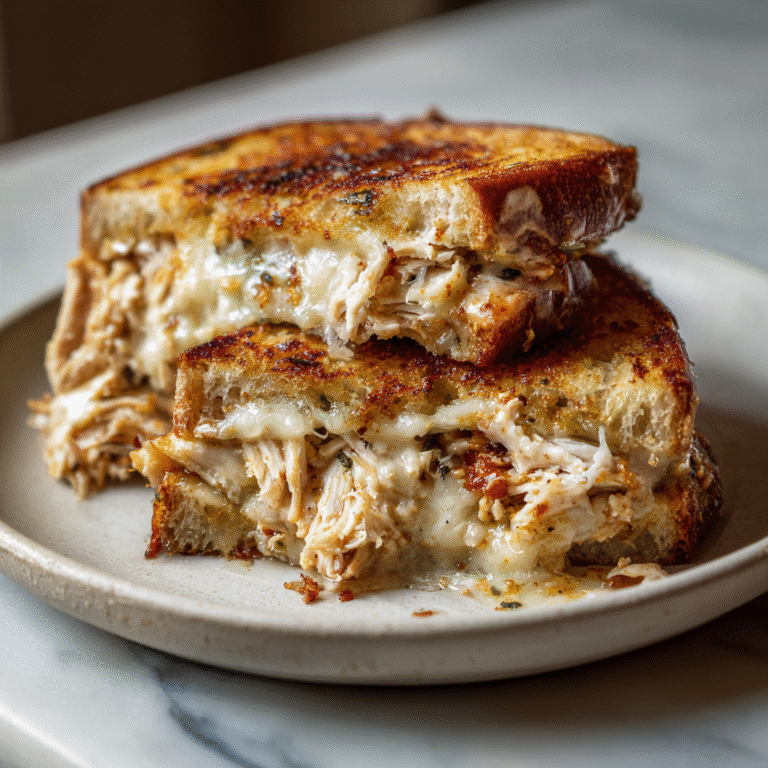
While incredible on its own, this Caramelized Onion and Gouda Sourdough is designed to be shared and paired. Its robust flavor profile makes it the ultimate base for an artisan grilled cheese sandwich, perhaps with a touch of Dijon mustard and extra Gouda. Slice and toast it for robust croutons in a rich French onion or tomato soup. Create an elegant appetizer by topping slices with fig jam, fresh prosciutto, and a sprinkle of walnuts. For brunch, use a slice as the base for avocado toast topped with a perfectly poached egg.
Storing and Reheating Your Loaf
Artisan bread has a shorter shelf life than store-bought. Store the unsliced loaf at room temperature, cut-side down on a cutting board, to keep the crust crisp for 1-2 days. Once sliced, store in an airtight bag. For longer storage, slice the entire loaf and freeze it. To reheat, toast individual frozen slices, or reheat an entire uncut loaf in a Dutch oven at 350F for 15 minutes to restore its freshly baked texture.
Caramelized Onion and Gouda Sourdough
Ingredients
Equipment
Method
- Build your levain: Feed starter 4-6 hours before you plan to mix, using it at its peak activity.
- Prepare Caramelized Onions: In a large skillet over medium-low heat, add the olive oil, sliced onions, and salt. Cook slowly, stirring frequently, for 35-45 minutes until deep golden brown and jammy. Transfer to a bowl to cool completely.
- Autolyse: In a large bowl, mix bread flour, all-purpose flour, and 330g warm water by hand until a shaggy dough forms and no dry flour remains. Cover and let rest for 30 minutes.
- Final Mix: Add levain to the dough, integrating it by hand. Then sprinkle sea salt over the top and continue mixing until the dough feels cohesive, using the reserved 20g water to help incorporate if needed.
- Bulk Fermentation & Folds: Transfer dough to a clean, lightly oiled bowl. Perform four sets of stretch and folds, spaced 30 minutes apart, during the first 2 hours of bulk fermentation.
- Laminate inclusions: Spread the cooled caramelized onions and 3/4 of the Gouda cheese evenly over the dough surface, then fold the dough letter-style to incorporate the layers. Transfer back to the bowl.
- Complete Bulk Fermentation: Let the dough continue to bulk for another 1.5-2 hours (total 4-5 hours), until volume has increased by 50-70% and the dough feels light and airy.
- Pre-Shape: Gently turn the dough onto a lightly floured surface. Perform a loose pre-shape by rounding the dough. Let rest uncovered for 15-20 minutes.
- Final Shape & Cold Proof: Perform your final shape (boule or batard). Place the shaped dough, smooth side down, into a well-floured banneton. Cover and cold proof in the refrigerator for 12-16 hours.
- Preheat Oven: Preheat oven to 475F (245C) with a Dutch oven inside for at least 45 minutes.
- Score & Bake Covered: Turn the cold dough out onto parchment paper. Score decorative pattern. Use the parchment to lift the dough into the preheated Dutch oven. Cover immediately. Bake covered for 20 minutes.
- Bake Uncovered: Uncover and bake for another 25-30 minutes, or until the crust is a deep golden brown and the internal temperature reaches 208-210F (98-99C). Let cool completely on a wire rack before slicing.