The Ultimate 2-Ingredient Cornstarch and Dish Soap Bubble Dough
There is a certain kind of magic to be found in everyday household ingredients. When you are looking for an engaging, hands-on activity that captivates both children and adults alike, sensory play is the ultimate solution. This mesmerizing Cornstarch and Dish Soap Bubble Dough—often referred to as dish soap slime, silky putty, or bubble dough—is a stunningly beautiful, incredibly tactile creation that comes together in mere minutes. With its glossy, pastel-swirled aesthetic, satisfying stretch, and sparkly finish, it looks like something out of a fairy tale. Yet, the base of this extraordinary craft requires only two simple items that are likely sitting in your kitchen right now.
In a world filled with screens and digital entertainment, returning to tactile, hands-on activities is incredibly grounding. Sensory play isn’t just a fun way to pass a rainy afternoon; it is vital for child development, helping to refine fine motor skills, encourage creative thinking, and provide a calming, self-regulating outlet for anxiety or boundless energy. But let’s be honest—adults find this glittery, bubbly dough just as irresistible. The soft, squishy texture and the visually stunning swirls of color make it a deeply satisfying stress-reliever for people of all ages. In this comprehensive guide, we will walk you through exactly how to master this magical bubble dough, perfectly balancing your ratios for the ultimate stretch and shine.
What Exactly is Bubble Dough?
If you have ever made traditional slime using glue and borax, or playdough using flour and cream of tartar, you might be wondering where bubble dough fits into the spectrum of sensory materials. Bubble dough is a unique hybrid. It bridges the gap between the elasticity of slime and the moldable, soft nature of traditional playdough. Because it utilizes dish soap as its liquid binder and cornstarch as its thickening base, the resulting texture is incredibly soft, silky, and pliable.
When left to rest, it has a glossy, almost liquid-like appearance, pooling beautifully into whatever container holds it. However, when you pick it up, stretch it, and knead it, it transforms into a stretchy, moldable putty. The addition of dish soap creates tiny, microscopic bubbles within the structure of the dough, giving it a lightweight, aerated feel that is completely unique. It is less sticky than traditional slime, making cleanup significantly easier, and it smells wonderfully fresh thanks to the soap!
Why You Will Fall in Love with This DIY Craft
The internet is flooded with sensory recipes, but this specific bubble dough stands out for several brilliant reasons. Here is why this recipe will quickly become a staple in your household activity rotation:
- Incredible Simplicity: You only need two mandatory ingredients. There is no boiling water on the stove, no hunting down obscure chemical activators like borax or contact lens solution, and no complicated resting periods.
- Budget-Friendly: Cornstarch and dish soap are incredibly inexpensive. You can make massive batches of this dough for the fraction of the cost of store-bought slimes or artisanal playdoughs.
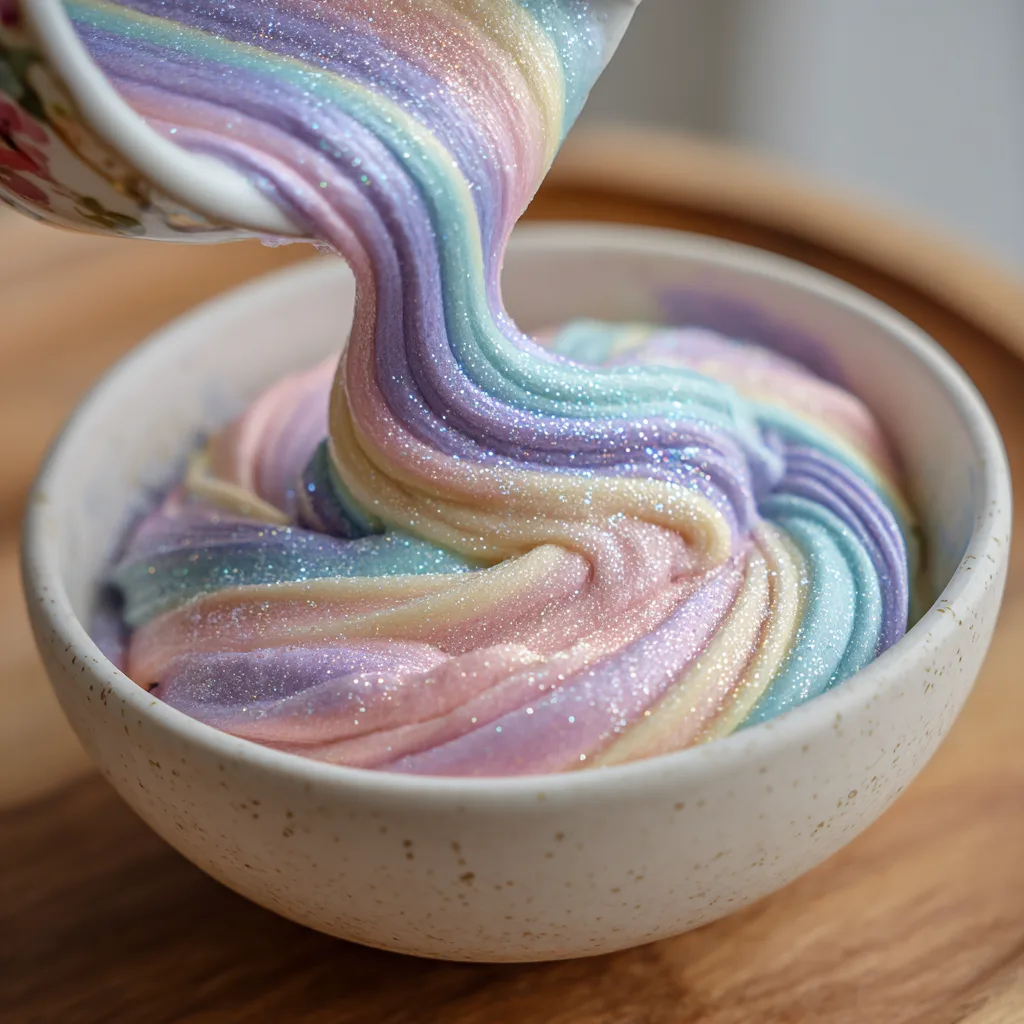
- Aesthetic Appeal: As seen in the gorgeous pastel swirls, this dough takes color beautifully. It has a natural, high-gloss sheen that makes it look premium and magical, especially when you fold in a pinch of fine glitter.
- Easy Cleanup: Because the primary ingredient is literally soap, cleaning up your hands, bowls, and countertops is a breeze. Warm water melts the dough right away, leaving behind zero sticky residue.
- Customizable Texture: You are in complete control of the final product. Want it stretchier? Add a drop more soap. Want it more moldable like a traditional dough? Knead in a sprinkle of extra cornstarch.
The Science of Sensory Dough: How It Works
While making this dough feels like magic, it is actually a fantastic lesson in basic chemistry and physics! Cornstarch is a very fine powder made of starch molecules. When you mix cornstarch with a bit of water, you create a non-Newtonian fluid (often called Oobleck)—a substance that acts like a liquid when poured but a solid when squeezed.
However, when you substitute water with dish soap, the chemistry shifts. Dish soap is a surfactant; it contains molecules that love water on one end and repel water on the other. It is also highly viscous (thick). When the starch molecules from the cornstarch are suspended in the thick, soapy matrix of the dish soap, they bind together softly. The soap prevents the cornstarch from becoming rigidly hard when squeezed, resulting in a flexible, stretchy polymer-like dough. It is a brilliant, hands-on way to introduce young minds to the concepts of mixtures, suspensions, and states of matter.
Key Ingredients and Materials
To achieve the beautiful, glossy, pastel-swirled dough, you will need to gather a few specific materials. While the base is only two ingredients, the magic is in the mix-ins.
- Cornstarch: This is the structure of your dough. You can use any brand of standard culinary cornstarch. In the UK and some other regions, this is known as cornflour. Ensure it is a fine, white powder, not coarse cornmeal.
- Dish Soap: The type of dish soap you use matters! For the best, most opaque pastel results, use a thicker, high-quality dish soap. Brands like Dawn (the classic blue one), Fairy, or Palmolive work beautifully. Thinner, watery, eco-friendly soaps can work, but you may need to adjust your ratios heavily.
- Gel Food Coloring (Optional): To get those distinct, vibrant pastel swirls (pink, purple, blue, yellow), gel coloring is highly recommended. Liquid food coloring adds extra moisture and can dilute your dough, while gel is concentrated and won’t mess with your ratios.
- Fine Cosmetic Glitter (Optional): For that magical, starry aesthetic, a sprinkle of fine, iridescent, or holographic glitter is essential. Make sure to use fine craft or cosmetic glitter rather than chunky glitter, as chunky pieces will fall out of the dough and ruin the smooth texture.
- Equipment: You will need a large mixing bowl, a sturdy mixing spoon, a few smaller bowls (if you are making multiple colors to swirl together), and an airtight container for storage.
Step-by-Step Instructions for Perfect Bubble Dough
Magical Bubble Dough (Cornstarch & Dish Soap Slime)
Ingredients
Equipment
Method
- In a large mixing bowl, add 1 cup of cornstarch.
- Gradually pour in 1/2 cup of dish soap. Begin mixing with a sturdy spoon. The mixture will look clumpy and dry at first.
- Once it becomes too thick to stir, dust your hands with a little extra cornstarch, scoop the dough out, and begin kneading it by hand. Knead for 3-5 minutes until it forms a smooth, cohesive, stretchy dough.
- Adjust the texture: If it is too sticky, knead in a tablespoon of cornstarch. If it is too dry and crumbly, knead in a small squirt of dish soap.
- To color the dough, divide it into 3 or 4 smaller portions. Flatten each portion, add a tiny drop of different gel food coloring to each, and knead until the color is fully incorporated.
- Flatten the colored dough portions and sprinkle your fine glitter over them, folding it in.
- Roll each colored portion into a long rope. Lay the ropes next to each other, twist them together, and fold. Stretch a few times to create beautiful, swirled pastel ribbons. Allow it to sit in a bowl for 5 minutes to achieve a glossy, bubbly surface before playing.
Notes
STORAGE: Store in an airtight container or zip-top bag at room temperature for 1-2 weeks. If it dries out slightly, knead in a tiny drop of water or dish soap to revive it.
1. Establish Your Base Ratio
The golden ratio for bubble dough is generally 2 parts cornstarch to 1.5 parts dish soap. However, humidity and the specific brand of soap you use will affect this. Start by adding 1 cup of cornstarch to your large mixing bowl.
2. Incorporate the Liquid
Gradually pour in 1/2 cup of your chosen dish soap. Using a sturdy spoon, gently begin to fold the liquid into the powder. At first, it will look clumpy, dry, and crumbly. Do not panic; this is normal. Keep stirring and pressing the mixture against the sides of the bowl to force the cornstarch to absorb the soap.
3. The Kneading Process (The Most Important Step)
Once the mixture becomes too thick and resistant to stir with a spoon, it is time to get your hands dirty. Dust your hands lightly with dry cornstarch to prevent sticking. Scoop the crumbly dough out of the bowl and begin squeezing and kneading it in your hands. The warmth of your hands and the friction of kneading will activate the mixture. After 3 to 5 minutes of continuous kneading, the crumbly mess will miraculously transform into a smooth, silky, cohesive ball of dough.
4. Troubleshooting the Texture
Sensory dough is forgiving, but it requires a little intuition.
If it is too sticky: It means there is too much soap. Sprinkle in cornstarch 1 tablespoon at a time, kneading thoroughly after each addition until it no longer sticks to your fingers.
If it is too dry, crumbly, or cracking: It means there is not enough moisture. Add a small squirt of dish soap (about 1 teaspoon at a time) and massage it into the dough until it becomes stretchy and smooth.
5. Adding the Magic (Color and Glitter)
If you want to create a rainbow swirl as pictured, divide your finished, uncolored dough into three or four smaller, equal-sized balls. Flatten each ball slightly and add a tiny drop of gel food coloring to the center. Fold the dough over the dye and knead it until the color is uniformly distributed. Repeat this for each color you want (e.g., pink, blue, yellow, purple). Once your colors are mixed, flatten the balls again and sprinkle your fine holographic glitter over the top, folding to incorporate the sparkle.
6. Creating the Masterpiece Swirl
To achieve that mesmerizing, photogenic swirl, roll each of your colored doughs into long “snakes” or ropes. Lay the colored ropes side-by-side on your table. Gently twist them together like a braid, then fold the twist in half and twist again. Do not over-knead at this stage, or the colors will muddle into a muddy brown or gray. Just pull and stretch it a few times to let the beautiful pastel ribbons weave through each other. Drop it into a bowl and watch it slowly pool and shine!
Pro Tips for the Ultimate Sensory Experience
- Scented Dough: While dish soap already smells great, you can take this a step further. Use an unscented or very mildly scented clear dish soap and add 2-3 drops of child-safe essential oils. Lavender is wonderful for a calming pre-bedtime sensory activity, while sweet orange is bright and uplifting.
- The “Resting” Magic: If you want your dough to look incredibly glossy and bubbly (like the images), place your finished, swirled dough into a bowl and let it sit untouched for 10 minutes. The mixture will relax, pool into the bowl, and the soap bubbles will rise to the surface, creating an incredibly high-gloss, liquid-like appearance.
- Temperature Matters: If your home is very cold, the dough might feel a bit stiff at first. Just knead it for a minute; the heat from your hands will loosen it right up.
- Surface Protection: While this dough cleans up easily, heavily dyed dough can temporarily stain porous surfaces or light-colored fabrics. Always play on a designated craft mat, a large plastic tray, or a wipeable table.
Creative Variations and Play Ideas
Bubble dough is a blank canvas for imaginative play. Once you have the base down, try these engaging variations:
- Galaxy Dough: Use black, deep purple, and navy blue food coloring. Mix them loosely and add an excessive amount of silver holographic glitter and tiny star-shaped sequins. It looks exactly like the night sky!
- Hidden Treasures: For younger children, hide small plastic gems, tiny dinosaur figures, or large beads inside a big ball of dough. The dense texture makes it a fun, tactile challenge for little fingers to dig through and extract the “treasures,” heavily promoting fine motor skill development.
- Ice Cream Parlor Play: Because the dough pools so beautifully, it makes excellent “fake ice cream.” Provide the kids with an ice cream scoop, some small bowls, and “sprinkles” (beads or real sprinkles that will eventually dissolve) and let them serve up colorful, swirled scoops.
Storage, Longevity, and Maintenance
One of the few drawbacks of DIY cornstarch doughs is that they do dry out when exposed to air. However, with proper storage, your bubble dough can last for quite a while.
When playtime is over, immediately place the dough into a clean, airtight plastic container or a high-quality zip-top bag. Squeeze out as much excess air as possible before sealing. Stored this way at room temperature, it should last for 1 to 2 weeks.
If you take it out and find that it has become slightly stiff or crumbly on the surface, don’t throw it away! Simply wet your hands slightly with warm water or add a tiny drop of fresh dish soap, and vigorously knead the dough for a minute. It will absorb the moisture and spring right back to its stretchy, glossy glory.
Important Safety Information
While this recipe uses common household items, it is incredibly important to note that this dough is NOT edible. Because it contains dish soap, it should not be consumed. This activity requires direct adult supervision, especially for toddlers or children prone to putting items in their mouths. Always ensure hands are washed thoroughly after playtime is over to remove any soap residue before eating.
Conclusion: Dive Into the Magic
Creating Cornstarch and Dish Soap Bubble Dough is more than just a craft; it is an experience. Watching two distinct, everyday items transform into a shimmering, stretchy, pastel dream is immensely satisfying. It encourages creativity, provides a soothing sensory outlet, and offers an easy, low-cost way to make memories right at your kitchen table. So grab that bottle of dish soap, dust your counter with cornstarch, and get ready to swirl up some magic. The only hard part is putting it away when you are done!