Greek Lemon Chicken Soup
The Ultimate Guide to Authentic Avgolemono: Greek Lemon Chicken Soup
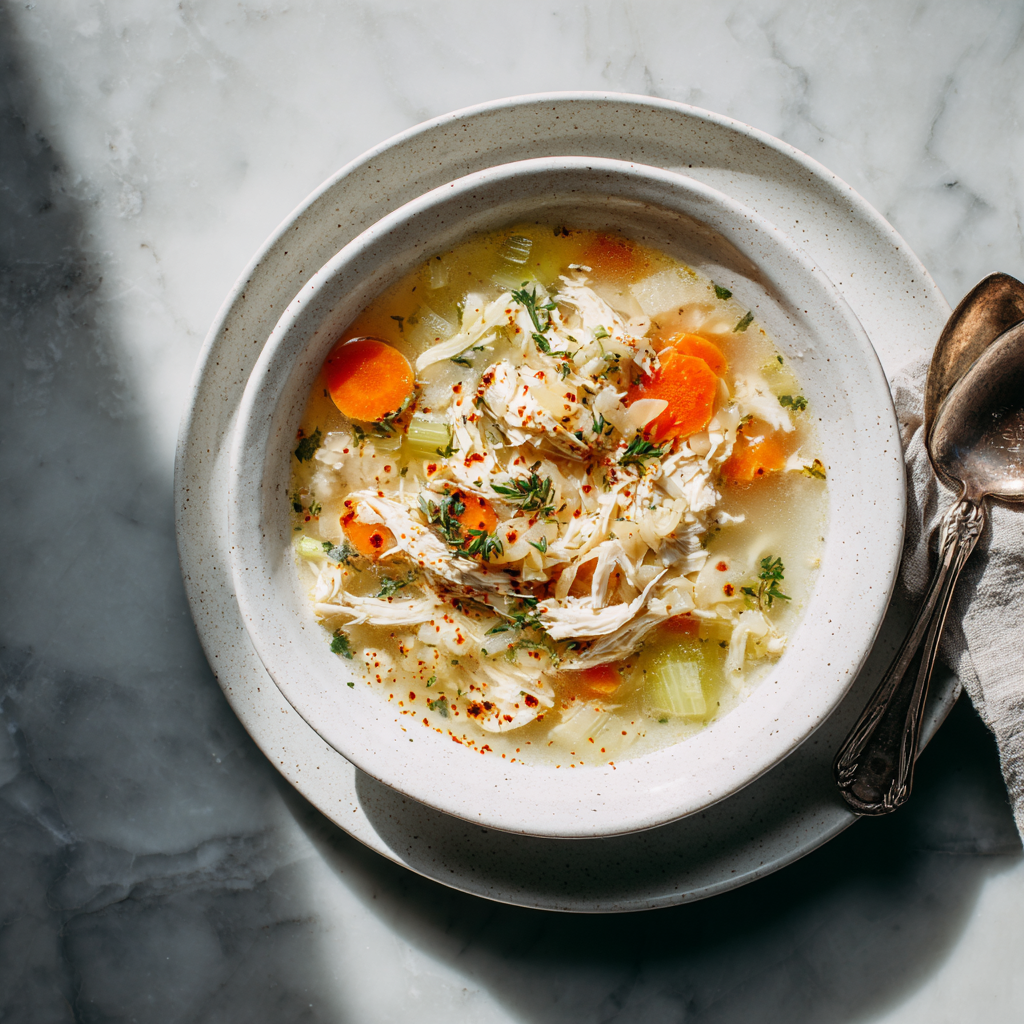
There are soups that warm you up, and then there are soups that heal the soul. If you have ever traveled to Greece or dined in a traditional taverna, you likely know the magic of Avgolemono. It is the gold standard of comfort food—a silky, fragrant, and deeply savory soup that achieves a creamy consistency without using a single drop of dairy. This bright and zesty Greek Lemon Chicken Soup is a masterpiece of simplicity, relying on the ancient culinary technique of tempering eggs with lemon juice and hot broth to create a luxurious emulsion.
Whether you are looking for a remedy for a cold, a cozy dinner for a rainy night, or simply want to expand your culinary repertoire, this recipe is your new go-to. While the name might sound intimidating to pronounce (ah-vo-le-mo-no), the process is surprisingly straightforward once you understand the science behind the sauce. In this comprehensive guide, we will walk you through everything you need to know to make the perfect bowl of Avgolemono, from selecting the right rice to mastering the egg-lemon tempering process so you never end up with scrambled egg soup.
What is Avgolemono?
Technically, “Avgolemono” refers to the sauce itself—a mixture of eggs (avgo) and lemon (lemono). This sauce is used in various Greek dishes, including stuffed grape leaves (dolmades) and pork stews. However, it is most famous as the thickening agent for this chicken soup. The result is a broth that looks like cream but tastes bright, clean, and velvety.
The history of this dish is fascinating. While we associate it with Greece, the technique of thickening sauces with egg and acid actually has Sephardic Jewish roots (agristada) and was likely brought to Greece by Iberian Jews. Over centuries, it became a staple of Greek home cooking, traditionally served to break the fast after Easter or as a comforting meal for family gatherings.
The Secret to the Perfect Texture
The hallmark of a great Avgolemono is its texture. It should be thick enough to coat the back of a spoon but fluid enough to be eaten as a soup. This texture comes from two sources: the starch released by the rice (or orzo) and the egg emulsion.
Many modern recipes try to take shortcuts by adding cornstarch or heavy cream. Avoid these fillers. Authentic flavor and texture come from patience and high-quality ingredients. By allowing the rice to release its starch into the broth and whisking the eggs vigorously, you create a natural suspension that is light yet satisfying.
Choosing Your Ingredients
Because this soup relies on so few ingredients, the quality of each one matters immensely.
- Chicken: Using bone-in, skin-on chicken is best for making your own stock from scratch, which provides the deepest flavor. However, for a weeknight version, you can use high-quality store-bought broth and rotisserie chicken or poached chicken breasts.
- Lemons: You must use fresh lemons. Bottled lemon juice lacks the essential oils found in fresh zest and juice, and it often has a metallic aftertaste that can ruin the delicate balance of the soup.
- Rice vs. Orzo: Traditionalists often debate this. Arborio or medium-grain rice releases excellent starch, contributing to the creaminess. Orzo (a rice-shaped pasta) offers a smoother mouthfeel and cooks faster. Both are authentic; this recipe uses rice for a gluten-free friendly option, but instructions for orzo are included in the variations.
- Eggs: Fresh, room-temperature eggs emulsify better than cold ones. This helps prevent curdling when the hot broth is introduced.
- Fresh Herbs: Fresh dill is the classic pairing for the lemon and chicken flavors. Flat-leaf parsley is a good alternative if you find dill too polarizing.
The Science of Tempering (How to Avoid Curdling)
The most intimidating part of this recipe for home cooks is adding the eggs. If you pour beaten eggs directly into boiling soup, the proteins will coagulate instantly, giving you egg drop soup (strands of cooked egg) rather than a smooth, creamy broth.
To prevent this, we use a technique called tempering. This involves slowly whisking hot broth into the egg and lemon mixture to gradually raise the temperature of the eggs. By the time you pour the egg mixture back into the pot, the eggs are warm enough to integrate smoothly without scrambling. It is a simple step that makes all the difference.
Nutritional Benefits
Beyond its incredible taste, this soup is a powerhouse of nutrition.
- Immune Support: The heavy dose of fresh lemon juice provides a significant amount of Vitamin C.
- Protein: Chicken and eggs provide high-quality protein to keep you full.
- Digestive Health: The warm broth and easy-to-digest rice make this the ultimate “sick day” food, gentle on the stomach while providing hydration.
Ingredients
- 2 tablespoons extra virgin olive oil
- 1 large yellow onion – finely chopped
- 2 medium carrots – diced into small rounds or cubes
- 2 stalks celery – finely chopped
- 2 cloves garlic – minced
- 8 cups high-quality chicken broth – (low sodium is preferred so you can control the salt)
- 1 cup medium-grain rice – (such as Arborio) or Orzo pasta
- 2 cups cooked chicken – shredded (rotisserie chicken works perfectly here)
- 3 large eggs – at room temperature
- 0.5 cup fresh lemon juice – (about 2-3 lemons)
- 1 tablespoon lemon zest
- Salt and freshly cracked black pepper – to taste
- 0.25 cup fresh dill – chopped (plus more for garnish)
- Lemon slices – for garnish
Instructions
1. Sauté the Vegetables
Place a large Dutch oven or heavy-bottomed soup pot over medium heat. Add the olive oil. Once the oil is shimmering, add the chopped onion, carrots, and celery. Sauté for about 5–7 minutes, or until the onions are translucent and soft. Add the minced garlic and cook for another minute until fragrant, being careful not to burn it.
2. Simmer the Broth and Rice
Pour the chicken broth into the pot with the vegetables. Increase the heat to high and bring the mixture to a rolling boil. Once boiling, stir in the rice (or orzo). Reduce the heat to low, cover the pot, and let it simmer for about 15 to 20 minutes, or until the rice is tender and cooked through.
3. Prepare the Chicken
While the rice is cooking, prepare your chicken. If you are using raw chicken breast, you can poach it in the broth along with the rice (remove it after 15 minutes, shred it, and return it). If using pre-cooked or rotisserie chicken, shred it into bite-sized pieces now. Once the rice is tender, add the cooked chicken to the pot and let it warm through for 2–3 minutes. Remove the pot from the heat completely. This is crucial: The soup must stop boiling before you add the egg mixture.
4. Prepare the Egg-Lemon Sauce (The Avgolemono)
In a medium heat-proof mixing bowl, whisk the eggs vigorously until they are frothy and pale. While continuing to whisk, slowly stream in the fresh lemon juice and lemon zest. Whisk until fully combined.
5. Temper the Eggs
Using a ladle, scoop out about one cup of the hot broth from the soup pot (try to avoid getting too much rice or veggies, just the liquid). Very slowly drizzle the hot broth into the egg mixture while whisking constantly and vigorously with your other hand. Repeat this process with a second cup of hot broth. The goal is to warm up the eggs gently. The bowl should feel warm to the touch now.
6. Combine and Thicken
Pour the warmed egg-lemon mixture back into the large soup pot. Stir gently to combine. Place the pot back on the stove over very low heat. Cook, stirring constantly, for 3–5 minutes until the soup thickens slightly and becomes glossy and creamy. Do not let the soup boil, or the eggs will curdle/scramble.
7. Season and Serve
Stir in the fresh chopped dill. Taste the soup. It should be bright and lemony. Add salt and plenty of freshly cracked black pepper to taste. If it’s too sour, a pinch of sugar can balance it; if it’s not lemony enough, add a squeeze more juice. Ladle into bowls and garnish with extra dill, a drizzle of olive oil, and fresh lemon slices.
Tips for Success
- Room Temperature Eggs: Cold eggs are more likely to shock and scramble. Take your eggs out of the fridge 30 minutes before you start cooking.
- Continuous Whisking: When tempering, never stop whisking. The motion prevents the egg proteins from binding together into clumps.
- Leftovers: Avgolemono will thicken significantly in the fridge as the rice absorbs the liquid. When reheating, you may need to add a splash of water or extra broth. Reheat gently on the stove over low heat; do not microwave on high power as it may separate the emulsion.
- Texture adjustments: If you prefer a thicker, porridge-like consistency, use Arborio rice. For a lighter soup, rinse your rice before adding it to remove surface starch.
Variations to Try
- Vegetarian Avgolemono: Substitute the chicken broth for a rich vegetable stock and omit the chicken. You can add chickpeas or white beans for protein.
- The “Flu Fighter”: Add double the garlic and a teaspoon of grated fresh ginger during the sauté step for an extra immune boost.
- Greens: Some regions in Greece add finely chopped spinach or kale near the end of cooking for added color and nutrition.
Fun Facts and Cultural Context
In Greece, food is rarely just about sustenance; it is about gathering. Avgolemono is often the first meal served after the midnight church service on Easter Eve, signifying the end of the long Lenten fast. It is gentle on the digestion but rich enough to feel celebratory.
The flavor profile of lemon and dill is quintessentially Greek, reflecting the abundance of citrus groves and wild herbs found across the Mediterranean coast. While this recipe uses chicken, the same egg-lemon sauce is frequently poured over lamb, artichokes, and even fish. Mastering this sauce opens the door to a wide variety of Hellenic dishes.
Serving Suggestions
This soup is a complete meal on its own, but it pairs beautifully with:
- Crusty Bread: A loaf of sourdough or warm pita is essential for soaking up the creamy broth.
- Greek Salad (Horiatiki): A crisp salad with tomatoes, cucumbers, kalamata olives, and a block of feta cheese provides a fresh, crunchy contrast to the warm, creamy soup.
- Spanakopita: Spinach and feta pie makes for a wonderful side dish if you are serving this at a dinner party.
Enjoy this bowl of sunshine. It is a testament to how a few humble ingredients—eggs, lemons, and rice—can come together to create something truly luxurious.
Greek Lemon Chicken Soup (Avgolemono)
Ingredients
Equipment
Method
- Heat olive oil in a large pot over medium heat. Sauté onion, carrots, and celery for 5-7 minutes until soft. Add garlic and cook for 1 minute.
- Pour in chicken broth and bring to a boil. Add rice, reduce heat to low, cover, and simmer for 15-20 minutes until rice is tender.
- Stir in the shredded chicken and let it warm through for 2 minutes. Remove pot from heat entirely.
- In a separate bowl, whisk eggs until frothy. Slowly whisk in lemon juice and zest.
- Temper the eggs: Very slowly ladle 1-2 cups of hot broth into the egg mixture while whisking constantly to warm the eggs without scrambling them.
- Pour the warm egg mixture back into the soup pot. Stir well to combine.
- Return pot to very low heat and cook for 3-5 minutes, stirring constantly, until thickened. Do not boil.
- Stir in fresh dill, season with salt and pepper, and serve immediately with lemon slices.