Authentic Sopa de Ajo
Authentic Sopa de Ajo: The Ultimate Spanish Garlic Soup
There are few dishes in the world that manage to do so much with so little as Sopa de Ajo. Known in English as Spanish Garlic Soup, this humble bowl of comfort is a cornerstone of Castilian cuisine. It is a dish born out of necessity—a peasant food designed to use up stale bread and basic pantry staples—yet it delivers a depth of flavor that rivals complex stews simmering for days. Imagine a broth that is rich with the smokiness of paprika, the sweet pungency of sautéed garlic, and the heartiness of bread that has soaked up every drop of flavor, all bound together by delicate ribbons of egg. It is widely considered one of the best hangover cures in Spain, but it is equally perfect for a cold winter night or when you are feeling a bit under the weather.
The magic of Sopa de Ajo lies in the alchemy of its ingredients. It transforms hard, day-old bread into a soft, savory sponge and turns pungent raw garlic into a mellow, aromatic base. The crowning jewel is the Pimentón de la Vera—Spanish smoked paprika—which dyes the soup a deep, rusty orange and infuses it with a campfire-like warmth. Unlike creamy garlic soups found in other cuisines, this version is broth-based, lighter on the stomach, but incredibly satisfying due to the bread and olive oil.
In this comprehensive guide, we will explore the traditional method of making this centuries-old dish. We will discuss the importance of slicing your garlic correctly, why you must take the pot off the heat before adding paprika, and the different ways to incorporate the egg (poached vs. stirred). If you have a loaf of bread turning hard on your counter, do not throw it away—you are halfway to a delicious dinner.
Why You Will Love This Sopa de Ajo
This soup is a testament to the philosophy that great food doesn’t need to be expensive or complicated. Here is why it belongs in your recipe rotation:
- Sustainable Cooking: It is the single best way to reduce food waste by using up stale bread that would otherwise be discarded. The harder the bread, the better the soup structure.
- Pantry Friendly: You likely have garlic, eggs, oil, and paprika in your kitchen right now. It’s the ultimate “I have nothing to eat” meal that tastes gourmet.
- Ready in 20 Minutes: From chopping board to bowl, the entire process is incredibly fast. It is instant gratification in a bowl.
- Health Benefits: Garlic is a natural immune system booster, making this soup a go-to remedy for colds and flu in Spanish households.
Sopa de Ajo (Spanish Garlic Soup)
Ingredients
Equipment
Method
- Heat olive oil in a large pot over medium heat. Add sliced garlic (and ham if using). Cook until garlic is pale golden.
- Add bread cubes to the pot and stir to coat in oil. Toast for 2-3 minutes.
- Remove pot from heat and sprinkle in paprika. Stir immediately to prevent burning.
- Return to heat and pour in broth. Bring to a boil, then simmer gently for 10-15 minutes.
- For egg ribbons: Beat eggs and slowly drizzle into the simmering soup while stirring. For poached: Crack whole eggs into soup and cook 3 mins.
- Season with salt to taste and garnish with fresh parsley before serving.
Notes
Ingredients Needed
Because the ingredient list is so short, the quality of each item really shines through. Don’t skimp on the olive oil or paprika.
The Aromatic Base:
- Garlic – 6 to 8 cloves. Yes, that is a lot, but it is the star of the show. Sliced thin, not minced, so it fries into golden chips rather than burning.
- Extra Virgin Olive Oil – ¼ cup. This soup relies on the emulsion of oil and broth for richness. Use a good Spanish oil if possible.
- Serrano Ham or Chorizo (Optional) – 2-3 oz, diced. While the vegetarian version is delicious, adding cured pork provides a salty, meaty depth that is very traditional.
The Body of the Soup:
- Stale Bread – ½ loaf (about 4-5 thick slices). A rustic loaf, baguette, or sourdough works best. Avoid sliced sandwich bread as it dissolves into mush; you want chunks that hold their shape.
- Smoked Paprika (Pimentón) – 1 tablespoon. Look for “Pimentón de la Vera.” You can use sweet (dulce) or spicy (picante), or a mix of both.
- Broth or Water – 6 cups. Traditionally water was used, but chicken or vegetable stock adds a much richer flavor profile.
The Finish:
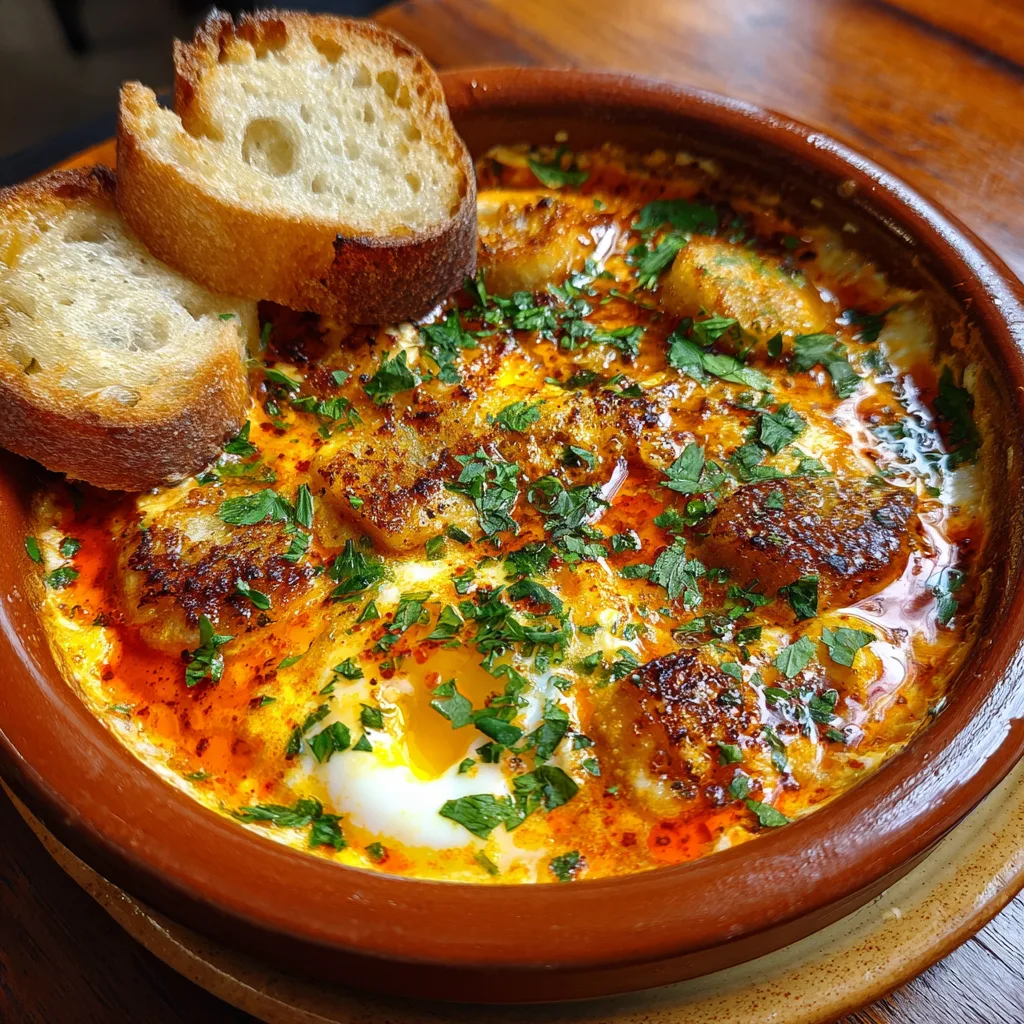
- Eggs – 4 large. These can be whisked and drizzled in for “stracciatella” ribbons (as shown in the image) or cracked whole into the soup to poach.
- Salt – To taste. Be careful if using salty ham or commercial broth.
- Parsley – Freshly chopped, for a burst of color and freshness.
Step-by-Step Instructions
Step 1: Prep the Garlic and Bread
- Peel the garlic cloves and slice them thinly. Do not crush or mince them; thin slices ensure they cook evenly and provide a nice texture in the soup.
- Cut or tear your stale bread into 1-inch chunks. If your bread is fresh, you can toast the chunks in the oven for 10 minutes to dry them out.
Step 2: Infuse the Oil
- In a large pot or Dutch oven (or a traditional clay cazuela if you have one), heat the olive oil over medium heat.
- Add the sliced garlic (and ham/chorizo if using). Cook slowly, stirring often, until the garlic turns a pale golden brown.
- Watch closely: Garlic goes from golden to burnt in seconds. Burnt garlic will make the soup bitter.
Step 3: Toast the Bread and Spice
- Add the bread chunks to the pot. Stir well to coat them in the garlic-infused oil. Toast them in the pot for 2–3 minutes until they absorb the oil and start to color slightly.
- Crucial Step: Remove the pot from the heat. Wait 30 seconds, then sprinkle in the paprika. Stir immediately. Paprika burns instantly in hot oil if left too long, turning bitter. Adding it off the heat prevents this.
Step 4: Simmer
- Return the pot to the heat and immediately pour in the broth (or water).
- Bring to a boil, then reduce the heat to low. Simmer for 10–15 minutes. The bread will soften and swell, but try not to stir too vigorously or it will break apart completely. You want a mix of soft broth and identifiable bread pieces.
Step 5: Add the Eggs
- There are two ways to do this:
- Method A (Ribbons – Recommended): Beat the eggs in a bowl. While the soup is gently simmering, slowly drizzle the eggs in while stirring the soup in a circular motion. This creates silky ribbons of cooked egg throughout the broth.
- Method B (Poached): Crack whole eggs directly into the hot broth. Cover the pot and let them poach for 3-4 minutes until the whites are set but yolks are runny.
Step 6: Serve
- Taste and adjust seasoning with salt.
- Ladle into bowls immediately. Garnish with fresh parsley.
- Serve with extra slices of toasted bread on the side for dipping.
The History of Sopa de Ajo
Sopa de Ajo is deeply rooted in the Castilian region of Spain (Castilla y León). Historically, it was a typical shepherd’s dish. Shepherds would travel long distances with non-perishable ingredients: garlic, stale bread, paprika, and lard or oil. With just a fire and a pot, they could create a warm, calorie-dense meal to survive cold nights.
In Spanish culture, it is also traditionally eaten during Semana Santa (Holy Week). Because it can easily be made without meat, it was suitable for days of religious abstinence. It is also famously known as a “wedding soup” in some villages, served to guests in the early hours of the morning to help soak up the alcohol from the celebration!
Tips for the Perfect Soup
The Bread Matters: The texture of the soup depends entirely on the bread. A dense, crusty sourdough will hold its shape and provide a pleasant chewiness. A soft white roll will disintegrate into a porridge-like consistency (which is also delicious, but different). Authentic recipes use “Pan de Hogaza.”
Paprika Varieties: The smokiness is non-negotiable. Do not use generic Hungarian paprika if you can avoid it. Look specifically for Pimentón de la Vera. It comes in three heat levels: Dulce (sweet), Agridulce (bittersweet), and Picante (spicy). A mix of sweet and spicy is usually best.
Clay Pot Cooking: If you want the full authentic experience, cook and serve this in earthenware bowls. The clay retains heat exceptionally well, keeping the soup piping hot until the last spoonful.
Variations
Sopa Castellana
Often used interchangeably with Sopa de Ajo, Sopa Castellana almost always includes ham and usually features whole poached eggs rather than beaten ones.
Vegan Version
This soup is naturally very close to vegan. Simply omit the optional ham, use vegetable broth, and skip the egg. To replace the richness of the egg, you can drizzle a bit more high-quality olive oil on top right before serving.
Mushroom Twist
For a woodsy variation, sauté sliced wild mushrooms along with the garlic. This adds an earthy flavor that complements the smoked paprika beautifully.
Final Thoughts
Sopa de Ajo is a reminder that the best food is often the simplest. It is a dish that warms you from the inside out, offering deep, savory flavors with minimal effort. It turns leftovers into luxury and basic ingredients into a feast.
The next time you hear rain against the window or feel a chill in the air, grab that old loaf of bread, peel some garlic, and make yourself a bowl of Spanish history. ¡Buen provecho!