Homemade Apple Cider Pork Roast
When the air turns crisp and the leaves begin to fall, our cravings inevitably shift toward the warm, savory, and slow-cooked. There is perhaps no dish that captures the essence of autumn and winter comfort quite like a Homemade Apple Cider Pork Roast. This recipe is a celebration of seasonal flavors, marrying the savory richness of slow-roasted pork with the tart sweetness of apples and the earthy depth of fresh herbs.
Imagine a kitchen filled with the aroma of rosemary, thyme, and sweet apple cider simmering away for hours. That is the promise of this dish. It isn’t just a meal; it’s an experience—a centerpiece for Sunday dinners, holiday gatherings, or any evening where you need a hug in the form of food. In this comprehensive guide, we will walk you through everything you need to know to create a restaurant-quality pork roast right in your own kitchen.
Why This Recipe Works
The magic of this Apple Cider Pork Roast lies in the science of braising. By searing the meat first, we lock in flavor and create a textural contrast with the crust. Then, by slowly cooking the pork in a liquid bath of apple cider and stock, we break down the connective tissues (collagen) in the pork shoulder (or loin), transforming tough fibers into melt-in-your-mouth tenderness.
Furthermore, the flavor profile is a classic culinary pairing. As the saying goes, “pork loves fruit.” The natural acidity and sugar in the apple cider cut through the richness of the pork fat, creating a balanced bite that is neither too heavy nor too sweet. The addition of caramelized onions and garlic builds a savory foundation that elevates the gravy from a simple sauce to liquid gold.
Choosing the Right Cut of Pork
Before we dive into the cooking process, it is crucial to select the right cut of meat. The success of a pot roast largely depends on fat content and connective tissue.
- Pork Shoulder (Boston Butt): This is the gold standard for pot roasts. It has excellent marbling and fat content, which renders down during the long cook time, keeping the meat incredibly moist and flavorful. It shreds easily and is very forgiving.
- Pork Loin: A leaner option. If you choose pork loin, you must be careful not to overcook it, as it has less fat to buffer the heat. It slices beautifully but requires a watchful eye.
- Pork Tenderloin: Generally not recommended for this specific slow-roast method as it cooks too quickly and can dry out. Stick to shoulder or loin for the best results.
Homemade Apple Cider Pork Roast
Ingredients
Equipment
Method
- Preheat oven to 325°F (163°C). Pat the pork roast dry with paper towels and season generously with salt and pepper.
- Heat olive oil in a large Dutch oven over medium-high heat. Sear the pork on all sides until deeply golden brown (3-4 mins per side). Remove pork and set aside.
- Reduce heat to medium and add butter. Add sliced onions and apples. Sauté for 5-7 minutes until slightly caramelized. Add garlic and cook for 1 minute.
- Deglaze the pan with apple cider and broth, scraping up browned bits from the bottom. Add rosemary and thyme sprigs.
- Return the pork to the pot, nestling it into the liquid and apples. Cover with a heavy lid.
- Bake in the oven. For pork loin: 60-90 mins (until 145°F). For pork shoulder: 2.5-3.5 hours (until fork-tender/shreddable).
- Remove pork and let rest for 15 minutes. Optionally, simmer the sauce on the stovetop with a cornstarch slurry to thicken into a gravy.
- Slice or shred pork and serve topped with the apples, onions, and cider gravy.
Notes
Ingredients
To achieve that glossy, savory-sweet perfection, you will need the following ingredients:
The Meat and Aromatics
- Pork Roast: 3-4 lb Pork Shoulder (boneless or bone-in) or Pork Loin.
- Salt and Pepper: Generous amount for seasoning the crust.
- Olive Oil: 2 tablespoons, for searing the meat.
- Butter: 2 tablespoons, unsalted, for sautéing the apples and onions.
The Braising Liquid and Produce
- Apples: 3 large apples, cored and sliced into thick wedges (Honeycrisp, Granny Smith, or Gala hold their shape best).
- Onions: 2 large yellow or sweet onions, sliced into thick strips.
- Garlic: 4-5 cloves, minced or smashed.
- Apple Cider: 2 cups (Use high-quality unfiltered cloudy cider, not apple juice or vinegar).
- Chicken or Beef Broth: 1 cup, to balance the sweetness.
- Fresh Herbs: 3 sprigs of Rosemary and 4 sprigs of Thyme (dried can be substituted, but fresh is superior).
- Dijon Mustard: 1 tablespoon (optional, for a tangy kick in the gravy).
For the Cornstarch Slurry (Optional Thickener)
- Cornstarch: 1 tablespoon mixed with 1 tablespoon of cold water.
Step-by-Step Instructions
Follow these steps to ensure your pork roast is juicy, tender, and packed with flavor.
1. Prepare and Sear the Meat
Preheat your oven to 325°F (163°C). Pat the pork roast completely dry with paper towels. This is a critical step; moisture is the enemy of a good sear. Generously season all sides of the pork with salt and freshly cracked black pepper.
Heat the olive oil in a large Dutch oven or heavy-bottomed oven-safe pot over medium-high heat. Once the oil is shimmering, place the pork in the pot. Sear undisturbed for 3-4 minutes per side until a deep, golden-brown crust forms. Remove the pork and set it aside on a plate.
2. Sauté the Aromatics
Reduce the heat to medium. Add the butter to the same pot (don’t clean it; those brown bits on the bottom are pure flavor!). Add the sliced onions and apple wedges. Sauté for 5-7 minutes until the onions are softened and slightly caramelized and the apples begin to take on color. Stir in the garlic and cook for another minute until fragrant.
3. Deglaze and Build the Sauce
Pour in the apple cider and broth. Use a wooden spoon to scrape up the browned bits (fond) from the bottom of the pot. This is where the deep flavor of the gravy comes from. Stir in the Dijon mustard if using. Add the fresh rosemary and thyme sprigs into the liquid.
4. The Slow Roast
Return the seared pork roast to the pot, nestling it down into the apples, onions, and liquid. The liquid should come about 1/3 to 1/2 way up the side of the meat. Cover the pot with a heavy lid.
Transfer to the preheated oven.
- For Pork Loin: Cook for roughly 60-90 minutes, or until the internal temperature reaches 145°F.
- For Pork Shoulder: Cook for 2.5 to 3.5 hours, or until the meat is fork-tender and shreds easily (internal temp around 195°F for shredding).
5. Resting and Gravy
Once cooked, carefully remove the pork from the pot and transfer it to a cutting board. Tent loosely with foil and let it rest for at least 15-20 minutes. This allows the juices to redistribute.
While the meat rests, place the pot back on the stove over medium heat. If you prefer a thicker gravy, whisk in your cornstarch slurry and simmer for 2-3 minutes until the sauce thickens and becomes glossy. Taste and adjust seasoning with more salt or pepper if needed.
6. Serve
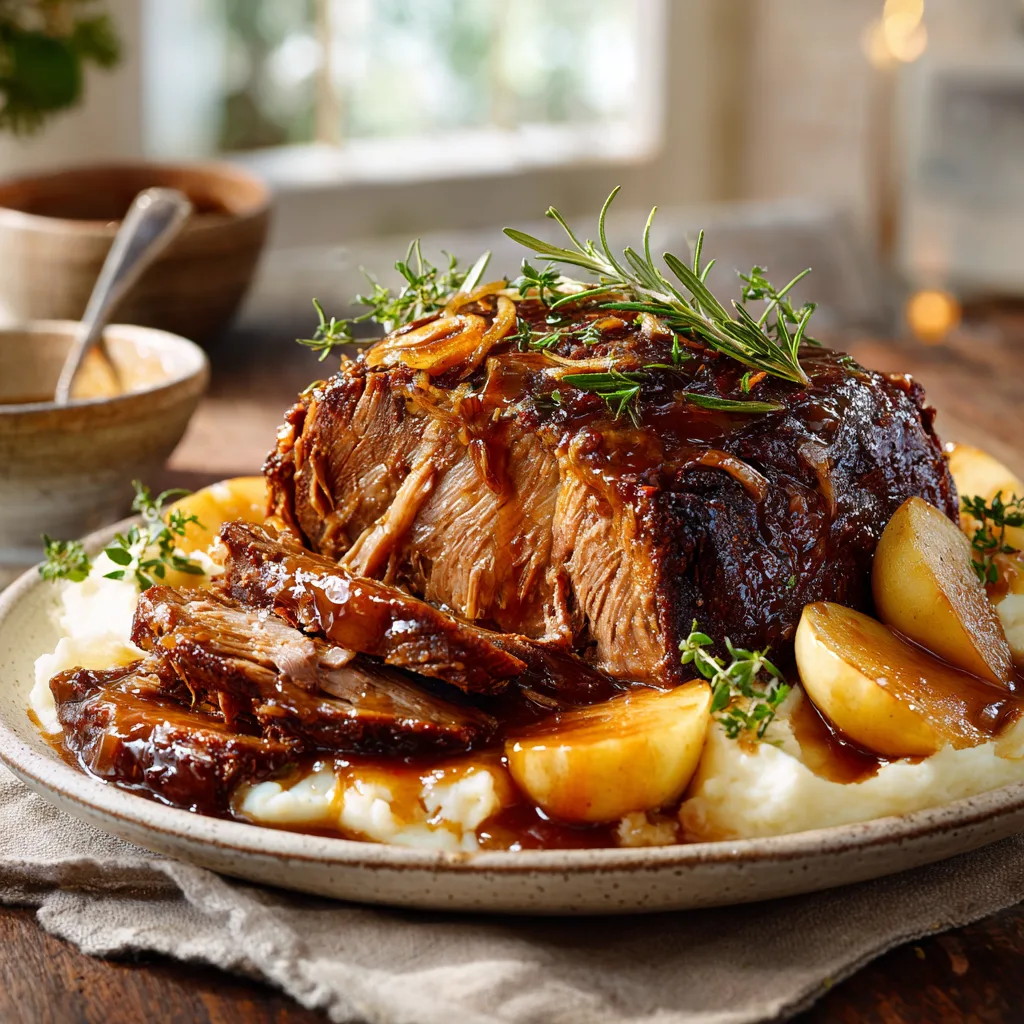
Slice or shred the pork. Arrange it on a platter and spoon the lush apple-onion gravy generously over the top. Serve immediately.
Expert Tips for Success
Don’t Skip the Sear: The Maillard reaction (browning) created during searing adds a depth of savory flavor that boiling or baking alone cannot achieve. It also improves the visual appeal of the dish.
Apple Selection Matters: Avoid using Red Delicious or other soft eating apples, as they will turn into applesauce during the long cooking process. Granny Smith offers a nice tart contrast, while Honeycrisp or Pink Lady offers a sturdier texture with sweetness.
The “Wiggle” Test: If you are cooking a pork shoulder, the best way to tell if it is done is the wiggle test. Grab the bone (if bone-in) or push the meat with a fork. It should give way with zero resistance, like soft butter.
Room Temperature Meat: Take your pork out of the fridge 30 minutes before cooking. Cooking cold meat can lead to uneven cooking and a tough outer layer.
Serving Suggestions
A roast this rich deserves sides that can soak up that incredible cider gravy. Here are some perfect pairings:
- Creamy Mashed Potatoes: The classic choice. A bed of garlic mashed potatoes acts as the perfect canvas for the savory sauce.
- Roasted Root Vegetables: Carrots, parsnips, and sweet potatoes roasted with honey highlight the autumnal theme.
- Braised Red Cabbage: The acidity of vinegar-braised cabbage cuts through the fat of the pork perfectly.
- Crusty Bread: You will want something to sop up every drop of that liquid gold gravy.
Variations
Slow Cooker Method: Follow steps 1 and 2 in a skillet. Transfer everything to a slow cooker. Cook on LOW for 7-8 hours or HIGH for 4-5 hours. This is great for “set it and forget it” days.
Herb Swaps: If you aren’t a fan of rosemary, try using plenty of fresh sage. Sage and pork are a historic combination that tastes like Thanksgiving.
Add a Kick: Add a pinch of red pepper flakes or a splash of bourbon to the sauce for a warming, spicy undertone.
Storage and Reheating
Fridge: Store leftovers in an airtight container for up to 3-4 days. The flavors often improve the next day as the meat sits in the gravy.
Freezer: You can freeze the cooked pork and gravy for up to 3 months. Thaw overnight in the refrigerator before reheating.
Reheating: To prevent the meat from drying out, reheat it in the gravy. Place it in a baking dish, cover with foil, and warm in a 350°F oven until heated through.
Conclusion
The Homemade Apple Cider Pork Roast is more than just a recipe; it is a reliable tradition. It brings the warmth of the season to your table with minimal effort and maximum flavor payoff. Whether you are an experienced home cook or a beginner, this dish is forgiving and rewarding. So, grab a jug of apple cider, a hearty roast, and get ready to impress your family with a meal they won’t soon forget.