Potsticker Noodle Bowls
Potsticker Noodle Bowls: The Ultimate 20-Minute Dinner
If you have ever found yourself standing in the kitchen, craving the savory, juicy, ginger-laced filling of a dumpling but lacking the patience to pleat fifty wrappers, then Potsticker Noodle Bowls are your culinary salvation. Imagine taking the heart and soul of a pork gyoza—the caramelized meat, the pungent garlic, the nutty sesame oil, and the salty-sweet soy kick—and tossing it with chewy, slurp-worthy noodles. This is deconstructed comfort food at its finest.
This recipe is designed for real life. It is the answer to the midweek slump, the busy school night, and the “I want takeout but I’m trying to save money” dilemma. In less time than it takes to wait for delivery, you can have a steaming bowl of glossy, flavor-packed noodles on the table. It is messy in the best way possible, with a sauce that clings to every ribbon of pasta and savory pork crumbles that ensure every bite is packed with texture.
Why This Recipe Will Become Your New Go-To
There is a reason this dish has taken the internet by storm. It bridges the gap between an elaborate Asian feast and a quick pantry meal. Here is why you need to add this to your weekly rotation:
- Speed: From chopping board to dinner table, you are looking at roughly 20 minutes. If you use pre-chopped garlic and ginger, it’s even faster.
- Flavor Density: Because we are using ground meat, the surface area for browning is high. This means more Maillard reaction (browning) and deeper flavor compared to using chunks of meat.
- Texture Contrast: Soft, chewy noodles meet crispy, caramelized pork and the fresh crunch of scallions. It is a sensory delight.
- Customizable: It is incredibly forgiving. Too salty? Add a splash of vinegar. Like it spicy? Load up on chili oil. Want veggies? Throw in whatever is wilting in your crisper drawer.
The “Potsticker” Flavor Trinity
To truly capture the essence of a potsticker without the wrapper, we rely on a specific balance of aromatics and seasonings. A traditional dumpling filling is usually a mix of ground pork, cabbage, ginger, garlic, and scallions.
1. Fresh Ginger and Garlic: You cannot skip these. Powdered versions simply won’t cut it here. You want the sharp, spicy bite of fresh ginger and the aromatic punch of garlic to cut through the richness of the pork.
2. Sesame Oil: This provides that distinct nutty aroma that signals “Asian comfort food” to your brain immediately. We use it in the sauce and sometimes a drizzle at the end for finish.
3. The Acid Component: Dumplings are often dipped in a vinegar-soy sauce. To mimic this, we incorporate rice vinegar directly into the stir-fry sauce. It brightens the dish and prevents the salty soy sauce and fatty pork from becoming too heavy.
Ingredients
The beauty of this recipe lies in its simplicity. You likely have most of these ingredients in your pantry right now.
Potsticker Noodle Bowls
Ingredients
Equipment
Method
- Boil noodles according to package instructions until al dente. Reserve 1/2 cup pasta water, drain, and rinse noodles under cold water.
- In a small bowl, whisk together soy sauce, dark soy sauce, oyster sauce, rice vinegar, brown sugar, and sesame oil. In a separate cup, mix cornstarch and water.
- Heat oil in a large skillet over medium-high heat. Add ground pork and cook until browned and crispy, breaking it into crumbles (5-7 mins).
- Add minced garlic, ginger, and the white parts of the green onions to the pork. Sauté for 1 minute until fragrant.
- Pour the sauce mixture over the pork and let bubble for 30 seconds. Stir in the cornstarch slurry to thicken the sauce.
- Add noodles to the pan and toss vigorously to coat in the sauce. Add reserved pasta water if needed to loosen the sauce. Cook for 2 mins.
- Remove from heat. Garnish with green scallion tops and sesame seeds. Serve hot.
Notes
The Stir Fry Base
- 1 lb (450g) Ground Pork: Fatty pork works best here (80/20 mix) because it keeps the meat juicy and creates a nice rendering for the sauce. You can substitute with ground chicken, turkey, or even a plant-based meat crumble.
- 10 oz (280g) Wide Noodles: Wheat noodles, knife-cut noodles, or dried curly noodles work perfectly. In a pinch, even linguine can do the job!
- 1 tbsp Vegetable Oil: For browning the meat.
- 1 cup Shredded Cabbage (Optional): While the image focuses on the meat and noodles, adding finely shredded cabbage or coleslaw mix mimics the dumpling filling texture perfectly.
- 4 cloves Garlic, minced: Measure with your heart; more is usually better.
- 1 tbsp Fresh Ginger, grated: Essential for that authentic potsticker taste.
- 4 Green Onions (Scallions): Sliced, keeping the white and green parts separate.
The Sticky Savory Sauce
- 4 tbsp Soy Sauce: Use low-sodium if you are sensitive to salt.
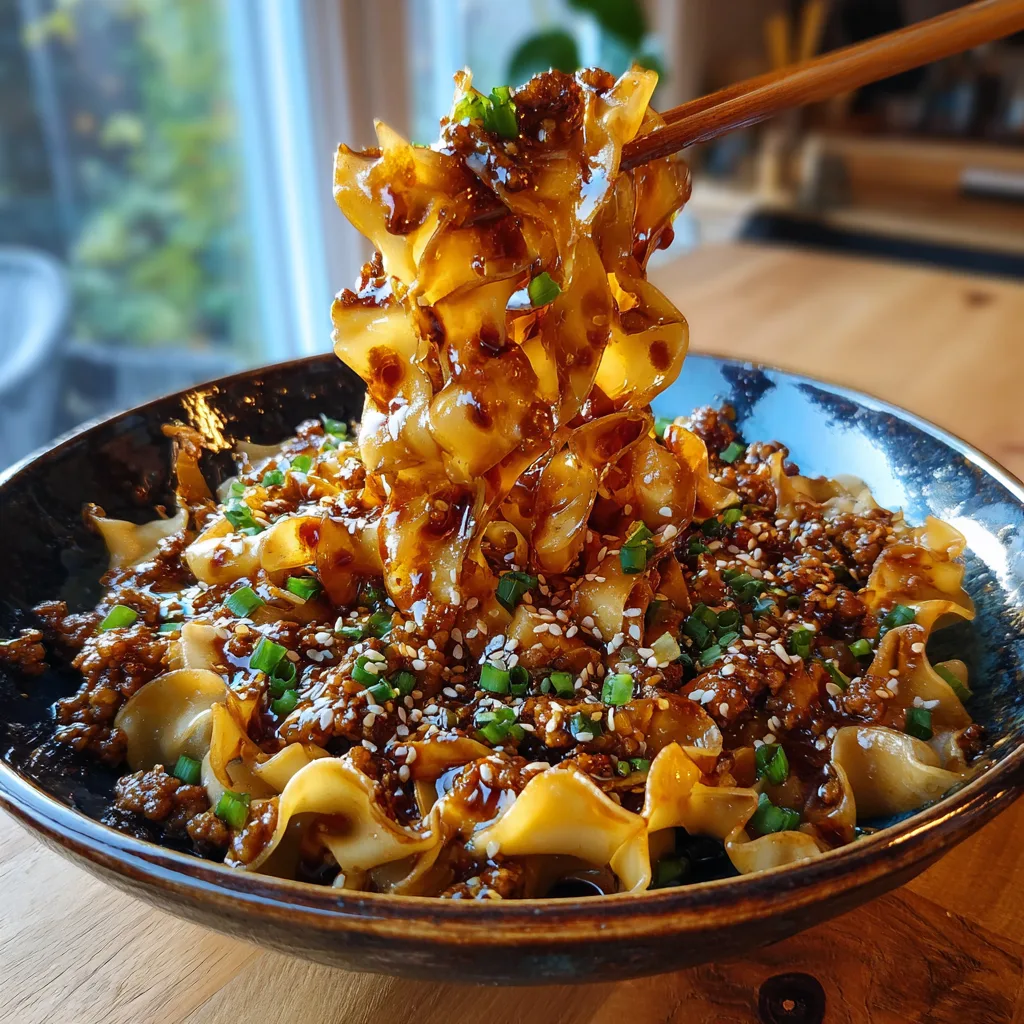
- 1 tbsp Dark Soy Sauce: This is the secret to that rich, dark caramel color you see in the photos. If you don’t have it, sub with regular soy sauce mixed with a little molasses.
- 1 tbsp Oyster Sauce: Adds umami and a glossy sheen to the noodles.
- 1 tbsp Rice Vinegar: Adds the necessary tang.
- 1 tbsp Brown Sugar: Helps balance the salt and aids in caramelizing the pork.
- 1 tsp Toasted Sesame Oil: For aroma.
- 1 tsp Cornstarch + 1 tbsp Water: A slurry to thicken the sauce so it coats the noodles instead of pooling at the bottom.
- Chili Flakes or Chili Oil (to taste): For that gentle heat.
Garnish
- Toasted Sesame Seeds: Visual appeal and texture.
- Reserved Green Scallions: Freshness.
Instructions
Step 1: Prep Your Sauce and Aromatics
Cooking Asian stir-fries moves fast, so “mise en place” (everything in its place) is key. Whisk together the soy sauce, dark soy sauce, oyster sauce, rice vinegar, brown sugar, and sesame oil in a small bowl. In a separate tiny bowl, mix the cornstarch and water. Chop your garlic, grate your ginger, and slice your scallions (separating whites from greens).
Step 2: Boil the Noodles
Bring a large pot of water to a boil. Cook your noodles according to the package directions, but aim for al dente (slightly undercooked). They will finish cooking in the sauce later. Reserve about 1/2 cup of pasta water before draining. Rinse the noodles under cold water to stop the cooking and prevent sticking.
Step 3: Caramelize the Pork
Heat the vegetable oil in a large skillet or wok over medium-high heat. Add the ground pork. Break it up with a spatula, but don’t over-mix initially—let it sear to get those crispy brown edges. Cook until the pork is no longer pink and is starting to brown (about 5-7 minutes).
Step 4: Add Aromatics
Make a small well in the center of the pork. Add the minced garlic, ginger, and the white parts of the green onions. Sauté for 1 minute until fragrant. If you are using cabbage, add it now and toss until slightly wilted.
Step 5: Simmer the Sauce
Pour the sauce mixture over the pork. Stir well to coat the meat. Let it bubble for 30 seconds. Stir your cornstarch slurry once more (cornstarch settles) and pour it into the bubbling sauce. It should thicken almost immediately into a glossy glaze.
Step 6: Toss and Serve
Add your cooked noodles into the skillet. Toss vigorously! You want every strand of noodle coated in that thick, meaty sauce. If the sauce looks too thick or sticky, splash in a little bit of the reserved pasta water to loosen it up. Cook for another 1-2 minutes until everything is piping hot.
Step 7: Garnish
Remove from heat. Top generously with the green parts of the scallions and toasted sesame seeds. Serve immediately while steaming hot.
Tips for the Perfect Bowl
- Don’t skip the rinse: Rinsing wheat noodles after boiling removes excess starch. If you don’t rinse them, they can become gummy and clump together in the skillet.
- Texture is key: Do not overcrowd the pan when browning the pork. If there is too much liquid, the pork will steam instead of sear. You want those crispy brown bits—that is where the flavor lives.
- Vegetarian Version: Swap the pork for crumbled extra-firm tofu or a plant-based ground meat alternative. Use vegetarian oyster sauce (made from mushrooms) to keep it fully plant-based.
- The “Gloss” Factor: If your noodles look dry, add a splash more oil or water. The appetizing look of this dish relies on the emulsion of fat and starch creating a shine.
Variations and Add-Ins
While the classic pork and noodle combo is elite, you can easily bulk up this meal with vegetables or flavor twists:
Spicy Peanut Potsticker Noodles: Add 1 tablespoon of creamy peanut butter and 1 tablespoon of chili crisp to the sauce for a Dan Dan noodle vibe.
Veggie Overload: Stir in bok choy, julienned carrots, or snap peas along with the aromatics. This adds crunch and nutrition without altering the core flavor profile.
Crispy Egg Topping: Fry an egg with a crispy edge (sunny side up) and place it on top. The runny yolk mixing with the soy glaze is heavenly.
Storage and Reheating
Refrigerator: Store leftovers in an airtight container for up to 3 days.
Reheating: Noodles tend to soak up the sauce as they sit. When reheating in the microwave or on the stove, add a splash of water to revive the glossy texture.
Freezing: The sauce and pork freeze well, but cooked noodles can get mushy when thawed. I recommend freezing the meat sauce separately and boiling fresh noodles when you are ready to eat.
Fun Fact: The History of the Potsticker
Legend has it that potstickers (Guotie) were invented by accident. A chef in China’s Imperial Court intended to boil dumplings (Jiaozi) but walked away and let the water boil off. The dumplings stuck to the wok and crisped up on the bottom. The chef served them anyway, and the Emperor loved the contrast of the crispy bottom and soft top. This noodle bowl pays homage to that happy accident by combining the flavors of the filling with the comfort of noodles.