Sugar Raspberry Danish Bun Recipe
Bakery Quality at Home: The Sugar Raspberry Danish Bun
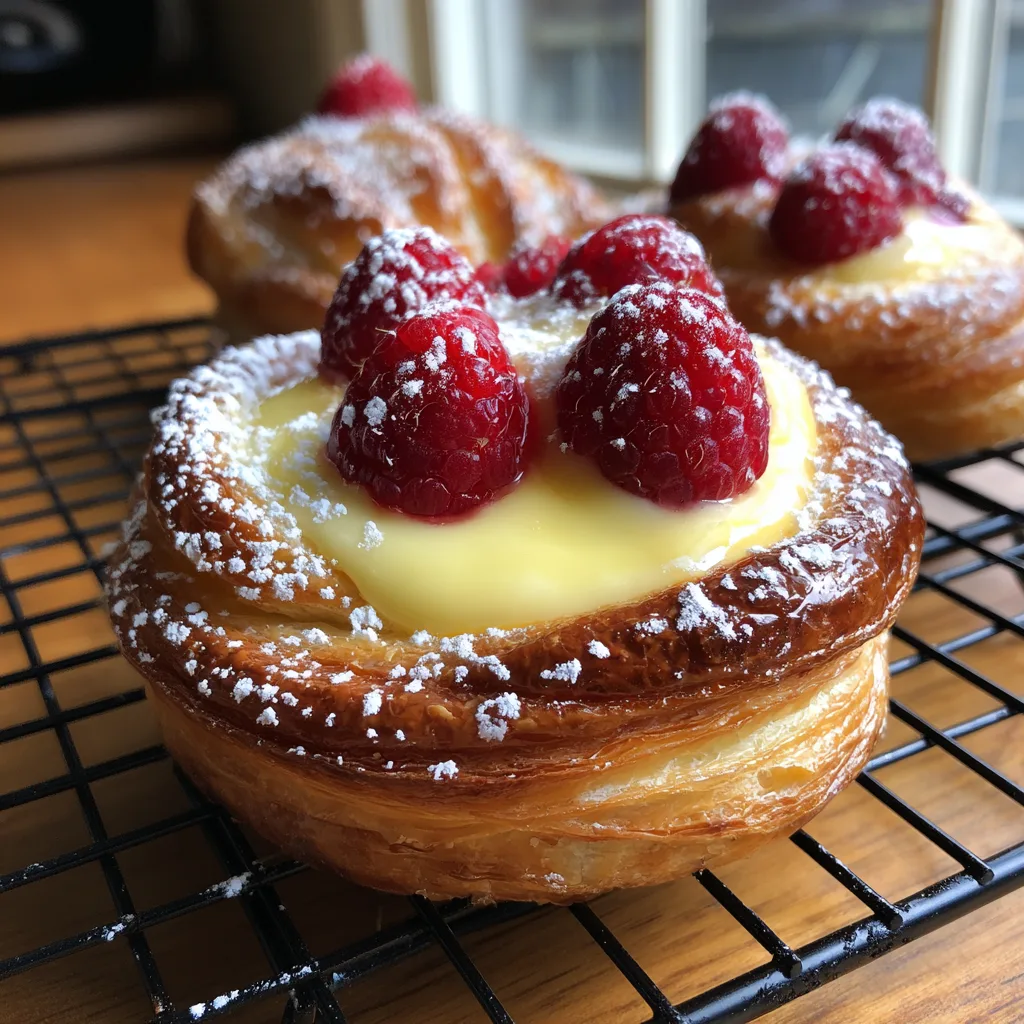
There is something undeniably magical about a fresh Danish pastry. The way the flaky, buttery dough shatters upon the first bite, revealing a soft, tender interior, is a sensory experience like no other. Enter the Sugar Raspberry Danish Bun. This isn’t just a breakfast item; it’s a centerpiece. Picture a golden, spiraled bun, boasting layers of laminated dough, cradling a pool of rich vanilla custard and studded with tart, jewel-like raspberries. A final dusting of powdered sugar transforms it into a snowy, sweet masterpiece that looks as if it came straight from a Copenhagen bakery window.
In this article, we are going to demystify the art of the Danish. Many home cooks are intimidated by the idea of pastry dough, fearing complex folding techniques and temperature control. While traditional laminated dough is an art form, this recipe offers a slightly more accessible approach that delivers that coveted flakiness without requiring a culinary degree. We will guide you through creating the enriched dough, the silky custard filling, and the assembly process. Whether you are serving these for a special holiday brunch or just treating yourself on a slow Sunday morning, these buns are guaranteed to impress.
Why You Will Love This Recipe
The Sugar Raspberry Danish Bun strikes the perfect balance between sweet and tart. The custard provides a creamy, mellow sweetness that offsets the acidity of the fresh raspberries. The dough itself is enriched with butter and eggs, giving it a brioche-like richness but with distinct layers that crisp up beautifully in the oven.
Furthermore, this recipe is versatile. Once you master the base dough and custard, you can swap fruits with the seasons—blueberries in late summer, spiced apples in autumn, or even a dollop of apricot jam. It is a foundational recipe that belongs in every baker’s repertoire.
Ingredients
To achieve that professional look and taste, we need to pay attention to our ingredients. Cold butter and fresh yeast are your best friends here.
Sugar Raspberry Danish Bun
Ingredients
Equipment
Method
- Make the custard: Whisk yolks, sugar, and cornstarch. Pour in hot milk slowly to temper. Cook over medium heat until thickened. Chill.
- Make the dough: Mix dry ingredients. Cut in cold butter until pea-sized. Add egg and warm milk. Mix to form shaggy dough.
- Roll out dough into a rectangle, fold in thirds. Rotate and repeat rolling/folding 3 times. Chill for 30 minutes.
- Roll dough out to 1/4 inch thickness. Cut into strips.
- Twist strips and coil into spirals on baking sheet. Press down centers to create wells.
- Fill centers with custard and top with raspberries. Let rise for 45 minutes.
- Preheat oven to 375°F (190°C). Brush edges with egg wash.
- Bake 15-18 minutes until golden. Cool on wire rack.
- Dust generously with powdered sugar before serving.
Notes
For the Danish Dough
- All-Purpose Flour – The backbone of your bun. You can also use bread flour for a chewier texture.
- Unsalted Butter – This needs to be cold and cubed. It is the secret to creating those flaky layers.
- Granulated Sugar – To feed the yeast and sweeten the dough lightly.
- Instant Yeast – For that crucial rise. If using active dry, make sure to bloom it in warm milk first.
- Milk – Whole milk, warmed slightly (about 110°F), enriches the dough.
- Egg – Adds richness and color to the dough.
- Salt – Essential for balancing the sweetness and strengthening the gluten structure.
For the Custard Filling
- Egg Yolks – The key to a rich, yellow, velvety custard.
- Sugar – To sweeten the cream.
- Cornstarch – This thickens the custard so it doesn’t run out of the bun during baking.
- Milk – Whole milk works best for a creamy texture.
- Vanilla Extract – Use a high-quality extract or bean paste for the best flavor.
The Toppings
- Fresh Raspberries – You can use frozen, but fresh berries hold their shape better and bleed less into the custard.
- Powdered Sugar – For the classic snowy finish.
- Egg Wash – One egg beaten with a splash of water, for brushing the edges to get that golden shine.
Instructions
Making Danish buns is a labor of love, but breaking it down into steps makes it manageable. Read through all instructions before starting.
Step 1: Make the Custard (Pastry Cream)
1. In a medium bowl, whisk together the egg yolks and sugar until pale. Whisk in the cornstarch.
2. Heat the milk in a saucepan until it just begins to simmer.
3. Slowly pour the hot milk into the egg mixture while whisking constantly (tempering) to prevent the eggs from scrambling.
4. Pour everything back into the saucepan and cook over medium heat, whisking constantly, until the mixture thickens into a pudding consistency.
5. Remove from heat, stir in vanilla, and transfer to a bowl. Cover with plastic wrap directly touching the surface to prevent a skin from forming. Chill completely.
Step 2: Prepare the Dough
6. In a large bowl, whisk flour, sugar, yeast, and salt.
7. Cut the cold butter into the flour using a pastry cutter or your fingers until you have pea-sized chunks. Do not overwork it; you want bits of butter to remain visible.
8. Whisk the egg into the warm milk, then pour this into the flour mixture.
9. Gently fold until a shaggy dough forms. Turn out onto a floured surface and knead briefly just to bring it together.
Step 3: The Mock Lamination
10. Roll the dough out into a rectangle. Fold it in thirds like a letter.
11. Rotate the dough 90 degrees, roll it out again, and fold in thirds again.
12. Repeat this process 2 more times. This creates layers of butter within the dough. Wrap in plastic and chill for 30 minutes.
Step 4: Shape the Buns
13. Roll the chilled dough out into a large rectangle, about 1/4 inch thick.
14. Cut into strips about 1 inch wide.
15. Twist each strip slightly, then coil it into a spiral shape on a parchment-lined baking sheet, tucking the end underneath.
16. Use your fingers or the back of a spoon to press a deep indentation into the center of each spiral.
Step 5: Fill and Proof
17. Fill the center indentation generously with the chilled custard.
18. Press 3-4 raspberries into the custard.
19. Cover loosely and let rise in a warm place for about 45 minutes to an hour, until puffy.
Step 6: Bake
20. Preheat oven to 375°F (190°C).
21. Brush the exposed dough edges with egg wash.
22. Bake for 15-18 minutes until deep golden brown.
23. Transfer to a wire rack to cool slightly.
Step 7: The Finish
24. Once cool, dust heavily with powdered sugar.
Tips for Success
Keep it Cold: The most critical rule of pastry is temperature control. If your butter melts before the dough hits the oven, you lose your layers. If the dough feels sticky or warm at any point, pop it in the fridge for 15 minutes.
Don’t Skimp on the Custard: The custard center is the heart of this pastry. Make sure your indentation is deep enough so the custard doesn’t overflow, but don’t be afraid to fill it up.
Fresh vs. Frozen Berries: While fresh raspberries look best, you can use frozen ones. Do not thaw them first; place them on the dough frozen. Note that they may release a bit more juice during baking.
Variations
Lemon Blueberry:
Add lemon zest to the dough and swap the raspberries for fresh blueberries. The citrus cuts through the richness beautifully.
Spiced Apple:
Skip the custard and fill the center with sautéed cinnamon apples for a fall treat.
Chocolate Hazelnut:
Fill the center with Nutella instead of custard and top with chopped toasted hazelnuts.
Storage and Reheating
Storage: These buns are best eaten the day they are made. However, they can be stored in an airtight container at room temperature for up to 2 days. Because of the custard, if your kitchen is very warm, store them in the fridge.
Reheating: To revive the flake, pop them in a 350°F oven or air fryer for 3-5 minutes. Avoid microwaving, as it will make the dough chewy and soft.
A Note on “Spandauer”
In Denmark, this type of pastry is often referred to as a “Spandauer.” It is a staple of the Danish breakfast table (morgenbrød). The name supposedly comes from the Spandau prison in Berlin, as the four corners of the pastry (in the square folded version) resemble prison walls. While our spiral version is shaped differently, it carries the same spirit of flaky, custard-filled indulgence that has made Danish pastry world-famous.
Whether you call it a Danish, a Spandauer, or just a really good bun, this Sugar Raspberry Danish Bun is a project worth undertaking. The smell of yeast and butter wafting through your kitchen is a reward in itself.