The Ultimate Guide to Spaghetti all’Assassina: Mastering the Famous Italian Burnt Spaghetti
Introduction: The Rebellious Italian Classic
When you think of traditional Italian pasta, your mind likely conjures images of large pots of rolling, salted boiling water, perfectly al dente strands of spaghetti, and a gentle toss in a velvety, simmering sauce. However, in the sun-drenched region of Puglia, nestled in the southern heel of Italy’s boot, there exists a fiercely guarded, rebellious culinary secret that breaks every conventional rule of pasta making. Enter Spaghetti all’Assassina, affectionately known as “Burnt Spaghetti” or “Assassin’s Spaghetti.”
This dish is an absolute marvel of texture and intense, concentrated flavor. Instead of being boiled in water, the raw dry pasta is placed directly into a screaming-hot skillet with olive oil, garlic, and fiery chili peppers. It is then slowly cooked using a technique similar to making risotto—by gradually ladling in a rich, savory tomato broth. The result is a dish that is deeply caramelized, intensely spicy, and boasting an unbelievable texture that is simultaneously tender, chewy, and audibly crunchy. The intentional charring of the pasta creates a complex, smoky bitterness that perfectly balances the natural sweetness of the concentrated tomatoes. In this comprehensive guide, we will dive deep into the heart of Bari’s most famous dish, exploring its fascinating history, the science behind its unique cooking method, and the exact steps you need to recreate this spicy masterpiece in your own kitchen.
The History of “Assassin’s Spaghetti”
To truly appreciate Spaghetti all’Assassina, one must understand its legendary, albeit slightly mysterious, origins. The dish traces its roots back to the late 1960s in the coastal city of Bari, the capital of the Puglia region. According to local culinary lore, the recipe was born out of necessity and brilliant improvisation in a local trattoria. A chef, looking to repurpose leftover pasta and tomato sauce from the previous day, threw the cold ingredients into a pan and left them on the fire a bit too long. The bottom layer of the spaghetti caramelized and burnt, creating a delightfully crispy crust.
Another popular origin story attributes the dish to chef Enzo Francavilla. It is said that two northern Italian tourists visited his restaurant in Bari and requested a hearty, flavorful dish. Francavilla decided to cook raw spaghetti directly in a spicy tomato broth in a cast-iron pan, letting it scorch and catch on the bottom. When the satisfied but sweating tourists finished the fiery, heavily spiced dish, they jokingly called the chef an “assassin” (assassino) for trying to “kill” them with the intense heat of the chili peppers. The name stuck, and a legendary dish was born.
Today, Spaghetti all’Assassina is a cult favorite. It has even inspired an official academy—L’Accademia dell’Assassina—founded in Bari by local gastronomes dedicated to preserving the authentic recipe and the highly specific techniques required to achieve the perfect balance of spice, crunch, and tomato goodness.
The Science Behind the Char: The Risotto Method
Cooking raw pasta directly in a skillet is highly unorthodox, but it is the cornerstone of this recipe. This technique is often referred to as risottatura, as it mimics the way arborio rice is cooked for risotto. By skipping the boiling water, several magical culinary transformations occur:
First, the raw pasta starch is never washed away in a pot of water. Instead, as the tomato broth is absorbed into the dry spaghetti, the starches are released directly into the pan, creating a rich, incredibly thick, and cohesive sauce that clings to every single strand.
Second, the direct contact of the pasta with the hot oil and the iron skillet triggers the Maillard reaction. This is a chemical reaction between amino acids and reducing sugars that gives browned food its distinctive flavor. Because tomatoes are naturally high in sugars, and wheat pasta is rich in proteins, the intense heat caramelizes these components, creating deep, roasted, and smoky notes that you simply cannot achieve by boiling. The key is pushing this caramelization to the absolute edge—just past browning, right into the realm of a controlled, delicious “burn,” without letting it turn into inedible carbon.
Essential Equipment for the Perfect Crust
If you want to achieve the authentic texture of Spaghetti all’Assassina, your choice of cookware is just as important as your ingredients. Do not reach for a non-stick pan; it is virtually impossible to get the proper sear and crust on a slick surface.
- A Well-Seasoned Cast-Iron or Carbon Steel Skillet: The traditional pan used in Bari is a wide, dark iron skillet. Iron retains and distributes heat incredibly well, providing the blistering hot surface area necessary to singe the pasta strands. The pan should be wide enough (at least 12 inches) so the spaghetti can lay flat.
- A Ladle: Essential for carefully adding the hot tomato broth to the pan in increments.
- A Metal Spatula or Tongs: You will need sturdy tools to scrape the beautifully burnt bits from the bottom of the pan and turn the pasta over like a savory, spicy pancake.
- A Separate Saucepan: To keep your tomato broth simmering steadily on a neighboring burner.

Ingredients for Spaghetti all’Assassina
The beauty of this dish lies in its humble, pantry-staple ingredients. Because there are so few components, quality is paramount.
- Spaghetti (14 oz / 400g): Do not use fresh pasta; it will turn to mush. You need high-quality, dried durum wheat spaghetti. Interestingly, while bronze-die extruded pasta is usually preferred for holding sauces, some traditionalists in Bari prefer smooth (Teflon-extruded) pasta for Assassina, as it holds up better to the rigorous pan-frying without releasing too much sticky starch prematurely.
- Tomato Puree / Passata (1.5 cups): This is smooth, strained tomatoes without seeds or skins. It forms the body of the dish.
- Tomato Paste (3 tablespoons): Double or triple concentrated tomato paste (concentrato di pomodoro) is mixed with water to create the savory broth that will cook the pasta.
- Garlic (2 to 3 cloves): Smashed or minced, depending on your preference for garlic intensity. It perfumes the oil before the pasta is added.
- Fresh or Dried Red Chili Peppers (Peperoncino): The “assassin” element. You need enough chili to make the dish fiercely spicy. Fresh Calabrian chilies or high-quality dried pepper flakes are ideal. Adjust to your personal heat tolerance, but remember, this dish is meant to make you sweat!
- Extra Virgin Olive Oil (1/2 cup): This is not a typo. You need a generous amount of high-quality olive oil to fry the pasta and create the crunchy crust. The oil acts as the frying medium for the crispiness.
- Water (about 4 to 5 cups): To mix with the tomato paste and a pinch of salt to create the cooking broth.
- Salt (to taste): For seasoning the broth.
Step-by-Step Instructions: The Risotto Method
- Prepare the Tomato Broth: In a medium saucepan, bring the water to a boil. Add the tomato paste and a generous pinch of salt. Whisk until the paste is completely dissolved. Reduce the heat to low and keep this broth simmering gently throughout the cooking process.
- Aromatize the Oil: Place your large cast-iron or carbon steel skillet over medium-high heat. Pour in the extra virgin olive oil. Add the smashed garlic cloves and the chopped chili peppers. Let them sizzle in the oil for 1 to 2 minutes until the garlic is golden brown and the oil is deeply infused with the chili heat. (You may remove the garlic cloves at this point if you prefer a milder flavor, or leave them in for a punchy kick).
- The First Sizzle: Carefully pour the tomato puree (passata) directly into the hot oil. Stand back, as it will splatter aggressively! Let the puree fry in the oil for a minute until it thickens slightly and deepens in color.
- Fry the Raw Pasta: Lay the dry, uncooked spaghetti completely flat in the skillet, right on top of the sizzling tomato puree. Do not break the pasta! Using tongs, gently move the spaghetti around so the bottom layer gets coated in the oil and sauce. Let it fry undisturbed for 2 to 3 minutes until the bottom strands begin to toast and stick slightly.
- Begin the Risottatura: Ladle a cup of the hot, simmering tomato broth over the pasta. The pan will hiss and steam. Leave it alone! Do not stir constantly like you would a traditional risotto. Allow the pasta to absorb the liquid and begin to fry against the bottom of the pan.
- Listen for the Sizzle: As the liquid evaporates, the sound in the pan will change from a bubbling boil to a sharp, crackling sizzle. This means the oil is frying the pasta, and the crust is forming. Using a stiff spatula, carefully lift the edges of the pasta to check the color. Once it achieves a deep, dark, slightly charred crust, flip the pasta over in sections.
- Repeat and Char: Add another ladle of the hot tomato broth. Wait for it to absorb and listen for the frying sound again. Let the newly exposed bottom layer develop its own burnt crust. Continue this process—ladling, absorbing, frying, and flipping—until the pasta is al dente, cooked through but still retaining a bite. This usually takes about 15 to 20 minutes.
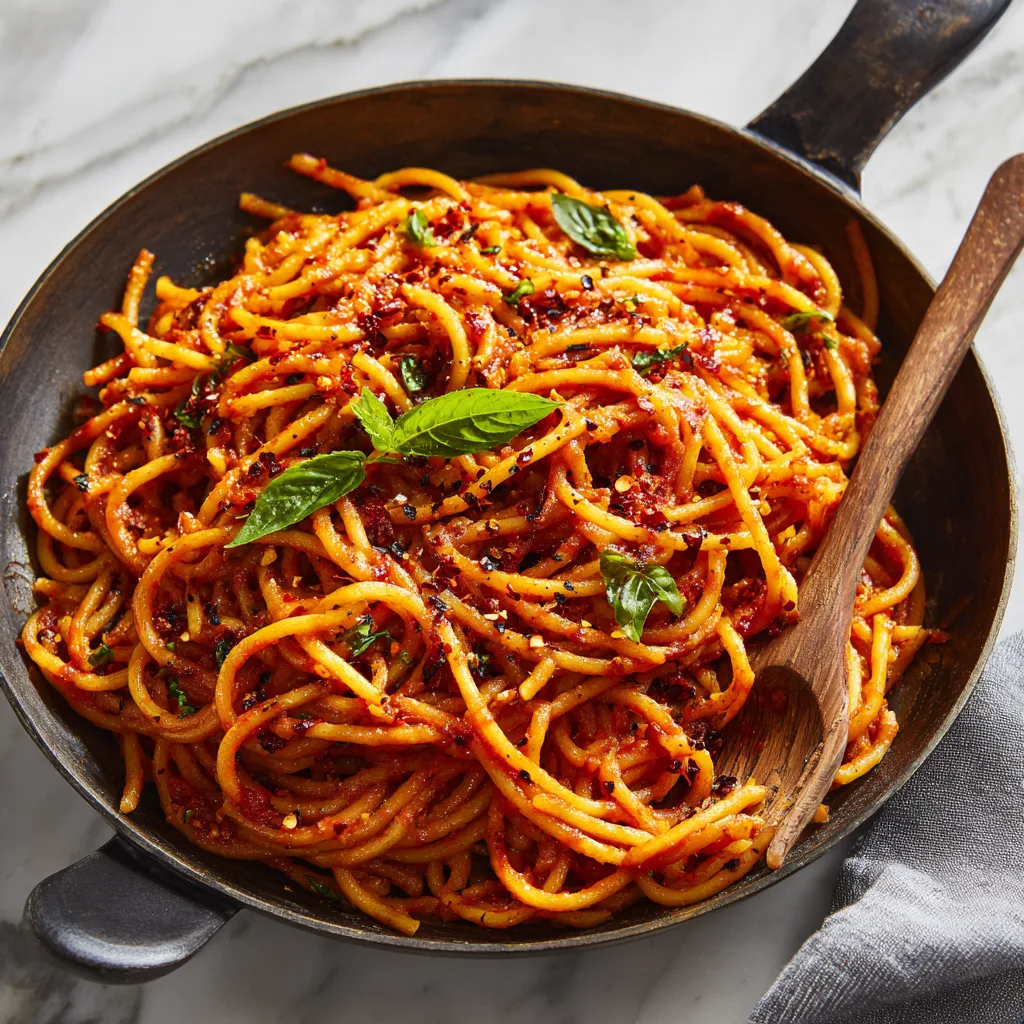
- The Final Sear: For the last few minutes, do not add any more broth. Let the pan get intensely hot and fry the spaghetti one last time to ensure maximum crunchiness. The final dish should have deep crimson red strands mixed with dark, blackened, crispy bits. The sauce should be entirely absorbed, leaving the pasta glossy with the spicy oil.
- Serve Immediately: Remove from the heat and serve the Spaghetti all’Assassina straight from the skillet. No cheese is traditionally required or desired—just the pure, unadulterated flavor of spicy, burnt, caramelized tomatoes and crunchy pasta.
Spaghetti all’Assassina (Burnt Spaghetti)
Ingredients
Equipment
Method
- In a medium saucepan, bring the water to a boil. Whisk in the tomato paste and a pinch of salt until dissolved. Reduce heat to low and keep the broth gently simmering.
- Place a wide cast-iron or carbon steel skillet over medium-high heat. Add the extra virgin olive oil, smashed garlic, and red chili peppers. Fry for 1-2 minutes until the garlic is golden.
- Carefully pour the tomato puree (passata) directly into the hot oil (stand back, it will splatter). Let it fry and sizzle for about 1 minute.
- Lay the raw spaghetti flat into the pan over the sauce. Do not break the pasta. Use tongs to gently coat the bottom layer with the oil and sauce.
- Let the pasta fry undisturbed for 2-3 minutes until the bottom begins to lightly toast and stick.
- Ladle about 1 cup of the hot simmering tomato broth over the spaghetti. Leave it alone to absorb the liquid.
- Listen to the pan: when the bubbling sound turns into a sharp, crackling sizzle, the oil is frying the pasta. Check the bottom with a spatula; once deeply charred and dark brown, flip the pasta over in sections.
- Continue this risottatura process: add a ladle of hot broth, let it absorb and fry until it sizzles and chars, then flip. Repeat until the pasta is cooked al dente (about 15-20 minutes).
- For the final few minutes, let the pan get very hot to achieve a final deep, crispy char. The sauce should be fully absorbed, and the pasta glossy and blackened in spots.
- Serve immediately straight from the hot skillet.
Notes
Pro Tips for Success
Mastering the Assassin’s Spaghetti takes a bit of practice and intuition. Keep these professional tips in mind to achieve perfection:
- Listen to the Pan: Your ears are your best tool for this recipe. The transition from the “gurgle” of boiling broth to the “crackle” of frying oil tells you exactly when the Maillard reaction is happening. If you add broth too soon, you boil the pasta instead of frying it.
- Do Not Be Afraid of the Dark: Home cooks are often terrified of burning their food. In this recipe, the burn is the goal. Push the boundaries of caramelization. The dark brown, slightly blackened strands are the most coveted bites in the entire dish.
- Keep the Broth Hot: If you add cold liquid to the hot pan, you will drop the temperature and stop the frying process, resulting in gummy pasta. Keep your tomato broth simmering on the stove the entire time.
- Don’t Skimp on the Oil: A half cup of oil may seem excessive, but it is necessary to fry the spaghetti. Without enough oil, the pasta will just stick and burn unpleasantly without getting crispy.
Common Mistakes to Avoid
Even seasoned home cooks can trip up on this unique technique. Avoid stirring the pasta too much; constant agitation will break the long strands and prevent the crust from forming. Additionally, be cautious with the salt. Because the tomato broth reduces so dramatically, adding too much salt at the beginning will result in an overwhelmingly salty final dish. Taste a piece of pasta toward the end of cooking and adjust the seasoning then if necessary.
Delicious Variations and Additions
While the purists in Bari will insist that the classic recipe is the only way to eat Assassina, the method lends itself beautifully to a few subtle variations:
- Stracciatella Cheese: If the heat is truly too much for you to handle, top the hot, crispy pasta with a spoonful of cold, creamy Stracciatella cheese (the creamy inside of burrata) right before serving. The contrast between the hot, spicy, crispy pasta and the cold, milky, soft cheese is mind-blowing.
- Anchovies: For a deeper, umami-rich flavor profile, melt two or three high-quality anchovy fillets into the hot oil along with the garlic and chili before adding the tomato puree.
- Pancetta or Guanciale: While decidedly not traditional for this specific dish, rendering some crispy pork fat in the pan before frying the pasta adds an incredibly rich, smoky, and decadent layer to the final flavor.
Serving Suggestions and Wine Pairings
Spaghetti all’Assassina is a rustic, humble, and deeply satisfying meal that requires very little adornment. Serve it hot directly from the cast-iron pan placed in the center of the table, allowing everyone to fight over the crunchiest bits at the bottom. Because the dish is intensely spicy and tomato-forward, it pairs wonderfully with a refreshing, slightly chilled red wine or a robust rosé from the Puglia region. Look for a Primitivo or a Negroamaro; their fruity notes and bright acidity cut through the rich olive oil and temper the fiery chili beautifully. A crisp, cold Italian lager is also an excellent choice to cool your palate between bites.
Conclusion
Spaghetti all’Assassina is more than just a recipe; it is an attitude. It takes the rigid rules of Italian pasta making and throws them out the window, rewarding your rebellion with a dish of unparalleled texture and flavor. The deeply savory, fiercely spicy, and addictively crunchy strands of burnt spaghetti will change the way you look at a box of dry pasta forever. Embrace the heat, trust the process, and do not be afraid to burn your dinner intentionally. Your taste buds will thank you.