Whiskey Cream Bavette Steak
The Ultimate Cast Iron Bavette Steak with Whiskey Garlic Cream Sauce
If you have been searching for a steak dinner that rivals high-end steakhouses but comes together in your own kitchen in under 30 minutes, look no further. This Cast Iron Bavette Steak with Whiskey Garlic Cream Sauce is the epitome of comfort food meeting gourmet execution. It features the deeply beefy flavor of the bavette cut, perfectly seared in a hot cast iron skillet, and draped in a luxurious, glossy sauce made from pan drippings, bold whiskey, and rich heavy cream.
Bavette steak, often referred to as the “butcher’s cut” or sirloin flap, is a hidden gem in the meat world. It possesses a loose texture similar to flank or skirt steak but offers a significantly richer marbling and tenderness when cooked correctly. The magic of this dish lies not just in the meat, but in the alchemy that happens in the pan. By utilizing the fond (the browned bits left behind after searing), we build a sauce that is savory, slightly sweet from the whiskey, and incredibly decadent.
In this comprehensive guide, we will walk you through everything you need to know about selecting the perfect cut of meat, the science behind the cast iron sear, and how to emulsify a pan sauce that will have your family licking their plates clean.
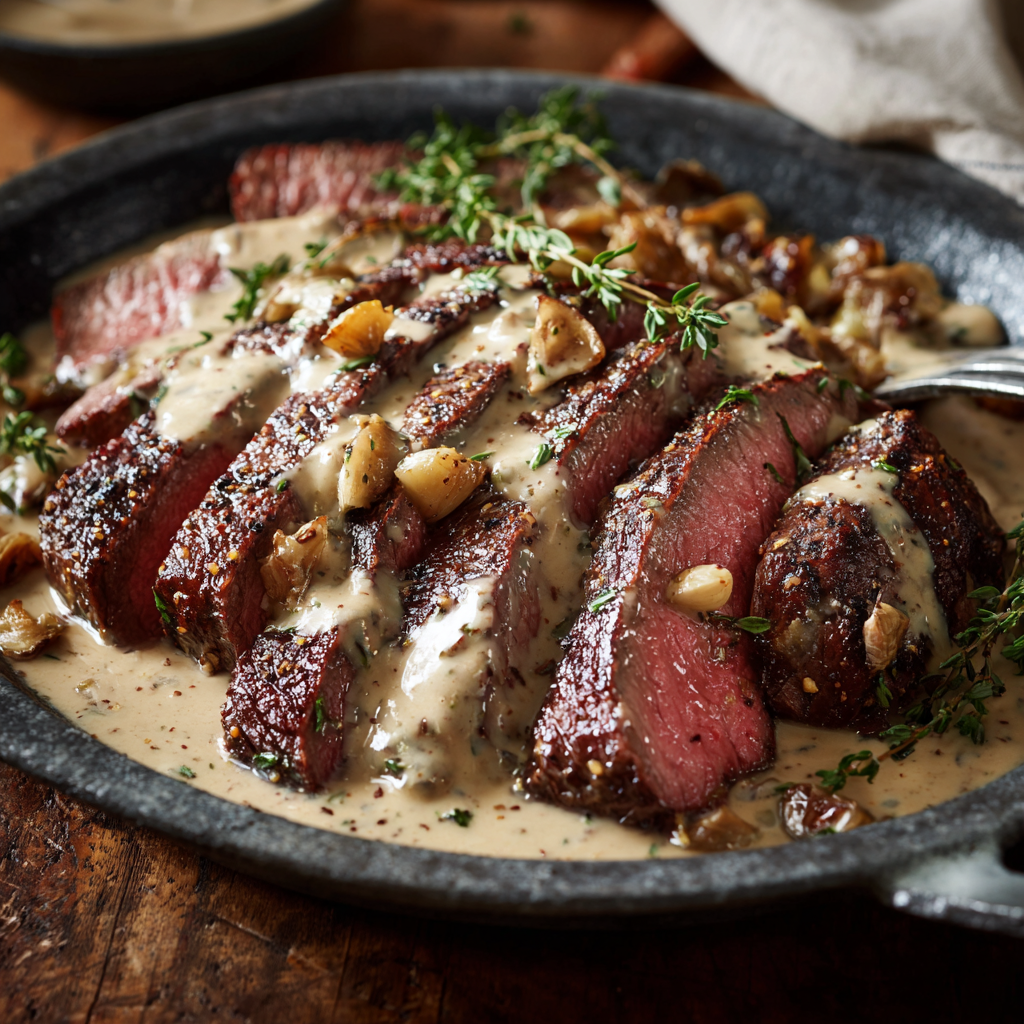
Why This Recipe Works
There are a thousand ways to cook a steak, but this specific combination of ingredients and technique stands out for several reasons:
- Texture Contrast: The cast iron provides a hard, caramelized crust, while the inside remains buttery and tender.
- Flavor Depth: The whiskey deglazes the pan, lifting the caramelized beef sugars and adding notes of oak, vanilla, and caramel which pair perfectly with the savory garlic.
- Simplicity: Despite its fancy appearance, this is a one-pan meal. Less cleanup means more time to enjoy your dinner.
- The “Underrated” Cut: Using bavette steak is cheaper than a ribeye or filet mignon but, many argue, delivers far superior flavor.
What is Bavette Steak?
Bavette comes from the bottom sirloin area of the cow. In French butchery, bavette d’aloyau is highly prized. In the United States, you might see it labeled as “flap steak” or “sirloin tips.” It has a coarse grain, similar to flank steak, which makes it perfect for holding onto sauces. Because the muscle fibers are distinct, it is crucial to slice this meat against the grain to ensure every bite is tender.
If you cannot find bavette steak at your local grocery store, you can substitute it with flank steak, skirt steak, or even a hanger steak. However, the bavette offers a unique thickness that allows for a better gradient of doneness compared to the thinner skirt steak.
Ingredients
For the Steak
- Bavette Steak (1.5 – 2 lbs): Look for a piece with good internal marbling and a uniform thickness.
- Coarse Kosher Salt: Essential for drawing out moisture and creating a crust.
- Freshly Cracked Black Pepper: Use a coarse grind for texture.
- Neutral Oil (2 tbsp): Avocado oil or grapeseed oil is best due to their high smoke points. Olive oil will burn at the temperatures needed for searing.
- Unsalted Butter (2 tbsp): For basting the steak near the end of the cooking process.
- Fresh Thyme (3-4 sprigs): Adds an aromatic, earthy note during the basting phase.
For the Whiskey Garlic Cream Sauce
- Whiskey or Bourbon (1/3 cup): Use a whiskey you would enjoy drinking. Bourbon adds sweetness; Rye adds spice. Avoid peated scotches as the smoky flavor can be overpowering.
- Garlic (4-5 cloves): Minced finely. We want a heavy garlic punch here.
- Beef Broth or Stock (1/2 cup): Use high-quality or bone broth for the best body.
- Heavy Cream (3/4 cup): Do not substitute with milk or half-and-half, as they will not thicken properly and may curdle when mixed with the alcohol and heat.
- Dijon Mustard (1 tsp): Optional, but helps emulsify the sauce and adds a tangy depth.
- Fresh Parsley: Chopped, for garnish.
Instructions
Step 1: Prep the Steak
Remove your bavette steak from the refrigerator at least 45 minutes before cooking. This allows the meat to come to room temperature, ensuring it cooks evenly. Pat the steak completely dry with paper towels. Moisture is the enemy of a good sear; if the steak is wet, it will steam instead of brown. Season generously on all sides with coarse salt and black pepper.
Step 2: The Sear
Place a large cast iron skillet over high heat. Let it get smoking hot—literally. Add the neutral oil and swirl to coat the pan. Carefully lay the steak into the skillet away from you to avoid oil splatter. Sear undisturbed for 3-4 minutes until a deep, dark brown crust forms. Flip the steak.
Step 3: Baste and Finish
Once flipped, reduce the heat to medium-high. Add the 2 tablespoons of butter and the fresh thyme sprigs to the pan. As the butter melts and foams, tilt the pan slightly and use a large spoon to continuously scoop the hot, herb-infused butter over the steak. Continue cooking until the internal temperature reaches 125°F (52°C) for medium-rare, usually another 3-4 minutes depending on thickness.
Step 4: Rest the Meat
Remove the steak from the pan and place it on a cutting board or warm plate. Tent loosely with foil. Do not skip this step. Resting for 10 minutes allows the muscle fibers to relax and reabsorb the juices. If you cut it now, all the liquid will bleed out, leaving you with dry meat.
Step 5: Make the Whiskey Sauce
While the steak rests, return the cast iron skillet to medium heat. Do not wipe out the pan; those browned bits (fond) are flavor gold. Add the minced garlic and sauté for 30 seconds until fragrant, being careful not to burn it.
Remove the pan from the heat source momentarily (for safety) and pour in the whiskey. Return to heat. Be careful, as the alcohol may flambé (catch fire). If it does, just let the flame die down naturally. Scrape the bottom of the pan with a wooden spoon to lift the fond. Let the whiskey reduce by half, which takes about 1-2 minutes.
Step 6: Cream and Simmer
Add the beef broth and Dijon mustard, whisking to combine. Let this bubble for 2 minutes to concentrate the flavors. Lower the heat to medium-low and pour in the heavy cream. Simmer gently—do not boil vigorously—until the sauce thickens enough to coat the back of a spoon. This should take 3-5 minutes. Taste and adjust seasoning with extra salt or pepper if needed.
Step 7: Serve
Slice the rested bavette steak against the grain into ½ inch thick slices. Arrange on a platter and pour the hot whiskey garlic cream sauce generously over the meat. Garnish with fresh parsley or extra thyme.
Tips for the Perfect Pan Sauce
The difference between a broken, greasy sauce and a glossy, restaurant-quality emulsion is temperature control. When adding the heavy cream, ensure your heat isn’t too high. If the sauce looks like it’s separating (oil pooling away from the cream), add a splash of cold water or cold cream and whisk vigorously to bring it back together.
Also, selecting the right whiskey matters. You don’t need a $100 bottle, but avoid the cheapest plastic jug options. A mid-range Bourbon like Buffalo Trace, Maker’s Mark, or Bulleit works exceptionally well because the corn base adds a sweetness that complements the char of the beef.
Serving Suggestions
This dish is rich and indulgent, so it pairs best with sides that can soak up the sauce or cut through the richness.
- Garlic Mashed Potatoes: The classic choice. Make a well in the potatoes and fill it with extra sauce.
- Roasted Asparagus or Broccolini: The bitterness of charred greens cuts through the heavy cream sauce beautifully.
- Crusty Sourdough Bread: Essential for mopping up every last drop of the whiskey garlic cream from the cast iron skillet.
Variations
Mushroom Whiskey Sauce: If you love earthy flavors, add sliced cremini or shiitake mushrooms to the pan at the same time as the garlic. Sauté them until browned before adding the whiskey.
Dairy-Free Option: While heavy cream is standard, you can use full-fat coconut milk for a dairy-free version. Note that this will impart a slight coconut flavor, which actually pairs surprisingly well with the whiskey and beef.
Blue Cheese Finish: For an extra layer of umami, crumble some Gorgonzola or Roquefort cheese into the sauce right at the end of the cooking process, stirring until melted.
Frequently Asked Questions
How do I know which way the grain runs?
On a bavette steak, the muscle fibers are very visible lines running across the meat. You want to position your knife perpendicular (at a 90-degree angle) to these lines to cut them short. This ensures the meat is tender to chew.
Can I use a non-stick pan?
You can, but you won’t get the same deep, dark crust that cast iron or stainless steel provides. The “fond” also doesn’t develop as well in non-stick, meaning your sauce will be less flavorful.
Is the alcohol safe for kids?
Most of the alcohol evaporates during the reduction and simmering process, leaving behind only the flavor. However, a trace amount may remain. If you prefer to cook without alcohol, you can substitute the whiskey with additional beef broth and a splash of apple cider vinegar for acidity.
Mastering this Cast Iron Bavette Steak with Whiskey Garlic Cream Sauce will add a powerful weapon to your culinary arsenal. It’s a dish that screams sophistication but whispers simplicity, perfect for date nights, dinner parties, or just a Tuesday night where you feel like treating yourself.
Cast Iron Bavette Steak with Whiskey Garlic Cream Sauce
Ingredients
Equipment
Method
- Remove steak from fridge 45 minutes prior to cooking. Pat dry and season liberally with salt and pepper.
- Heat oil in a cast iron skillet over high heat until smoking. Sear steak for 3-4 minutes per side until deeply browned.
- Reduce heat to medium-high. Add butter and thyme sprigs. Baste the steak with the foaming butter for 2-3 minutes until internal temp reaches 125°F (medium-rare).
- Remove steak to a board to rest for 10 minutes. Keep the skillet on the heat.
- Add minced garlic to the steak drippings and sauté for 30 seconds.
- Deglaze the pan with whiskey, scraping up browned bits. Simmer for 1-2 minutes to reduce alcohol.
- Add beef broth and Dijon mustard. Simmer 2 minutes. Stir in heavy cream and simmer gently until sauce coats the back of a spoon.
- Slice steak against the grain and top with the hot cream sauce. Serve immediately.