Bacon & Corn Griddle Cakes: The Ultimate Sweet and Savory Breakfast
Introduction: The Best of Both Brunch Worlds
Weekend mornings bring with them a unique sense of culinary possibility. As the workweek fades into the rearview mirror, the kitchen transforms into a sanctuary where time slows down, and breakfast evolves from a rushed necessity into a cherished ritual. However, this leisurely pace often brings about the eternal brunch dilemma: do you crave something sweet, or are you in the mood for something savory? The sweet camp dreams of fluffy pancakes drowned in maple syrup, while the savory camp yearns for crispy bacon, eggs, and hearty flavors. Thankfully, you no longer have to choose. These Bacon & Corn Griddle Cakes elegantly bridge the gap, offering the ultimate solution for the indecisive brunch enthusiast.
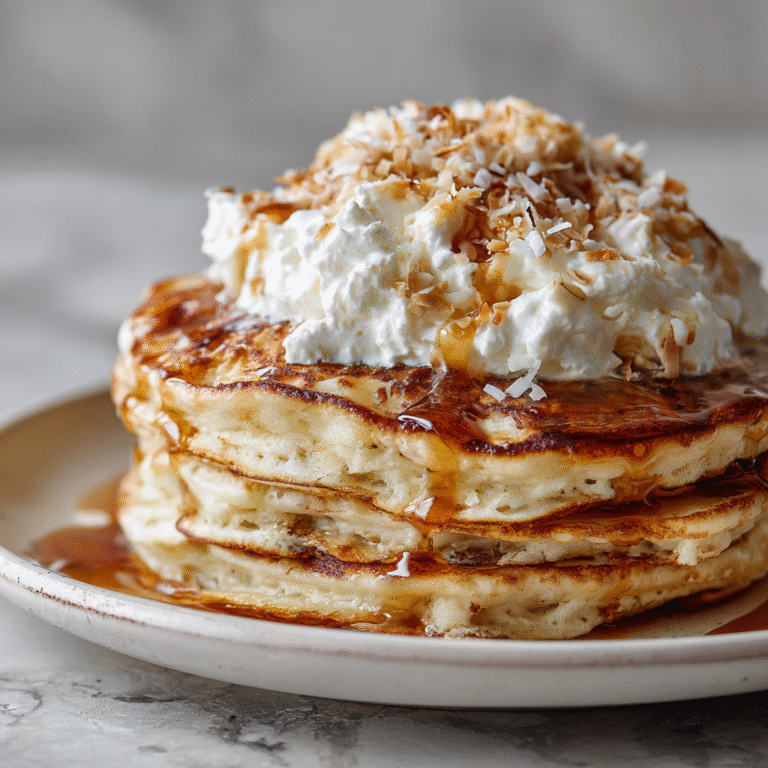
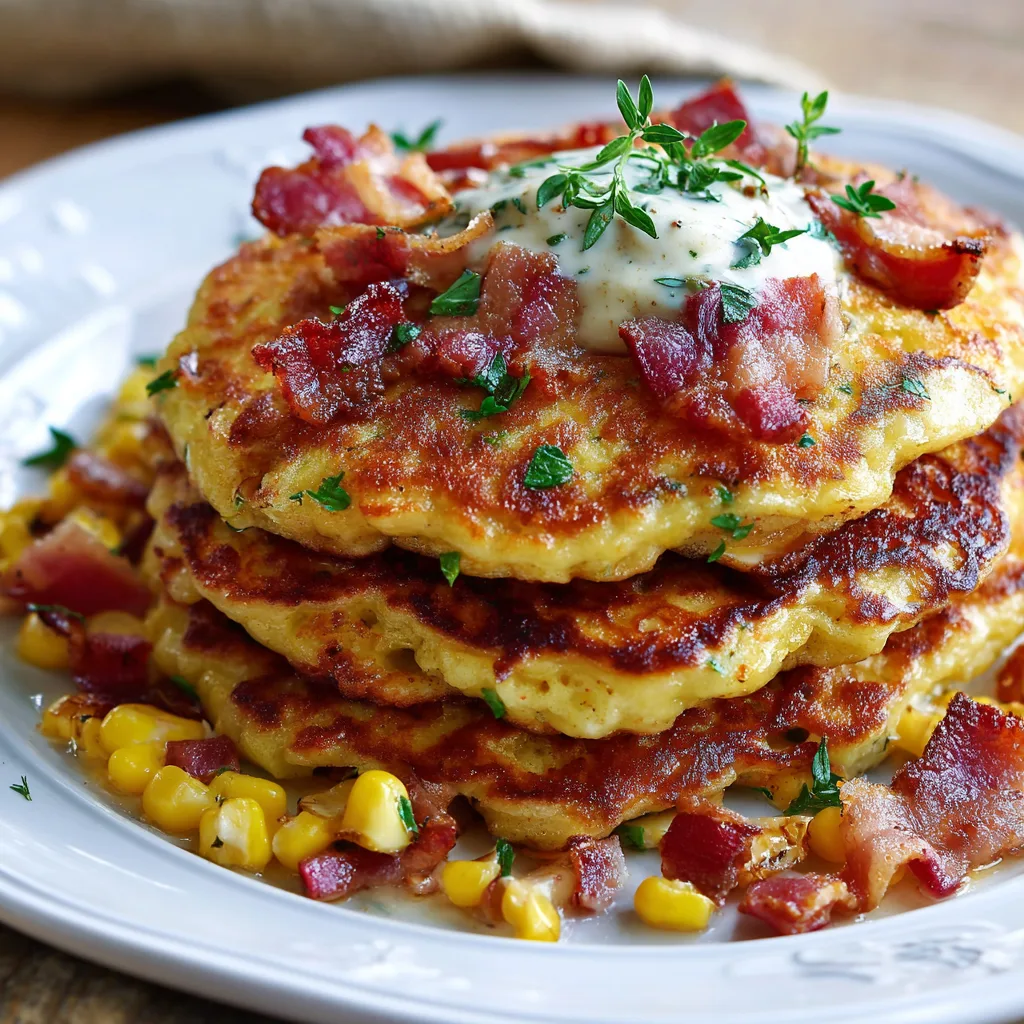
Imagine slicing into a towering stack of incredibly fluffy, buttermilk-rich pancakes. But instead of standard blueberries or chocolate chips, your fork encounters vibrant bursts of sweet, juicy corn, the salty, smoky crunch of perfectly cooked bacon, and the subtle, sharp bite of fresh green onions. When crowned with a pat of melting butter and a heavy drizzle of pure maple syrup, every single bite becomes a masterclass in flavor balancing. The interplay of the savory add-ins with the naturally sweet corn and the sugary syrup creates a complex, addictive taste profile that hits every single pleasure center on your palate.
This recipe takes the rustic charm of a classic diner griddle cake and elevates it into a modern breakfast masterpiece. It is hearty enough to serve as a standalone meal for a hungry family, yet visually impressive enough to be the star attraction at your next brunch gathering. Prepare to redefine your weekend breakfast routine with a dish that celebrates the absolute best of sweet and savory harmony.
The Magic of Sweet and Savory Combinations
The culinary world has long understood the power of contrasting flavors, and the combination of sweet and savory—often referred to as “swavory”—is a foundational pillar of modern gastronomy. But why does this specific combination work so exceptionally well in these griddle cakes?
Palate Fatigue Prevention: When we eat a meal that is entirely sweet (like a massive plate of plain pancakes with syrup), our taste buds can quickly become overwhelmed, leading to palate fatigue. You might find yourself unable to finish the plate simply because it is too cloying. By introducing savory elements like bacon and green onions, you reset the palate with every bite, making the dish continuously interesting and allowing you to enjoy the meal from start to finish without feeling overwhelmed by sugar.
Flavor Enhancement: Salt is a natural flavor enhancer. The sodium in the bacon does not just make the pancake taste salty; it actually amplifies the perception of sweetness in the corn and the maple syrup. This is the same scientific principle behind salted caramel or adding a pinch of sea salt to chocolate chip cookies. The bacon elevates the entire flavor profile of the griddle cake.
Textural Diversity: Beyond taste, this recipe excels in its textural variety. You have the pillowy, cloud-like softness of the griddle cake crumb, the sudden, juicy pop of the sweet corn kernels, and the satisfying, brittle crunch of the bacon bits. This dynamic mouthfeel keeps your brain engaged and makes eating a far more satisfying experience.
Griddle Cakes vs. Pancakes: What is the Difference?
You might be wondering why we are calling these “griddle cakes” rather than simply “pancakes.” While the terms are often used interchangeably in modern kitchens, there are subtle historical and textural distinctions between the two.
Historically, pancakes were exactly what they sound like: cakes cooked in a pan. They were often thinner, relying on simpler batters, and were popularized in European cuisines (like crêpes or the slightly thicker British pancakes). Griddle cakes, on the other hand, have deep roots in American culinary history. They were traditionally cooked on a large, flat, cast-iron griddle suspended over an open fire or on a wood-burning stove.
From a recipe standpoint, griddle cakes often feature a thicker, more robust batter designed to hold up to heartier mix-ins—like the corn and bacon used here. They typically rely heavily on buttermilk and baking soda to achieve a spectacular rise and a tender, slightly denser crumb than a delicate, airy pancake. Calling them griddle cakes evokes a sense of rustic, comforting Americana that perfectly suits this hearty recipe.
Key Ingredients for the Perfect Batter
The foundation of this recipe is a classic, foolproof buttermilk batter. To achieve griddle cake perfection, it is essential to understand the role of your primary ingredients.
The Buttermilk Advantage: Real buttermilk is non-negotiable for authentic griddle cakes. Its acidity tenderizes the gluten in the flour, ensuring a soft, melt-in-your-mouth texture. Furthermore, that lactic acid reacts vigorously with the baking soda, creating thousands of tiny carbon dioxide bubbles that lift the batter and create a towering, fluffy stack. The slight tanginess of the buttermilk also beautifully cuts through the richness of the bacon fat and maple syrup.
The Sweet Corn: You have a few options here. Freshly cut corn off the cob provides the best crisp texture and natural sweetness, making it ideal during late summer. However, high-quality frozen sweet corn (thawed and patted dry) or well-drained canned corn work wonderfully year-round. The key is to ensure the corn isn’t overly wet, which could make the batter soggy.
The Bacon: Thick-cut, applewood or hickory-smoked bacon provides the best results. You want to cook it until it is extra crispy, as it will soften slightly once folded into the wet batter. Reserve a little bit of the rendered bacon fat to grease your griddle—it adds an incredible layer of savory flavor to the exterior of the cakes.
The Green Onions (Scallions): Do not skip these! The bright, slightly pungent, peppery bite of the green onions acts as a crucial counterpoint to the heavy, rich flavors of the bacon and syrup. They add a necessary pop of freshness that brightens the entire dish.
Ingredients You Will Need
Gather these ingredients before you begin. Having everything measured and ready (mise en place) ensures your griddle cakes cook evenly and perfectly.
- For the Batter:
- 2 cups all-purpose flour
- 2 tablespoons granulated sugar
- 2 teaspoons baking powder
- 1/2 teaspoon baking soda
- 1 teaspoon kosher salt
- 2 large eggs, room temperature
- 2 cups well-shaken buttermilk, room temperature
- 1/4 cup (1/2 stick) unsalted butter, melted and slightly cooled
- For the Mix-ins:
- 8 slices thick-cut bacon, cooked crispy and crumbled (reserve 1 tbsp of bacon grease)
- 1 1/2 cups sweet corn kernels (fresh, frozen and thawed, or canned and thoroughly drained)
- 1/2 cup fresh green onions (scallions), thinly sliced
- For Serving:
- Softened butter
- High-quality, pure maple syrup
- Extra crumbled bacon (optional)
Step-by-Step Instructions
Follow these steps carefully to achieve the ultimate fluffy texture and perfectly golden-brown exterior.
Bacon & Corn Griddle Cakes
Ingredients
Equipment
Method
- Cook the bacon until crispy. Drain, crumble, and reserve 1 tablespoon of the bacon grease for the griddle.
- In a large bowl, whisk together the flour, sugar, baking powder, baking soda, and kosher salt.
- In a separate bowl, whisk the eggs, buttermilk, and melted butter until smooth.
- Pour the wet ingredients into the dry ingredients. Gently fold together until just combined. Lumps are okay; do not overmix.
- Gently fold in the crumbled bacon, sweet corn, and sliced green onions. Let the batter rest for 10 minutes.
- Preheat a griddle or large skillet over medium heat. Brush lightly with the reserved bacon grease or butter.
- Pour 1/3 cup portions of batter onto the hot griddle. Cook for 3-4 minutes until bubbles form on top and edges appear dry.
- Flip the griddle cakes and cook for an additional 2-3 minutes until golden brown and cooked through.
- Serve immediately with softened butter and a generous pour of maple syrup.
Notes
- Cook the Bacon: In a large skillet over medium heat, or baked on a foil-lined sheet pan in a 400°F oven, cook the bacon until very crispy. Transfer the cooked bacon to a paper towel-lined plate to drain. Once cooled, chop or crumble into small pieces. Reserve 1 tablespoon of the liquid bacon grease for cooking the griddle cakes.
- Combine Dry Ingredients: In a large mixing bowl, whisk together the all-purpose flour, granulated sugar, baking powder, baking soda, and kosher salt until well aerated and combined.
- Mix Wet Ingredients: In a separate medium bowl, whisk the room temperature eggs until slightly beaten. Add the buttermilk and the melted, cooled butter. Whisk vigorously until the wet ingredients are completely homogenous.
- Form the Batter: Pour the wet ingredients into the center of the dry ingredients. Using a rubber spatula or a wooden spoon, gently fold the mixture together. Stop mixing when there are still a few streaks of flour visible. The batter should be thick and slightly lumpy; do not overmix, or your griddle cakes will be tough.
- Fold in the Add-ins: Gently fold the crumbled bacon (reserving a small handful for garnish if desired), the prepared sweet corn, and the sliced green onions into the batter. Give it just three or four folds to distribute the ingredients evenly without overworking the gluten.
- Rest the Batter: Allow the batter to sit undisturbed for 10 minutes. This rest period is crucial; it allows the flour to hydrate fully and gives the baking soda time to react with the buttermilk, resulting in a fluffier final product.
- Preheat the Griddle: While the batter rests, heat a large cast-iron skillet, an electric griddle, or a non-stick pan over medium heat (about 350°F on an electric griddle). Lightly brush the surface with the reserved bacon grease (or a little extra butter or oil).
- Cook the Griddle Cakes: Using a 1/3 cup measuring cup or a large cookie scoop, portion the batter onto the hot griddle. Leave about 2 inches of space between each cake, as they will spread. Cook for 3 to 4 minutes on the first side. You will know they are ready to flip when the edges look set and dry, and bubbles begin to pop and leave tiny holes on the surface of the batter.
- Flip and Finish: Carefully slide a wide spatula under the cakes and flip them in one swift motion. Cook for an additional 2 to 3 minutes on the second side, or until golden brown and cooked through.
- Serve Immediately: Transfer the cooked griddle cakes to a warm plate. Top with a generous pat of softened butter, a heavy drizzle of warm maple syrup, and an extra sprinkle of bacon bits. Enjoy immediately!
Pro Tips for the Fluffiest Griddle Cakes
Making pancakes might seem straightforward, but mastering them requires technique. Keep these professional tips in mind:
- Do Not Overmix: This is the golden rule of pancake and muffin batters. Overmixing develops gluten, which leads to dense, rubbery cakes. Lumps in your batter are completely fine and actually preferred!
- Temperature Control: If your pan is too hot, the outside of the griddle cake will burn before the thick, hearty interior has a chance to cook through. If it is too cold, the cakes will absorb the fat and become greasy. Medium heat is usually the sweet spot, but be prepared to adjust your dial down slightly as you cook multiple batches and the pan retains heat.
- The “Wipe Down” Method: If you are making a large batch, butter and bacon grease can burn in the pan over time, leaving bitter black specks on your later batches. Between batches, quickly wipe out the skillet with a wadded paper towel and re-grease it lightly.
- Keep Them Warm: If you are cooking for a crowd and need to serve everyone at once, preheat your oven to 200°F (90°C). Place a wire cooling rack inside a rimmed baking sheet in the oven. Transfer finished griddle cakes to the wire rack in the warm oven. The rack prevents the bottoms from getting soggy while you finish cooking the rest of the batter.
Delicious Variations and Customizations
This recipe is highly adaptable. Use it as a canvas for your own culinary creativity depending on what you have in the fridge.
The Cheesy Upgrade: For an even more savory experience, fold 1/2 cup of shredded sharp cheddar cheese or pepper jack cheese into the batter along with the corn and bacon. The cheese melts into gooey pockets within the cake.
Spicy Kick: If you love heat, finely dice half of a fresh jalapeño pepper (seeds removed for a milder heat, left in for a serious kick) and add it to the batter. The heat pairs beautifully with the sweet maple syrup.
Sausage Swap: If you are not a fan of bacon, this recipe works remarkably well with cooked, crumbled breakfast sausage. A maple-sage sausage will echo the flavors of the syrup brilliantly.
Brown Butter Maple Syrup: Elevate your topping by browning a few tablespoons of butter in a small saucepan until it smells nutty and fragrant. Whisk in your pure maple syrup and a pinch of flaky sea salt, and serve this warm concoction over the cakes.
Make-Ahead, Storage, and Reheating
Griddle cakes are fantastic for meal prep, making busy weekday mornings feel like a luxurious weekend.
Storing Leftovers: Allow any leftover cooked griddle cakes to cool completely to room temperature. Store them in an airtight container or a zip-top bag in the refrigerator for up to 4 days.
Freezing for the Future: These cakes freeze beautifully. To prevent them from sticking together, place the cooled cakes in a single layer on a baking sheet and freeze for 1 hour until solid. Once frozen solid, transfer them to a freezer-safe bag, squeezing out as much air as possible. They will keep in the freezer for up to 2 months.
The Best Reheating Methods: Skip the microwave if possible, as it can make the cakes tough and rubbery. The best way to reheat griddle cakes (straight from the fridge or freezer) is to pop them into a standard toaster or toaster oven. This crisps up the edges beautifully while warming the inside. Alternatively, you can reheat them on a baking sheet in a 350°F oven for about 5-8 minutes.
Frequently Asked Questions (FAQs)
Can I make the batter the night before?
While you can mix the dry ingredients and wet ingredients in separate bowls the night before, you should not combine them until right before you are ready to cook. The leavening power of the baking soda begins the second it touches the acidic buttermilk. If you let the mixed batter sit overnight, the bubbles will dissipate, and your griddle cakes will turn out flat and dense.
What if I don’t have buttermilk?
Real buttermilk is highly recommended, but in a pinch, you can make a sour milk substitute. Add 2 tablespoons of white vinegar or fresh lemon juice to a liquid measuring cup. Fill it to the 2-cup line with whole milk. Stir and let it sit for 5 to 10 minutes until it slightly curdles and thickens. Use this mixture exactly as you would the buttermilk in the recipe.
Can I use a pancake mix as a shortcut?
Yes, you can! If you are short on time, use your favorite high-quality, “just add water” or “add milk/egg” boxed pancake mix. Prepare the batter according to the package directions (aiming for about 4 cups of prepared batter), and then simply fold in the cooked bacon, sweet corn, and green onions. It will lack the from-scratch buttermilk tang, but it will still be a delicious swavory shortcut.
Why are my griddle cakes raw in the middle?
If your cakes are dark brown on the outside but gummy and raw on the inside, your heat is too high, and your cakes might be too thick. Turn the heat down to medium-low. This allows the heat to penetrate to the center of the thick batter without burning the exterior. Also, resist the urge to press down on the cakes with your spatula while they cook; this squeezes out the air and makes them dense.
Conclusion: Elevate Your Morning Routine
The Bacon & Corn Griddle Cake is more than just a recipe; it is a celebration of flavor and comfort. By marrying the nostalgic, syrupy sweetness of a classic pancake breakfast with the robust, savory satisfaction of bacon and fresh produce, you create a meal that truly satisfies every craving. Whether you are hosting a festive holiday brunch, treating your family to a special Sunday morning feast, or simply indulging in some well-deserved weekend self-care, these griddle cakes are guaranteed to steal the show.
So, preheat your skillet, chop up those green onions, and prepare to flip your way to breakfast perfection. Once you experience the magic of sweet corn, salty bacon, and maple syrup all in one fluffy bite, standard pancakes will simply never look the same again.