The Ultimate Marbled Carrot Cake Cheesecake
The Ultimate Marbled Carrot Cake Cheesecake: A Showstopping Dessert Mashup
In the vast, wonderful world of dessert, there are certain flavor profiles that stand the test of time, commanding respect and drool-worthy anticipation whenever they make an appearance. Carrot cake, with its earthy sweetness, warming spices, and incredibly moist crumb, is a beloved classic, especially during the spring holidays and crisp autumn months. Cheesecake, on the other hand, is the undisputed king of rich, decadent, creamy indulgence. But what happens when you refuse to choose between the two? What happens when you combine the rustic, spiced charm of a traditional carrot cake with the luxurious, velvety elegance of a New York-style cheesecake? You get a culinary masterpiece: The Marbled Carrot Cake Cheesecake.
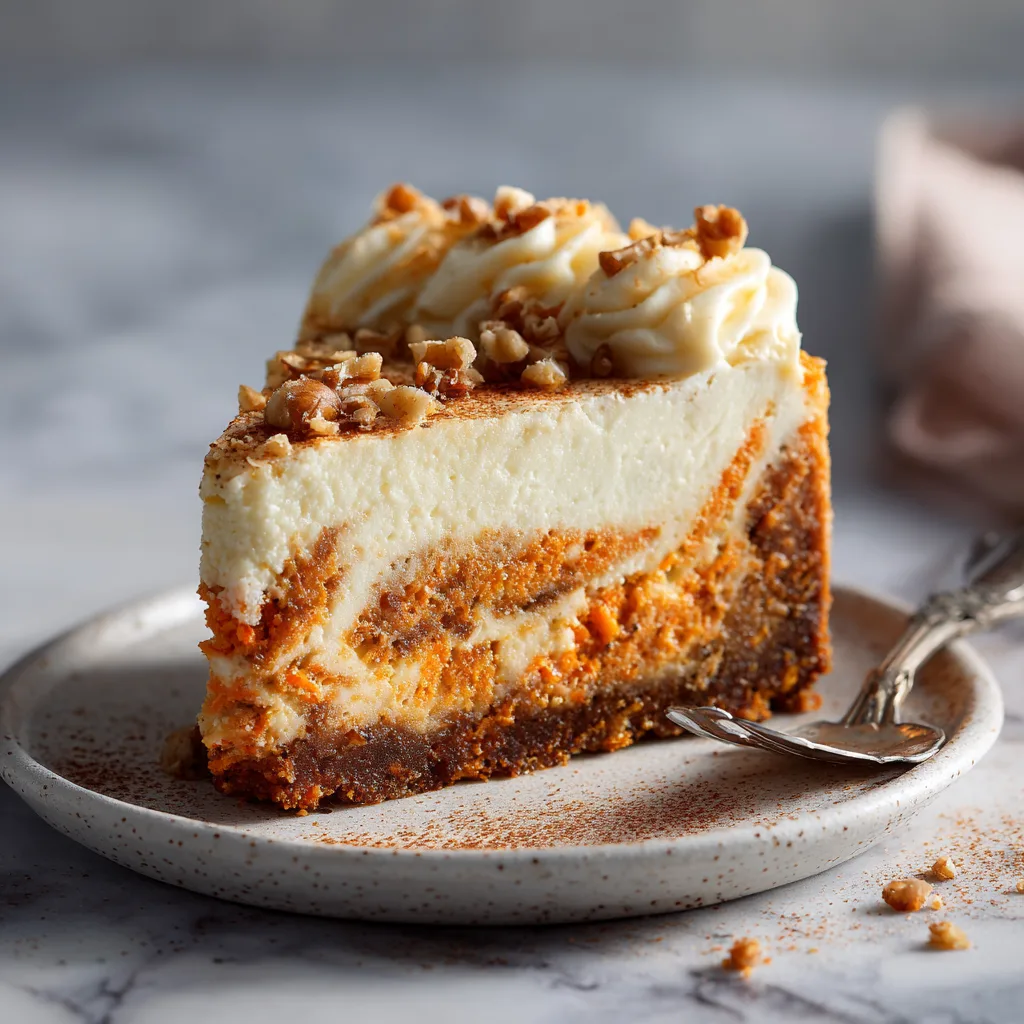
This isn’t merely a cheesecake with a carrot cake crust, nor is it a carrot cake simply slathered in cream cheese frosting. This is a meticulously engineered, visually stunning hybrid where the two distinct batters are swirled together and baked simultaneously in a single springform pan. Every single forkful delivers the ultimate textural and flavor contrast: the dense, tangy richness of vanilla bean cheesecake melting perfectly into the soft, heavily spiced, texturally complex bite of freshly grated carrot cake. Finished with a crown of tangy cream cheese frosting and toasted walnuts, this dessert is designed to stop conversations, elicit gasps of delight, and cement your status as a legendary baker among your family and friends.
Why This Dessert is the Ultimate Culinary Showstopper
Creating a hybrid dessert is often a risky endeavor. Sometimes, combining two great things results in a muddled, confusing final product. However, the Carrot Cake Cheesecake is the exception that proves the rule. The reason this combination is so phenomenally successful lies in the intrinsic relationship between the components. Carrot cake practically demands cream cheese frosting; it is a pairing ordained by the dessert gods. The tanginess of the cream cheese perfectly cuts through the intense sweetness and heavy spices (cinnamon, nutmeg, cloves) of the cake. By transforming that frosting concept into an entire cheesecake layer, you are simply taking a classic flavor pairing and elevating its volume and texture to unprecedented heights.
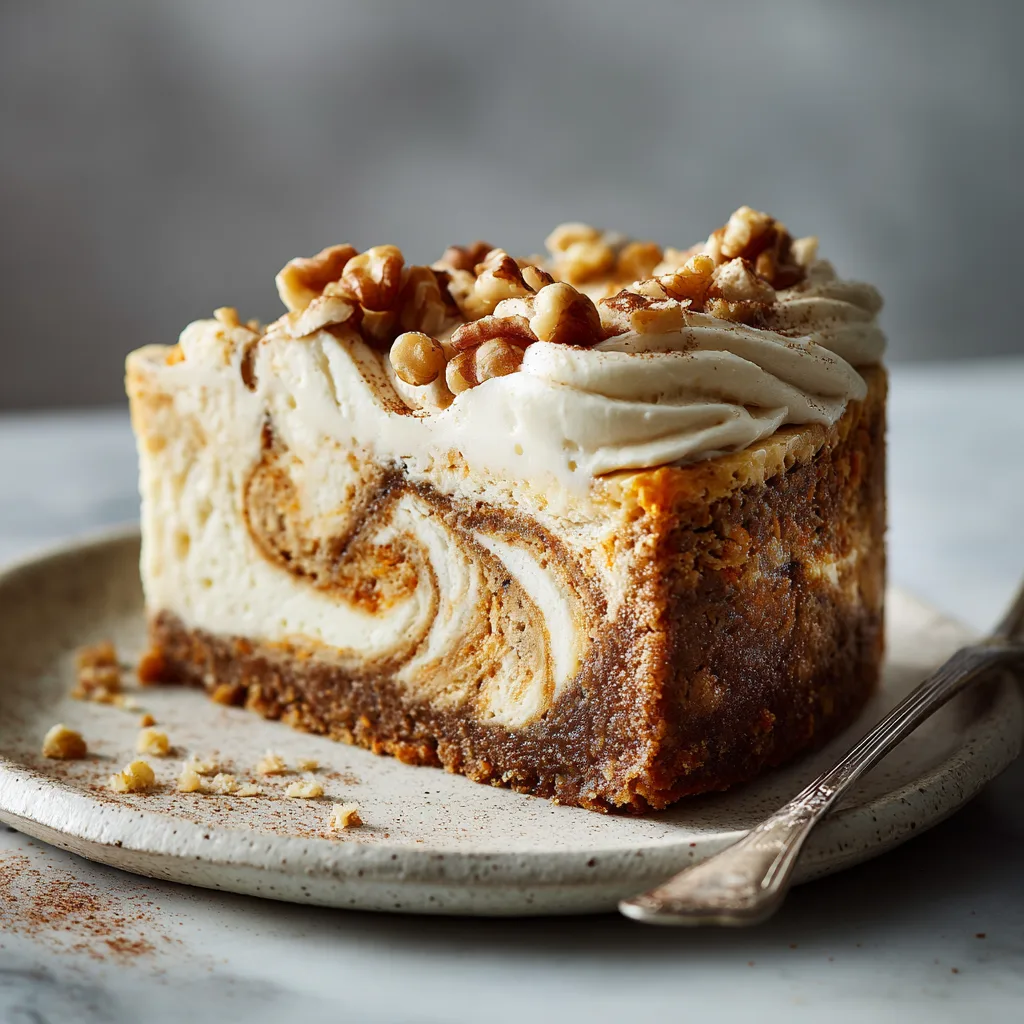
Visually, the dessert is a triumph. When you slice into the finished cake, you are greeted with a beautiful, organic, marbled pattern. The vibrant, golden-orange hue of the carrot cake starkly contrasts against the pristine, creamy white of the cheesecake. It looks incredibly complex and professional, suggesting hours of painstaking labor. Yet, the secret—which we will detail in the instructions below—is that achieving this marbling is actually quite simple, requiring nothing more than a spoon and a little bit of strategic layering.
The Anatomy of a Perfect Hybrid Cake: Understanding the Science
Baking two entirely different batters in the same pan at the same time requires a bit of baking chemistry knowledge. A standard cake batter relies on chemical leaveners (baking soda and baking powder) to rise quickly and create a light, airy crumb. A cheesecake batter, conversely, is essentially a baked custard. It relies on the coagulation of egg proteins to set, requiring a gentle, slow, and humid baking environment to prevent it from curdling or cracking.
To successfully marry these two, we must tweak the carrot cake recipe slightly. We reduce the leavening agents just a fraction so the cake doesn’t rise so aggressively that it swallows the heavier cheesecake batter. We also use oil instead of butter in the carrot cake portion. Oil remains liquid at room temperature, ensuring the carrot cake portions remain incredibly moist even after being refrigerated—a crucial step for the cheesecake portion. The cheesecake batter must be incredibly smooth and dense to hold its own against the cake, requiring room-temperature ingredients and minimal aeration during mixing.
Key Ingredients for the Perfect Bake
The quality of your ingredients will directly dictate the success of this monumental dessert. Here is a deep dive into what you need and why:
- Fresh Carrots: This is non-negotiable. You must buy whole carrots and grate them yourself, preferably using the fine side of a box grater. Pre-shredded carrots from the grocery store are coated in starches to prevent clumping; they are dry, lack natural sugars, and will result in a tough, flavorless cake.
- Full-Fat Cream Cheese (Blocks): Do not use whipped cream cheese or cream cheese spread sold in tubs. You need the dense, foil-wrapped blocks of full-fat cream cheese for the structure and richness of both the cheesecake layer and the frosting. Reduced-fat versions will lead to a watery, unstable cheesecake.
- Neutral Oil: Canola, vegetable, or a light olive oil works perfectly for the carrot cake batter. It provides superior moisture compared to butter and ensures the cake remains soft when chilled.
- Warm Spices: High-quality ground cinnamon, nutmeg, and a tiny pinch of cloves provide the signature carrot cake flavor. Ensure your spices are relatively fresh; spices that have sat in a pantry for five years have lost their volatile oils and flavor.
- Brown and White Sugars: The carrot cake utilizes a mix of both. Brown sugar adds molasses, chewiness, and depth, while white sugar provides clean sweetness and structure. The cheesecake batter uses strictly white granulated sugar to maintain its pristine color.
- Large Eggs: The binding agents for both batters. It is absolutely imperative that your eggs are at room temperature before you begin mixing. Cold eggs will cause the cream cheese to seize, resulting in a lumpy cheesecake.
- Sour Cream: Added to the cheesecake batter to soften the texture of the cheese and add a pleasant, bright tanginess that lightens the overall profile of the heavy dessert.
- Toasted Walnuts or Pecans: Essential for adding a necessary textural crunch to contrast the soft cake and creamy cheesecake. Toasting them briefly in a skillet or oven amplifies their nutty flavor.
Step-by-Step Instructions: Mastering the Mashup
Preparation and Mis en Place
- Preheat your oven to 350°F (175°C). Prepare a 9-inch springform pan. Spray the bottom and sides lightly with non-stick baking spray, then line the bottom with a circle of parchment paper. Wrap the outside of the springform pan tightly with three layers of heavy-duty aluminum foil. This is crucial as the cake will be baked in a water bath to ensure the cheesecake sets gently without cracking.
- Set a kettle of water to boil for the water bath. Ensure all cold ingredients (cream cheese, eggs, sour cream) have been sitting at room temperature for at least two hours.
1. Prepare the Spiced Carrot Cake Batter
- In a medium mixing bowl, whisk together the dry ingredients: all-purpose flour, baking powder, baking soda, ground cinnamon, ground nutmeg, ground cloves, and salt. Whisk thoroughly to ensure the leavening agents and spices are evenly distributed.
- In a separate, larger bowl, whisk together the neutral oil, granulated sugar, and brown sugar until well combined. Add the room-temperature eggs one at a time, whisking vigorously after each addition until the mixture is smooth and slightly emulsified. Whisk in the vanilla extract.
- Gently fold the dry flour mixture into the wet ingredient mixture using a rubber spatula. Mix just until no large pockets of dry flour remain. Do not overmix, or the cake will be tough.
- Fold in the freshly grated carrots until evenly dispersed throughout the batter. Set this bowl aside.
2. Prepare the Creamy Cheesecake Batter
- In the bowl of a stand mixer fitted with the paddle attachment (or using a hand mixer), beat the softened cream cheese on medium-low speed until it is completely smooth and free of any lumps. This should take about 2-3 minutes. Scrape down the sides and bottom of the bowl frequently.
- Gradually add the granulated sugar while mixing on low speed. Once the sugar is incorporated, add the sour cream and vanilla extract, mixing just until combined.
- Add the room-temperature eggs one at a time, mixing on the lowest possible speed. Mix just until the yolk disappears into the batter, then stop. Overmixing at this stage incorporates air bubbles, which will rise to the surface during baking and cause the cheesecake to crack.
3. The Art of Assembly and Marbling
- Pour about half of the carrot cake batter into the prepared springform pan, spreading it into an even layer with an offset spatula.
- Using a large spoon or a cookie scoop, dollop about half of the cheesecake batter randomly over the carrot cake layer.
- Spoon the remaining carrot cake batter into the gaps between the cheesecake dollops. Finally, pour the remaining cheesecake batter over the top, filling in the remaining spaces.
- Take a butter knife or a wooden skewer and gently swirl the two batters together. Insert the knife deep into the pan and move it in figure-eight motions, pulling the bottom batter up and pushing the top batter down. Do not over-swirl, or the colors will muddy together; you want distinct, large pockets of each batter.
4. The Crucial Baking and Cooling Process
- Place the foil-wrapped springform pan into a larger roasting pan. Carefully pour the boiling water from your kettle into the roasting pan until it reaches about halfway up the sides of the springform pan. This water bath (bain-marie) creates a steamy, humid environment that cooks the delicate cheesecake gently and evenly.
- Carefully transfer the roasting pan to the center rack of your preheated oven. Bake for 60 to 75 minutes. The cake is done when the edges are set and slightly puffed, but the very center (about a 2-inch circle) still has a slight jiggle when you gently shake the pan. The carrot cake portions should look baked through.
- Turn the oven off completely. Leave the cake in the oven with the door cracked open about an inch (you can use a wooden spoon to hold the door ajar). Let the cake cool slowly in the warm oven for exactly 1 hour. This gradual cooling process is the ultimate secret to preventing cracks.
- After an hour, remove the pan from the water bath, carefully peel off the foil, and transfer the springform pan to a wire rack to cool to room temperature (about 2 more hours). Once at room temperature, cover tightly with plastic wrap and refrigerate for a minimum of 6 hours, preferably overnight, to allow the cheesecake to set completely.
5. Frosting and Final Decoration
- Once the cake is fully chilled and set, prepare the frosting. In a medium bowl, beat the softened cream cheese and softened butter together until smooth and creamy. Gradually add the powdered sugar, vanilla extract, and a tiny pinch of salt. Beat until thick and fluffy.
- Run a thin knife around the edge of the chilled cake to loosen it, then unlatch and remove the springform ring. Transfer the cake to a serving platter.
- Spread the cream cheese frosting thickly over the top of the cake, using the back of a spoon to create decorative swoops and swirls. Do not frost the sides; you want to show off the beautiful marbling!
- Garnish the outer edge or the center of the cake with roughly chopped, toasted walnuts. Slice with a sharp knife dipped in hot water (wiping the blade clean between every single slice) for perfectly clean cuts.
Marbled Carrot Cake Cheesecake
Ingredients
Equipment
Method
- Preheat oven to 350°F (175°C). Line the bottom of a 9-inch springform pan with parchment paper and spray the sides. Wrap the outside of the pan tightly with 3 layers of heavy-duty foil. Boil water for a water bath.
- For the Carrot Cake: In a bowl, whisk together flour, baking soda, baking powder, cinnamon, nutmeg, and salt.
- In a separate large bowl, whisk the oil, granulated sugar, and brown sugar until combined. Add the eggs one at a time, whisking well, then stir in the vanilla.
- Fold the dry ingredients into the wet mixture until just combined. Fold in the grated carrots. Set aside.
- For the Cheesecake: Using a mixer, beat the room temperature cream cheese until completely smooth. Add the sugar, sour cream, and vanilla, beating until incorporated.
- Add the eggs one at a time on low speed, mixing just until the yolk disappears. Do not overmix.
- To Assemble: Pour half the carrot cake batter into the pan. Dollop half the cheesecake batter over it. Fill gaps with remaining carrot cake batter, and top with remaining cheesecake batter.
- Using a knife or skewer, swirl the batters together in figure-eight motions to create a marbled effect.
- Place the springform pan in a large roasting pan. Pour boiling water into the roasting pan until it reaches halfway up the sides of the springform pan.
- Bake for 60-75 minutes until the edges are set but the center still has a slight jiggle.
- Turn off the oven, crack the door slightly, and let the cheesecake cool in the oven for 1 hour. Remove, peel off foil, and cool to room temp on a wire rack. Refrigerate for at least 6 hours (preferably overnight).
- For the Frosting: Beat the softened cream cheese and butter until smooth. Add powdered sugar and vanilla, beating until fluffy. Spread over the top of the chilled cake and garnish with toasted walnuts before slicing.
Notes
Pro Tips for Absolute Perfection
Baking a marbled hybrid cake can seem intimidating, but adhering to a few professional bakery rules will guarantee success. First, we cannot stress enough the importance of room-temperature ingredients. If your cream cheese is even slightly cold, it will not blend smoothly, leaving you with little white lumps throughout your beautiful cake. Second, respect the water bath. Many home bakers try to skip this step because it feels fussy. However, the water bath insulates the pan from the direct, harsh heat of the oven. Without it, the outer edges of your cheesecake will curdle and overbake before the center is even close to setting.
Finally, practice patience. A cheesecake is not done when it comes out of the oven; it is only halfway there. The chilling process is when the final texture is established. Cutting into a warm cheesecake will result in a messy, pudding-like consistency. Let it chill overnight, and you will be rewarded with perfectly sharp slices and an incredibly dense, luxurious texture.
Storage, Freezing, and Make-Ahead Instructions
This Marbled Carrot Cake Cheesecake is an exceptional make-ahead dessert, as its flavor and texture actually improve after resting in the refrigerator for a day or two.
Refrigeration: Store leftover cake, or the fully prepared cake, in the refrigerator for up to 5 days. Keep it covered tightly with a cake dome or loose plastic wrap to prevent it from absorbing any odors from the fridge and to keep the cake layers from drying out.
Freezing the Whole Cake: This cake freezes beautifully. To freeze the entire cake (preferably before adding the final frosting layer, though it can be frozen frosted), let it chill completely in the fridge first. Once cold, wrap the entire cake tightly in two layers of plastic wrap, followed by a layer of heavy-duty aluminum foil. Freeze for up to 3 months. To thaw, place the wrapped cake in the refrigerator overnight. Add the fresh frosting and walnuts the day you plan to serve it.
Freezing Slices: If you have leftovers, slice the cake and place the individual pieces on a baking sheet in the freezer until solid. Once frozen solid, wrap each slice individually in plastic wrap and store them in a freezer-safe zip-top bag. When a craving strikes, you can pull out a single slice and let it thaw in the fridge or on the counter for 20-30 minutes.
Delicious Variations to Explore
Once you master the base recipe, you can easily customize the flavor profile to suit your exact preferences. Here are a few ways to switch things up:
- Pineapple and Coconut: For a more tropical, heavily loaded carrot cake vibe, fold 1/2 cup of well-drained crushed pineapple and 1/2 cup of shredded coconut into the carrot cake batter before marbling.
- Caramel Pecan: Skip the walnuts and top the final frosted cake with toasted pecans and a generous drizzle of homemade salted caramel sauce right before serving.
- Ginger Spiced: Add a teaspoon of freshly grated ginger and a quarter cup of finely chopped candied ginger to the carrot cake batter for an intense, spicy, warming flavor profile perfect for the winter holidays.
Creating this Marbled Carrot Cake Cheesecake is an act of culinary love. It requires time, high-quality ingredients, and a bit of patience, but the result is a breathtaking dessert that seamlessly marries the comforting, spiced nostalgia of a classic cake with the undeniable luxury of a gourmet cheesecake. Enjoy every decadent, beautiful bite.