High-Protein Cottage Cheese Tomato Soup
Creamy, High-Protein Cottage Cheese Tomato Soup: The Ultimate Meal Prep Hack
There are few things in the culinary world more comforting, nostalgic, and universally loved than a warm, steaming bowl of tomato soup. It evokes memories of chilly autumn afternoons, rainy days spent indoors, and the simple, undeniable pleasure of dipping a crispy, buttery grilled cheese sandwich into a rich, savory broth. Traditionally, however, to achieve that luscious, velvety texture that transforms a basic tomato broth into a luxurious bisque, recipes rely heavily on generous glugs of heavy cream. While undeniably delicious, this traditional method significantly increases the caloric density and fat content of the dish, often leaving it lacking in substantial, satiating macronutrients—specifically, protein.
Enter the modern culinary revolution: Cottage Cheese Tomato Soup. If you have been paying any attention to health-conscious cooking trends recently, you have likely noticed cottage cheese undergoing a massive renaissance. Long relegated to the diet plates of the 1980s, this humble dairy product has been rediscovered as a highly versatile, protein-packed secret weapon for both sweet and savory dishes. By blending cottage cheese into a vibrant, classic tomato base, we achieve the exact same creamy, rich mouthfeel of a traditional tomato bisque, but with a fraction of the fat and a massive boost of muscle-building, hunger-crushing protein. This isn’t just a healthy alternative; for many, the slight tang of the cottage cheese actually improves the flavor profile, perfectly balancing the natural acidity and sweetness of the tomatoes.
Why You Will Obsess Over This Soup
This Cottage Cheese Tomato Soup is more than just a clever ingredient swap; it is a meticulously balanced recipe designed to become a staple in your weekly rotation. Here is why this recipe stands head and shoulders above the canned varieties and traditional cream-based recipes:
- Incredible Macronutrient Profile: Traditional tomato soup is almost entirely composed of carbohydrates and fats (if cream is used). By utilizing cottage cheese, we inject a significant amount of casein protein into every single serving. This makes the soup incredibly filling, stabilizing blood sugar and keeping you satisfied long after your meal is finished.
- Unbelievably Creamy Texture: You might be skeptical about blending curds into your smooth soup, but modern high-speed blenders obliterate the texture of cottage cheese entirely. What remains is a luxurious, velvety emulsion that mimics heavy cream so perfectly, your family and dinner guests will never guess your secret.
- Perfect for Meal Prep: As demonstrated by the beautiful, uniform portions in our imagery, this soup is a meal prep champion. It stores beautifully, reheats without separating (if done correctly), and allows you to have a nutritious, high-protein lunch ready to grab and go for the entire workweek.
- Budget-Friendly and Accessible: Gourmet soups can be expensive to make from scratch, often requiring specialty ingredients. This recipe relies on humble, pantry-staple ingredients: canned tomatoes, basic aromatics like onions and garlic, and a tub of standard grocery store cottage cheese.
The Science of the Secret Ingredient: Why Cottage Cheese Works
To truly appreciate this recipe, it helps to understand the culinary science behind why cottage cheese is the perfect substitute for heavy cream in acidic environments like tomato soup. Tomatoes are naturally acidic (typically resting between 4.0 and 4.6 on the pH scale). When you add standard dairy milk to hot, acidic liquids, the sudden drop in pH and high temperature can cause the casein proteins in the milk to denature rapidly, unravel, and clump together—a process we commonly call “curdling.”
Heavy cream is traditionally used in tomato soup because its high fat content (usually around 36% or more) coats the casein proteins, protecting them from the acid and heat, preventing curdling. Cottage cheese, however, is unique. It is made by intentionally curdling milk with acid. Because the proteins have already been coagulated and stabilized during the cheese-making process, they behave differently when blended back into a hot liquid. When you blend cottage cheese until utterly smooth, you are dispersing these protein structures into tiny, stable particles. They provide the thickness and opacity of cream without the vulnerability to further curdling from the tomato acid, resulting in a perfectly stable, incredibly creamy soup.

Deconstructing the Ingredient List
The beauty of this recipe lies in its simplicity. High-quality ingredients, treated with care, yield a complex flavor profile. Here is exactly what you need to create this high-protein masterpiece:
- Canned Crushed Tomatoes (or Whole Peeled San Marzano): The foundation of the soup. For the best flavor, seek out high-quality crushed tomatoes, or buy whole peeled San Marzano tomatoes and crush them yourself. San Marzano tomatoes are naturally sweeter, less acidic, and have a lower water content, resulting in a richer, deeper tomato flavor.
- Cottage Cheese: The star of the show. We highly recommend using 4% milkfat (whole milk) cottage cheese. While fat-free or 1% will technically work, the slight amount of fat in the 4% variety goes a long way in contributing to the luxurious, velvety mouthfeel we want in a bisque. The curds will be entirely blended away, so brand and curd size (small vs. large) do not matter.
- Aromatics (Yellow Onion and Fresh Garlic): These provide the savory, umami-rich backbone of the soup. Taking the time to properly sweat the onions until they are deeply translucent and fragrant is crucial for building a complex flavor base that elevates the soup from tasting like warm pasta sauce to a proper bisque.
- Vegetable Broth or Chicken Bone Broth: To thin the tomatoes to a soup consistency. For an even higher protein punch, opt for a high-quality chicken bone broth. To keep it vegetarian, a robust vegetable broth works perfectly.
- Olive Oil or Butter: Used for sautéing the aromatics. A good quality extra virgin olive oil adds a lovely, slightly peppery background note.
- Fresh Basil: Basil and tomato are a match made in culinary heaven. Adding fresh basil at the very end of cooking, or blending it directly into the soup, provides a bright, herbaceous, slightly sweet anise note that cuts through the richness of the cheese.
- Salt, Black Pepper, and Optional Spices: Proper seasoning is essential. A pinch of red pepper flakes can add a lovely background warmth, while a tiny pinch of sugar (or a drop of maple syrup) can be used if your canned tomatoes lean too far on the acidic side.
Step-by-Step Instructions for the Perfect Batch
1. Building the Flavor Foundation
- Place a large Dutch oven or heavy-bottomed soup pot over medium heat. Add your olive oil (or butter). Once the oil is shimmering, add the finely diced yellow onion. Sauté the onions slowly, stirring frequently, until they are very soft, translucent, and just beginning to take on a pale golden color around the edges. This should take about 7 to 10 minutes. Rushing this step will result in a harsh, raw onion flavor in the final soup.
- Add the minced garlic and sauté for an additional 60 seconds, just until highly fragrant. Do not let the garlic brown or burn, as it will introduce a bitter flavor to the delicate soup base.
2. Simmering the Base
- Pour in the canned crushed tomatoes (along with all their juices) and your chosen broth. Stir well to combine, scraping up any delicious browned bits (fond) from the bottom of the pot.
- Bring the mixture to a gentle boil, then immediately reduce the heat to low. Cover the pot with a lid and let the soup simmer gently for 15 to 20 minutes. This simmering time allows the flavors to meld beautifully and softens the tomatoes and aromatics further, making them easier to blend.
3. The Magic Emulsion: Blending in the Protein
- Remove the pot from the heat. This is the crucial step. You have two options for blending: an immersion (stick) blender or a traditional countertop stand blender.
- If using a stand blender (Recommended for the silkiest texture): Carefully transfer the hot soup base to your blender. Crucial Safety Tip: Never fill a blender more than halfway with hot liquid. Remove the center cap of the blender lid to allow steam to escape, and cover the hole loosely with a folded kitchen towel to prevent splatters. Add the cottage cheese directly into the blender with the hot soup. Blend on high speed for 1 to 2 full minutes, until the soup is perfectly smooth, opaque, and a vibrant, creamy orange color. You may need to do this in batches.
- If using an immersion blender: Add the cottage cheese directly into the pot. Submerge the immersion blender fully before turning it on to prevent hot splatters. Blend continuously, moving the wand around the pot, until no white curds remain and the soup is entirely smooth.
4. Final Seasoning and Garnish
- Return the smooth soup to the pot (if you used a stand blender). Stir in any chopped fresh basil if using. Taste the soup carefully. Adjust the seasoning by adding kosher salt and freshly cracked black pepper to your liking. If the soup tastes slightly flat, a tiny splash of balsamic vinegar can wake up the flavors.
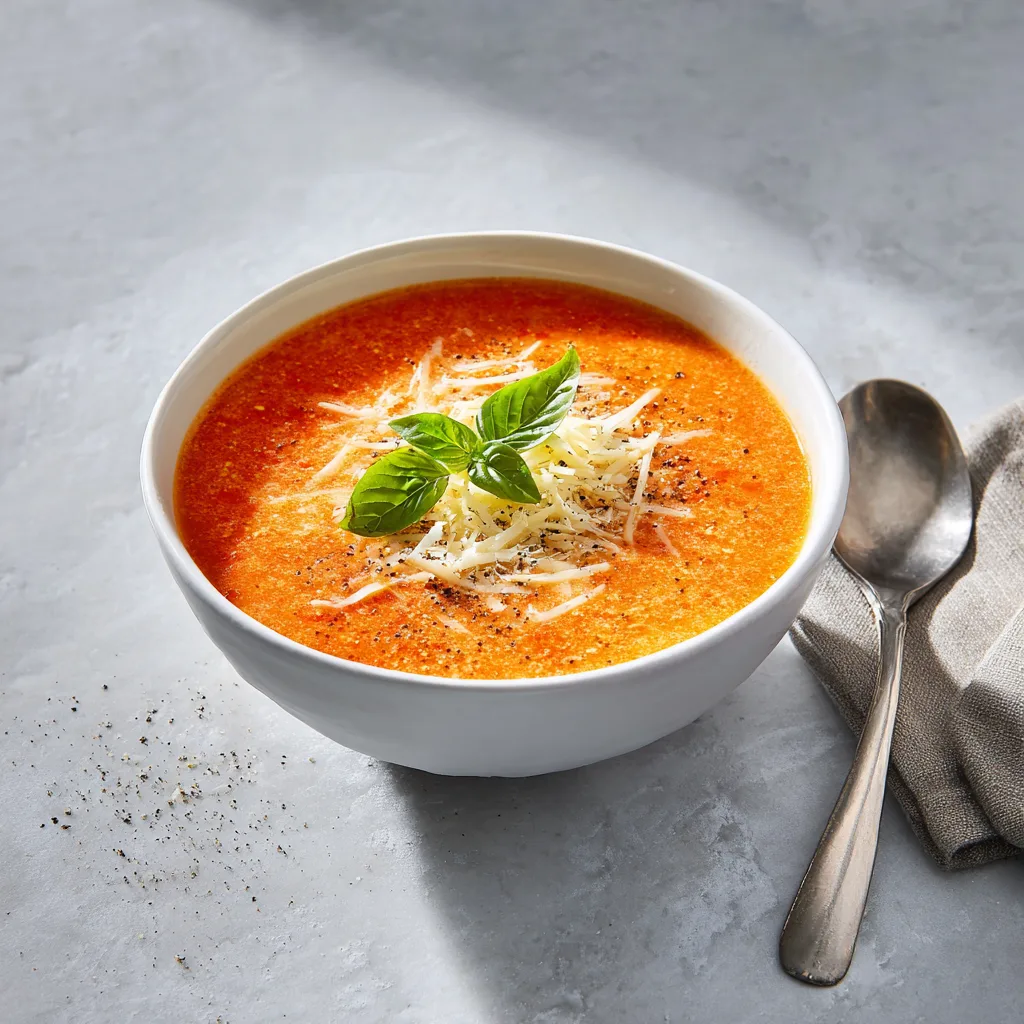
- Ladle the hot soup into bowls. Garnish generously with freshly shredded cheese (such as parmesan or mozzarella) and an extra sprig of fresh basil.
High-Protein Cottage Cheese Tomato Soup
Ingredients
Equipment
Method
- Heat olive oil in a large pot or Dutch oven over medium heat. Add the diced onion and sauté for 7-10 minutes until soft and translucent.
- Add the minced garlic to the pot and sauté for 1 minute until fragrant. Do not brown.
- Pour in the crushed tomatoes and the broth. Stir to combine, bringing the mixture to a gentle boil.
- Reduce the heat to low, cover the pot, and let the soup simmer gently for 15 minutes to allow the flavors to meld.
- Remove the pot from the heat. Carefully transfer the hot soup to a high-speed blender (do not fill past halfway) or use an immersion blender directly in the pot.
- Add the cottage cheese to the soup. Blend on high for 1-2 minutes until completely smooth, creamy, and no curds remain.
- Return the soup to the pot if using a stand blender. Stir in the chopped fresh basil, salt, and black pepper. Taste and adjust seasonings as needed.
- Ladle into bowls and garnish with a generous sprinkle of shredded cheese and fresh basil leaves. Serve warm.
Notes
Pro Tips for Absolute Perfection
While this recipe is incredibly straightforward, a few professional culinary tweaks can elevate your results from good to restaurant-quality:
- Room Temperature Cottage Cheese: If you remember, pull your cottage cheese out of the refrigerator 30 minutes before you plan to blend it. Blending ice-cold cheese into hot soup can sometimes drastically lower the temperature of the soup, requiring you to reheat it, which can slightly dull the fresh tomato flavor.
- The Acidity Check: Tomatoes vary wildly in their acidity depending on the brand, the season they were canned, and their growing conditions. Before blending, taste your simmering tomato base. If it tastes excessively sharp or acidic, add a tiny pinch of baking soda (about 1/8 teaspoon). The baking soda will physically neutralize the acid, rounding out the flavor much more effectively than simply masking it with sugar.
- Invest in Good Parmesan: Since this soup uses so few ingredients, the garnishes matter. Skip the pre-grated parmesan in the shaker can, which is often coated in anti-caking agents that prevent it from melting smoothly into the soup. Instead, buy a small wedge of real Parmigiano-Reggiano and grate it fresh over your bowl. The salty, nutty complexity it adds is unmatched.
Mastering Meal Prep and Storage
This Cottage Cheese Tomato Soup was practically designed for Sunday meal prep. The flavors actually deepen and improve after a day or two in the refrigerator, making it an ideal candidate for batch cooking.
Refrigeration Strategy
Allow the soup to cool to room temperature before dividing it into your meal prep containers. Glass containers with airtight, locking lids are ideal to prevent the tomatoes from staining the plastic and to ensure a tight seal. Store the soup in the refrigerator for up to 5 days. For the best meal prep experience, keep your garnishes (shredded cheese and basil) in a separate, small container and add them only after you have reheated the soup.
Reheating for Optimal Texture
Because we are using a dairy product, gentle reheating is the key to maintaining that perfect, velvety emulsion. The best method is to reheat the soup gently on the stovetop over medium-low heat, stirring frequently, until just simmering. If you are at work and must use a microwave, reheat the soup in 1-minute intervals, stirring thoroughly between each interval, until hot. Avoid boiling the soup aggressively, as this can sometimes cause the proteins to separate slightly, altering the texture.
Can You Freeze Cottage Cheese Tomato Soup?
Generally, freezing soups with dairy can be tricky, as the freezing and thawing process can break the emulsion, resulting in a grainy or separated texture when reheated. However, because cottage cheese is already a curdled product that has been mechanically smoothed in the blender, it actually freezes slightly better than heavy cream-based soups. If you choose to freeze it, allow it to cool completely, store it in freezer-safe bags or containers (leaving room for expansion), and freeze for up to 2 months. Thaw overnight in the refrigerator. When reheating, if you notice any slight separation, simply give it a vigorous whisking or a quick blitz with an immersion blender to bring it right back together.
Delicious Variations to Explore
Once you have mastered the base recipe, consider this soup a blank canvas for your culinary creativity. Here are a few ways to customize your bowls:
- Roasted Red Pepper and Tomato: Drain half a jar of roasted red peppers and add them to the pot along with the canned tomatoes before simmering. They add a sweet, smoky depth that pairs beautifully with the tangy cottage cheese.
- Spicy Arrabbiata Style: For those who love heat, sauté a generous pinch (or two) of crushed red pepper flakes along with the garlic. A dash of hot honey drizzled over the top right before serving is a spectacular finishing touch.
- Protein Powerhouse: If you want to increase the protein even further, consider stirring in some cooked, shredded chicken breast, or even a can of rinsed and drained cannellini beans during the last few minutes of simmering.
Whether you are looking to hit your daily macro goals, seeking a comforting and quick weeknight dinner, or planning your lunches for the busy week ahead, this High-Protein Cottage Cheese Tomato Soup delivers on all fronts. It is creamy, deeply flavorful, satisfying, and proof that healthy eating can still be incredibly luxurious.