The Ultimate Harissa & Honey Smashed Carrots Recipe
Welcome to the side dish that is about to completely steal the spotlight from your main course. If you thought carrots were destined to remain a boring, steamed afterthought or a mundane addition to a lunchbox, prepare for a culinary awakening. The Harissa & Honey Smashed Carrots recipe is a masterclass in flavor and texture, taking a humble, everyday root vegetable and transforming it into a sticky, crispy, sweet, and fiery masterpiece. By borrowing the beloved “smashed” technique—traditionally reserved for baby potatoes—and applying it to tenderly boiled carrots, we maximize the surface area. This allows an intoxicating glaze of North African chili paste and sticky honey to caramelize in the oven, creating unparalleled crispy edges and a melt-in-your-mouth interior. Whether you are hosting an elegant holiday dinner, prepping for a vibrant summer barbecue, or simply elevating your weeknight chicken, this dish is guaranteed to have everyone reaching for seconds.
The culinary landscape has seen a massive surge in the popularity of vegetable-forward side dishes that refuse to compromise on boldness. The internet has fallen in love with smashed Brussels sprouts, smashed broccoli, and smashed potatoes. But smashed carrots? They might just be the crown jewel of the trend. Carrots possess a natural, earthy sweetness that becomes incredibly pronounced when roasted. When you introduce the complex, smoky heat of harissa and the binding, glossy sweetness of honey, a magical Maillard reaction occurs in the oven. This comprehensive guide will take you through the vibrant history of these ingredients, the precise science behind the perfect “smash,” and every expert tip you need to execute this stunning, restaurant-quality dish in your very own kitchen.
Why You Will Fall in Love with This Smashed Carrot Recipe
There are countless reasons why this recipe is destined to become a permanent fixture in your culinary repertoire. First and foremost is the stunning contrast of flavors. The human palate is naturally drawn to the combination of sweet and spicy—a profile known affectionately as “swicy.” The deep, complex heat of the harissa paste is immediately tempered by the floral sweetness of the honey. When this glaze hits the hot oven, it reduces into a sticky, lacquered coating that is utterly irresistible.
Secondly, the texture is an absolute revelation. Boiling the carrots first ensures that the interior remains soft, sweet, and creamy. Smashing them flat exposes the fibrous interior, creating nooks and crannies that catch the glaze. When baked at a high temperature, these exposed edges become deeply caramelized, charred, and crispy. It is a textural duality that you simply cannot achieve by roasting whole or diced carrots.
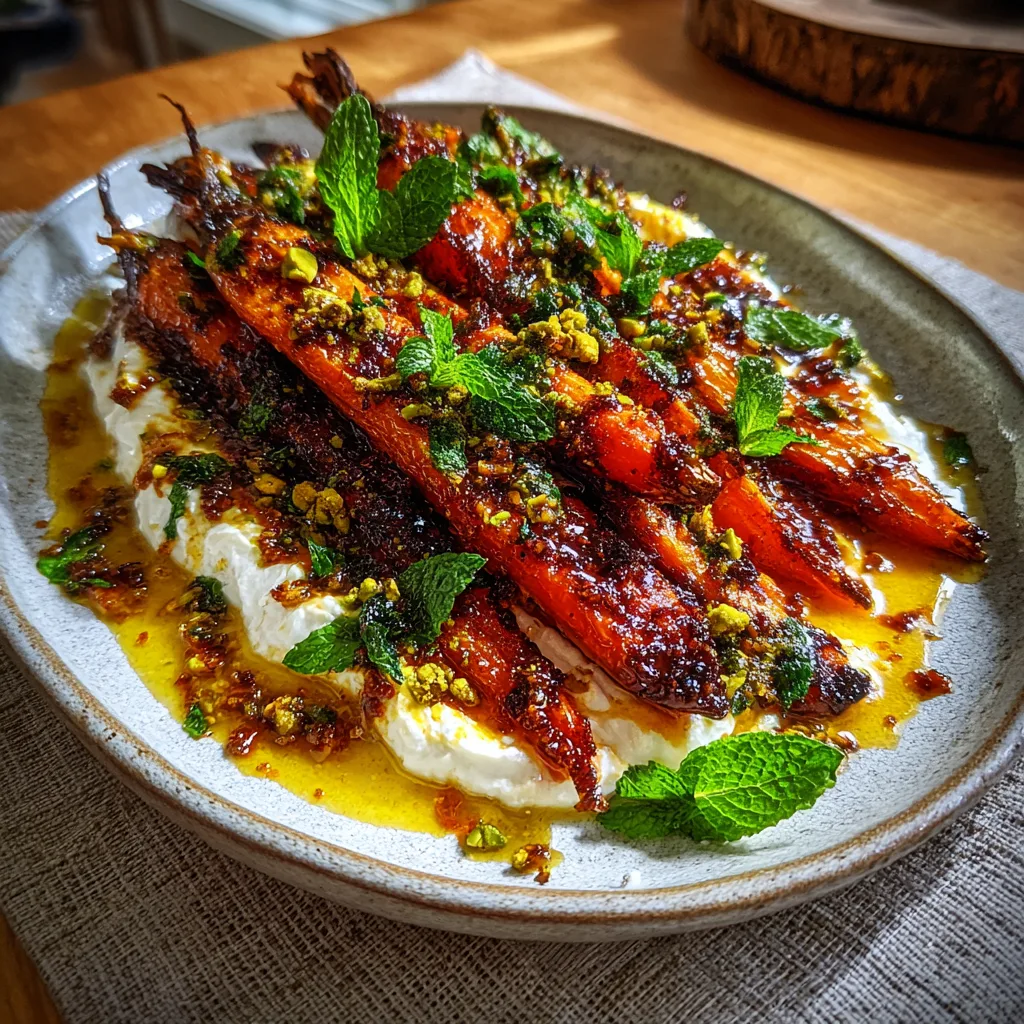
Finally, the visual presentation is breathtaking. Food is eaten first with the eyes, and this dish is a vibrant explosion of color. The deep, fiery orange and red hues of the glazed carrots, set against a cooling swoop of stark white yogurt or labneh, and garnished with the bright green of fresh herbs and pistachios, makes it look like a dish served at a high-end Mediterranean restaurant. It requires minimal effort for maximum visual and flavor impact.
The Culinary Magic: Understanding Your Ingredients
To master this dish, one must understand the unique qualities of the ingredients that make up its flavor profile. This is not just about throwing spices onto a vegetable; it is about building a cohesive, balanced bite.
The Carrots: The type of carrot you choose will dictate the ease of your preparation. Medium-sized, whole carrots with the tops still attached are ideal. They have a superior, sweeter flavor compared to mass-produced baby carrots. If you use whole carrots, you will want to cut them into 2 to 3-inch chunks before boiling. If you are incredibly short on time, large “baby carrots” (which are actually just larger carrots machined down to a smaller size) can work in a pinch, but they may lack the depth of flavor of fresh, whole root vegetables. Rainbow carrots are also a fantastic option to add stunning visual variety.
The Harissa Paste: Harissa is the beating heart of this recipe. It is a vibrant, smoky, and spicy chili paste native to the Maghreb region of North Africa (specifically Tunisia, where it is a staple, as well as Morocco and Algeria). It is typically made from roasted red peppers, Baklouti peppers, garlic, olive oil, and earthy spices like cumin, coriander, and caraway. It has a complex, layered heat that builds beautifully on the palate. You can find jarred harissa in most major supermarkets today, or specialty Middle Eastern grocers. If you can find “Rose Harissa,” which includes dried rose petals, it adds an incredible, subtle floral note that pairs magically with the carrots.
The Honey: Honey is the crucial binding agent and the source of our caramelization. As the water content evaporates in the hot oven, the sugars in the honey undergo caramelization, creating that sticky, glossy, slightly charred crust on the outside of the smashed carrots. Try to use a good quality, runny honey rather than a crystallized one, as it will mix much more easily with the thick harissa paste.
The Base (Labneh or Greek Yogurt): Because the carrots are intensely flavorful, spicy, and sticky, they require a grounding, cooling element. Swiping a thick layer of creamy, tangy labneh (a Middle Eastern strained yogurt cheese) or plain, whole-milk Greek yogurt on the serving platter before laying down the hot carrots creates the perfect, balanced bite. The cool dairy cuts through the chili heat and adds a luxurious richness.
The Science and Technique of the “Smash”
Smashing a vegetable might sound aggressive, but it is actually a delicate process that requires attention to detail. The goal is to flatten the carrot enough to maximize surface area without completely obliterating it into a puree.
The carrots must be par-cooked (partially cooked) first. Boiling or steaming them until they are just “fork-tender” is the key. If they are undercooked, they will snap and break into hard chunks when you press them. If they are overcooked, they will turn into mush and stick to your pressing tool.
Once they are perfectly tender, draining them well and letting them steam dry for a minute or two is crucial. Excess moisture is the enemy of crispiness. When smashing, use the bottom of a heavy drinking glass, a mason jar, or a sturdy spatula. Press down with steady, even pressure until the carrot splits and flattens out to about a 1/4-inch thickness. Do not worry if they look a little messy or rustic; those ragged edges are exactly what will become the crispiest, most delicious parts in the oven.
Health Benefits and Nutritional Breakdown
Beyond being obscenely delicious, this side dish is packed with essential nutrients, making it a fantastic addition to a balanced diet.
Carrots are globally renowned for their exceptionally high levels of beta-carotene, an antioxidant that the human body converts into Vitamin A. Vitamin A is crucial for maintaining healthy vision, a strong immune system, and proper organ function. They are also an excellent source of dietary fiber, which aids in digestion and helps maintain steady blood sugar levels.
Harissa, being made primarily of chili peppers, contains capsaicin, which has been shown to boost metabolism and possess anti-inflammatory properties. The olive oil used in the glaze is rich in heart-healthy monounsaturated fats. While honey does add sugar to the dish, it is a natural, unrefined sugar that offers trace minerals and antioxidants. By pairing this dish with a protein-rich base like Greek yogurt, you are creating a well-rounded, nourishing component to your meal.

Essential Equipment for Crispy Perfection
You do not need a professional kitchen to make this recipe, but a few key items will ensure success.
Large Baking Sheet: You need a large, heavy-duty baking sheet. The carrots need space to breathe. If you crowd them onto a small pan, they will steam each other instead of roasting and crisping.
Parchment Paper or Silicone Baking Mat: Because of the high sugar content in the honey, this glaze will burn and stick aggressively to a bare metal pan. Lining your baking sheet with non-stick parchment paper is absolutely essential for an easy cleanup and to ensure you do not leave the crispy bottoms of your carrots stuck to the tray.
A Heavy, Flat Object: A sturdy, flat-bottomed drinking glass or a wide metal spatula is perfect for the smashing process.
Ingredients List
- For the Smashed Carrots:
- – 1.5 lbs whole medium carrots (or large organic baby carrots)
- – 1 tablespoon kosher salt (for boiling water)
- For the Harissa Honey Glaze:
- – 2 tablespoons harissa paste (adjust based on your spice tolerance)
- – 2 tablespoons runny honey
- – 2 tablespoons extra virgin olive oil
- – 1 clove garlic, finely minced or grated
- – 1/2 teaspoon ground cumin
- – 1/4 teaspoon kosher salt
- – 1/4 teaspoon freshly ground black pepper
- For Serving and Garnish:
- – 3/4 cup labneh or plain, whole-milk Greek yogurt
- – 1 tablespoon fresh lemon juice
- – 2 tablespoons fresh mint or cilantro, roughly chopped
- – 2 tablespoons roasted pistachios, roughly chopped
- – Extra drizzle of olive oil
Step-by-Step Instructions
- Prepare the Carrots: If using whole carrots, wash them thoroughly and peel them (peeling is optional if they are organic and well-scrubbed, but peeling yields a cleaner look). Trim the tops and cut the carrots crosswise into 2 to 3-inch chunks. If the carrots are very thick, you may want to halve them lengthwise as well.
- Boil to Tender: Bring a large pot of water to a rolling boil. Add the tablespoon of kosher salt. Carefully drop in the carrots and boil for 12 to 18 minutes, depending on their thickness. Test them by piercing the thickest piece with a fork; it should slide in with only slight resistance. You want them tender but not falling apart.
- Drain and Dry: Drain the carrots in a colander. Let them sit in the colander for 3 to 5 minutes so the steam can evaporate. This removes excess surface water, which is vital for achieving a crispy roast.
- Prepare the Glaze: While the carrots are drying, preheat your oven to 425°F (220°C). Line a large baking sheet with parchment paper. In a small bowl, whisk together the harissa paste, honey, extra virgin olive oil, minced garlic, cumin, salt, and black pepper until it forms a smooth, cohesive, sticky glaze.
- The Smash: Transfer the dried carrots to the parchment-lined baking sheet, leaving ample space between each piece. Take your heavy, flat-bottomed glass or spatula and gently but firmly press down on each carrot chunk until it flattens to about 1/4-inch thick. If they stick to the glass, lightly oil the bottom of the glass.
- Glaze the Carrots: Using a pastry brush or a spoon, generously coat the top of each smashed carrot with the harissa-honey glaze. Ensure the glaze gets into all the little cracks and ragged edges you created during the smashing process.
- Roast to Perfection: Place the baking sheet in the preheated oven. Roast for 20 to 25 minutes. Keep a close eye on them during the last 5 minutes. The high sugar content in the honey can go from beautifully caramelized to burnt very quickly. You want deep, dark, sticky, charred edges.
- Prepare the Base: While the carrots are roasting, combine the labneh or Greek yogurt with the fresh lemon juice and a tiny pinch of salt in a small bowl. Stir until smooth. Spread this mixture into a decorative swoop across your serving platter.
- Assemble and Serve: Remove the sizzling, glossy carrots from the oven. Carefully transfer them, arranging them over the bed of cool yogurt. Garnish generously with the chopped pistachios, fresh mint or cilantro, and a final drizzle of high-quality extra virgin olive oil. Serve immediately.
Harissa & Honey Smashed Carrots
Ingredients
Equipment
Method
- Bring a large pot of salted water to a boil. Add carrot chunks and boil for 12-18 minutes until just fork-tender. Do not overcook.
- Drain carrots well and let them steam dry in a colander for 3-5 minutes.
- Preheat oven to 425°F (220°C). Line a large baking sheet with parchment paper.
- In a small bowl, whisk together the harissa, honey, olive oil, garlic, cumin, salt, and pepper to create the glaze.
- Place the dried carrots onto the baking sheet. Use the bottom of a heavy glass or spatula to press down on each piece, smashing them flat to about 1/4-inch thickness.
- Brush the harissa honey glaze generously over each smashed carrot, ensuring it gets into all the crevices.
- Roast in the oven for 20-25 minutes, or until the edges are dark, caramelized, and extremely crispy. Watch carefully at the end so the honey does not burn.
- Mix the labneh with lemon juice and a pinch of salt. Swoop it onto a serving platter. Arrange hot carrots over the yogurt. Garnish with pistachios, herbs, and a drizzle of olive oil. Serve hot.
Notes
Pro Tips for Achieving Maximum Crispiness and Flavor
Do not be shy with the oil in the glaze. While honey provides the caramelization, the olive oil essentially “fries” the edges of the smashed carrot against the hot parchment paper. If your glaze seems too thick, add an extra splash of olive oil.
Spice levels vary wildly between different brands of harissa. Before you mix your glaze, taste a tiny bit of your harissa straight from the jar. If it is extremely fiery, you may want to reduce it to 1 tablespoon and increase the honey slightly. If it is a milder, smokier blend, you can use the full 2 tablespoons or even more. The goal is a balanced, warm heat, not an overpowering burn.
If you have the time, you can flip the smashed carrots halfway through the roasting time and brush the other side with any leftover glaze. This will ensure both sides get incredibly sticky and charred, though simply roasting them face-up as directed will still yield phenomenal results.
Exciting Variations and Customizations
This recipe is highly adaptable to whatever you have in your pantry or whatever dietary preferences you are accommodating.
Maple Sriracha Twist: If you cannot find harissa, you can substitute it with sriracha or a chili-garlic paste like sambal oelek. Swap the honey for pure maple syrup for a slightly different, earthier sweetness that also caramelizes beautifully.
Vegan Adaptation: To make this recipe 100% vegan, substitute the honey with maple syrup or agave nectar. Replace the labneh or Greek yogurt base with a thick, plain, unsweetened almond or oat milk yogurt, or even a swipe of creamy hummus or tahini sauce.
Nutty Crunch: If you don’t have pistachios, toasted slivered almonds, crushed walnuts, or even toasted pumpkin seeds (pepitas) add a fantastic, necessary crunch to contrast the soft, creamy carrots.
Serving Suggestions: What to Pair with Your Carrots
These Harissa & Honey Smashed Carrots are incredibly versatile. Because of their Middle Eastern and North African flavor profile, they pair beautifully with traditional proteins from those regions. Serve them alongside a spiced, roasted leg of lamb, grilled chicken shawarma skewers, or a fragrant, slow-cooked beef tagine.
They are also the perfect way to elevate a simple, everyday dinner. A plain, pan-seared chicken breast or a simple piece of baked salmon becomes a gourmet meal when accompanied by these intensely flavored, glossy carrots. For a vegetarian feast, serve them alongside a hearty quinoa salad, warm flatbreads, and a bowl of creamy lentil soup.
How to Store and Reheat
While these carrots are unarguably at their absolute best directly out of the hot oven when the edges are crispiest, leftovers are still highly enjoyable.
Store any leftover carrots in an airtight container in the refrigerator for up to 3 days. Do not store them on top of the yogurt base, as the moisture from the yogurt will immediately turn the crispy carrots soggy. Keep them separate until it is time to serve.
To reheat and attempt to revive some of the crispiness, the oven or an air fryer is your best option. Reheat them at 375°F (190°C) for about 5 to 7 minutes until hot and sizzling again. Microwaving is acceptable if you are in a rush, but the carrots will be entirely soft and lack the textural contrast that makes the dish so special.
Frequently Asked Questions (FAQs)
Why did my carrots turn into mush when I smashed them?
They were boiled for too long. Carrots should be cooked just until a fork can pierce them, not until they are falling apart. Keep a close eye on the boiling pot and test them frequently after the 10-minute mark.
My glaze burned in the oven. What went wrong?
Honey burns quickly due to its high sugar content. If your oven runs hot, or if you placed the tray on the bottom rack too close to the heating element, the sugars will char before the carrots are properly roasted. Keep them on the middle rack and check them 5 minutes before the timer goes off.
Can I use this glaze on other vegetables?
Absolutely! This harissa and honey glaze is magnificent. Try it on smashed baby potatoes, roasted cauliflower florets, or even halved Brussels sprouts. It brings the same sweet, spicy, and sticky magic to almost any hearty vegetable.
Is harissa very spicy?
It depends entirely on the brand. Some are quite mild and focus heavily on roasted red peppers and cumin, while others are heavily laden with hot chilies. Always taste your specific jar of harissa before adding it to the glaze to gauge its heat level.
Conclusion
The Harissa & Honey Smashed Carrots recipe is a triumph of simple cooking techniques elevating humble ingredients. By taking the time to perfectly boil, delicately smash, and aggressively roast these carrots in a fiery, sweet, and sticky glaze, you unlock a depth of flavor and texture that is truly remarkable. The contrast between the charred, glossy carrots and the cool, creamy yogurt base makes every single bite a balanced, mouth-watering experience. Throw out your old, boring carrot recipes; this spicy, sweet, and crispy masterpiece is the only side dish you will ever need.