Crispy Brunch Mashup
Latke Eggs Benedict: The Ultimate Crispy Brunch Mashup
Brunch is an institution. It is that magical time of the week when breakfast foods get a savory, indulgent upgrade. But if you are tired of the standard English muffin routine, prepare to have your world rocked by the Latke Eggs Benedict. This recipe takes the crown jewel of Jewish holiday cooking—the crispy, golden potato latke—and uses it as the vessel for a perfectly poached egg and rich, velvety hollandaise sauce. It is a fusion of textures that English muffins simply cannot compete with.
Imagine the crunch of fried shredded potatoes, seasoned with onion and salt, shattering under your fork. Then, the soft, runny yolk of a poached egg breaks, mixing with the buttery, lemon-kissed hollandaise. The combination of the hot, oily, crispy potato and the creamy, smooth sauce is nothing short of culinary genius. Whether you are using up leftover Hanukkah latkes or making a fresh batch specifically for a Sunday treat, this dish elevates brunch to a gourmet level right in your own kitchen.
Why Swap the English Muffin?
The traditional Eggs Benedict is served on an English muffin. While delicious, the muffin is essentially a sponge—soft and absorbent. By swapping it for a latke, you introduce a completely new dimension: Texture. The latke provides a sturdy, crunchy base that doesn’t get soggy immediately under the weight of the sauce and egg. The jagged edges of the fried potato catch the hollandaise, holding onto more flavor with every bite. Additionally, the flavor profile of the potato (earthy, salty, fried) pairs far better with the richness of egg yolk than plain bread does.
This recipe also solves the “leftover latke” dilemma. If you have ever hosted a Hanukkah party, you know that reheated latkes can sometimes lose their luster. Re-frying them and topping them with eggs and sauce gives them a glorious second life.
The Three Pillars of This Recipe
To master this dish, you need to conquer three separate components. Don’t worry; we will break them down so they are foolproof.
1. The Latke: The goal here is maximum crispiness. This means removing as much moisture from the potatoes as possible before frying. If the potatoes are wet, they steam instead of fry, leading to a soggy pancake. We use Russet potatoes for their high starch content, which yields the best interior texture.
2. The Poached Egg: Many home cooks fear the poach. The secret? Fresh eggs and a gentle vinegar swirl. You want the white to be fully set but the yolk to remain liquid gold.
3. The Hollandaise: This mother sauce is an emulsion of egg yolk and butter. It requires a gentle hand with heat to prevent scrambling the eggs. Our method uses a blender or a very careful double-boiler approach to ensure a silky, glossy finish that coats the spoon.
Ingredients Needed
Gather these ingredients to assemble your brunch masterpiece.
Latke Eggs Benedict
Ingredients
Equipment
Method
- Grate potatoes and onion. Place in a towel and squeeze out ALL moisture firmly.
- Mix dried potatoes with egg, flour, salt, and pepper in a bowl.
- Heat oil in a skillet. Drop spoonfuls of mixture and fry 3-4 mins per side until crispy. Drain on rack.
- Blend egg yolks, lemon juice, and mustard. Slowly drizzle in hot melted butter while blending to emulsify.
- Bring water with vinegar to a simmer. Swirl water and poach eggs for 3 minutes.
- Place poached eggs on top of hot latkes.
- Pour hollandaise sauce over eggs.
- Garnish with red onion, chives, and black pepper. Serve immediately.
Notes
For the Crispy Latkes:
- Russet Potatoes: 2 large (approx. 1 lb). Peeling is optional depending on preference, but scrub them well.
- Onion: 1 medium yellow onion. Grating the onion with the potato adds essential flavor and moisture.
- Egg: 1 large egg, beaten. This acts as the binder.
- All-Purpose Flour or Matzo Meal: 2 tablespoons. Helps hold the shred together. Use gluten-free flour if needed.
- Salt: 1 teaspoon. Potatoes love salt.
- Black Pepper: ½ teaspoon.
- Baking Powder: ¼ teaspoon (optional, for extra fluffiness inside).
- Neutral Oil: Vegetable or Canola oil for frying (about ½ cup).
For the Eggs & Toppings:
- Eggs: 4-8 large eggs (depending on serving size). Fresher eggs hold their shape better when poaching.
- Vinegar: 1 tablespoon (white or apple cider) for the poaching water.
- Red Onion: 2 tablespoons, finely diced (for garnish).
- Fresh Chives: 1 tablespoon, chopped (for garnish).
For the Blender Hollandaise:
- Egg Yolks: 3 large yolks.
- Lemon Juice: 1 tablespoon, fresh squeezed.
- Unsalted Butter: ½ cup (1 stick), melted and hot.
- Dijon Mustard: ½ teaspoon (adds a nice tang).
- Cayenne Pepper or Paprika: A pinch.
- Salt: To taste.
Step-by-Step Instructions
Part 1: Making the Latkes
1. Grate: Using a box grater or food processor, grate the potatoes and the onion using the coarse setting.
2. Squeeze (The Most Important Step): Place the grated potato and onion mixture into the center of a clean kitchen towel or cheesecloth. Gather the corners and twist tightly over the sink. Squeeze with all your might to extract as much liquid as possible. The drier the mix, the crispier the latke.
3. Mix: Transfer the dried potato mixture to a bowl. Add the egg, flour, salt, pepper, and baking powder. Toss with a fork until evenly coated.
4. Fry: Heat about ¼ inch of oil in a large skillet over medium-high heat. Once the oil is shimmering (drop a shred of potato in; if it sizzles immediately, it’s ready), drop spoonfuls of the mixture into the pan. Flatten them slightly with a spatula. Fry for 3-4 minutes per side until deeply golden brown and crispy. Transfer to a wire rack or paper towel-lined plate.
Part 2: The Hollandaise Sauce
1. Blend Base: In a blender, combine egg yolks, lemon juice, Dijon mustard, cayenne, and salt. Blend for 5 seconds until light in color.
2. Emulsify: With the blender running on medium-low speed, slowly drizzle in the hot melted butter. Pour it in a thin, steady stream. The sauce will thicken almost instantly as the emulsion forms. Taste and adjust salt or lemon.
Part 3: Poaching the Eggs
1. Water Prep: Fill a wide saucepan with 3 inches of water. Add vinegar and bring to a gentle simmer (not a rolling boil—you want small bubbles).
2. The Swirl: Crack an egg into a small ramekin. Use a spoon to create a gentle vortex in the water. Carefully slide the egg into the center of the vortex. The swirling water wraps the white around the yolk.
3. Cook: Poach for 3 minutes for a runny yolk, or 4 minutes for a jammy yolk. Remove with a slotted spoon and dab on a paper towel to remove excess water.
Part 4: Assembly
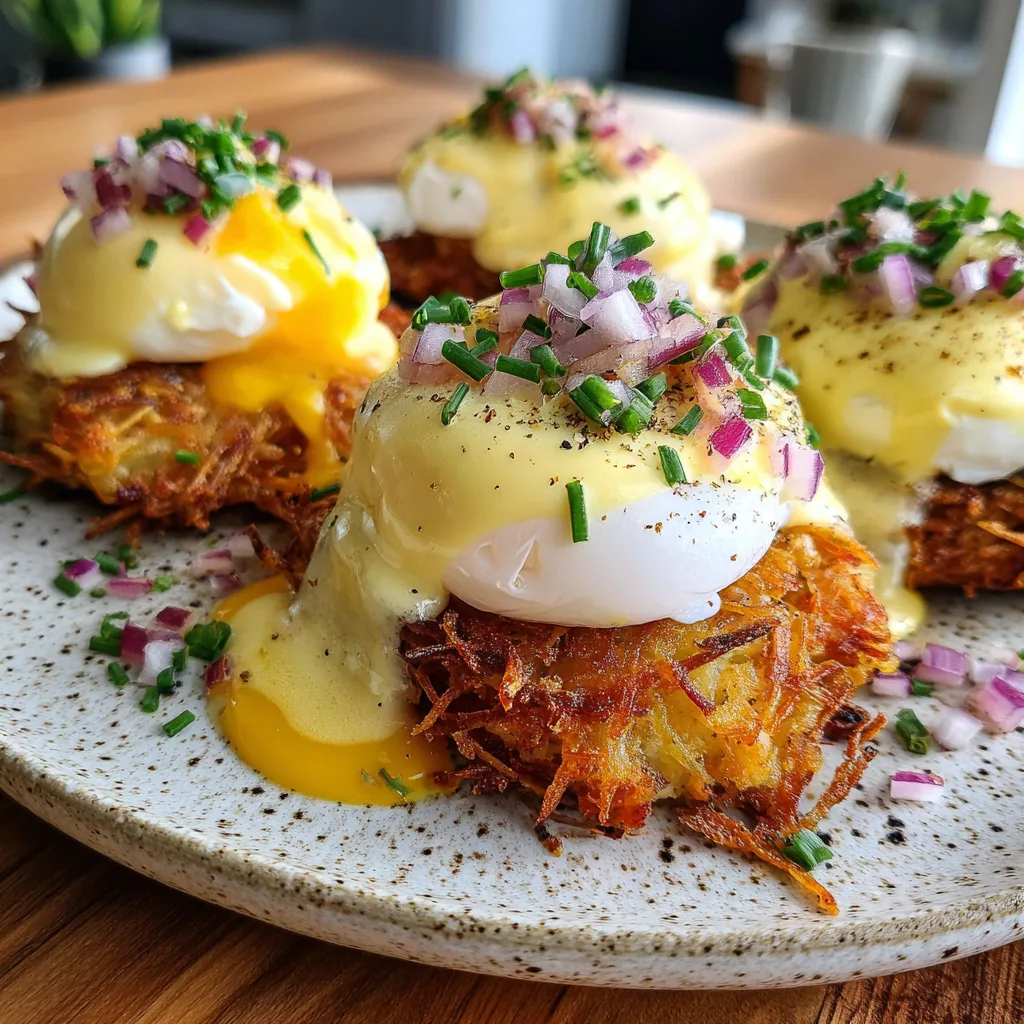
Place two crispy latkes on a plate. Top each latke with a warm poached egg. Generously ladle the hollandaise sauce over the eggs. Garnish with diced red onion, chopped chives, and plenty of cracked black pepper.
Expert Tips for Success
Keep Latkes Warm:
If you are making a big batch, keep the fried latkes warm in a 200°F (95°C) oven on a wire rack while you poach the eggs. This ensures everything hits the table hot.
Fixing Broken Hollandaise:
If your sauce “breaks” (looks oily and separated), don’t panic. Add a teaspoon of boiling water to a fresh bowl and whisk the broken sauce into it drop by drop. It should re-emulsify.
Potato Color:
Potatoes oxidize (turn pink/brown) quickly once grated. Work fast! If you must wait, submerge the grated potatoes in water, but you will have to squeeze them very thoroughly afterward.
Creative Variations
1. Smoked Salmon (The “Royale”):
Add a slice of cold-smoked salmon (lox) between the latke and the egg. This is a classic Jewish deli twist that adds a smoky, salty layer.
2. Florentine Style:
Add a layer of sautéed spinach and garlic on top of the latke before adding the egg. It adds color and nutrients.
3. Sweet Potato Latkes:
Swap the Russets for sweet potatoes. The natural sweetness pairs beautifully with a spicy hollandaise (add sriracha to the sauce).
4. Avocado Smash:
Spread mashed avocado on the latke for a “California” version.
Cultural Context
Latkes are traditionally eaten during Hanukkah, the Festival of Lights, to celebrate the miracle of the oil that lasted eight days. Eating foods fried in oil is a symbolic act. By combining this tradition with Eggs Benedict—a dish invented in New York City in the late 19th century—you create a dish that tells a story of cultural adaptation and culinary joy.
Storage and Reheating
Latkes: Can be made ahead and frozen. Reheat frozen latkes in a 400°F oven for 10-15 minutes until crispy. Do not microwave them, or they will be soggy.
Hollandaise: Best made fresh. It is difficult to reheat without scrambling. If you must, use a double boiler over very low heat and whisk constantly.
Eggs: Poached eggs can be made ahead! Undercook them slightly, shock in ice water, and store in water in the fridge for up to 2 days. Reheat by dropping in hot water for 1 minute before serving.
Nutritional Highlights
This is undeniably an indulgent meal. It is high in protein from the eggs and rich in fats from the oil and butter. It is a “sometimes” food meant for celebration and comfort. However, you can lighten it up by baking the latkes (spray generously with oil) instead of frying, though you sacrifice some crunch.
Enjoy your Latke Eggs Benedict—a breakfast that proves potatoes are, in fact, the best vegetable on earth.