Healing Ginger Garlic Broth with Rice Noodles
Healing Ginger Garlic Broth with Rice Noodles: A Bowl of Pure Comfort
There are days when your body simply asks for a reset. Maybe you are fighting off the beginnings of a cold, recovering from an indulgent weekend, or simply craving warmth on a chilly evening. In those moments, heavy creams and rich sauces don’t quite hit the mark. What you need is something restorative, something vibrant, and something that warms you from the inside out. Enter this Healing Ginger Garlic Broth with Rice Noodles.
This soup is the culinary equivalent of a warm hug. It relies on the age-old medicinal power of fresh ginger and garlic, simmered into a golden, aromatic broth that clears the sinuses and soothes the soul. But it isn’t just “health food”—it’s delicious. The broth is savory and complex, spiked with soy sauce and toasted sesame oil, while the tender rice noodles provide that satisfying carbohydrate comfort we all crave. Bright orange carrots and leafy greens add texture and nutrition, making this a complete meal in a single bowl.
In this guide, we will walk you through how to build a flavorful broth from scratch in under 30 minutes, the best vegetables to use for texture and color, and how to cook rice noodles perfectly so they never get mushy. Get ready to make your new favorite “feel better” meal.
Why This Soup Is a Wellness Powerhouse
Every ingredient in this bowl serves a purpose beyond just flavor. Here is why this soup is often referred to as “healing”:
- Ginger: Known for its anti-inflammatory properties, ginger helps settle the stomach and provides a gentle heat that promotes circulation. We use fresh ginger here for the most potent punch.
- Garlic: A natural immune booster, garlic contains allicin, which has been shown to help fight infection. Sautéing it gently releases its aromatic oils without burning it.
- Bone Broth or Veggie Stock: Whether you choose a collagen-rich bone broth or a mineral-dense vegetable stock, the liquid base provides hydration and essential nutrients.
- Chili Flakes: A little heat from red pepper flakes acts as a natural decongestant, clearing out sinuses instantly.
- Rice Noodles: Gluten-free and easy to digest, rice noodles are gentle on the stomach, making this perfect for those days when you need something light.
The Secret to a Golden, Flavorful Broth
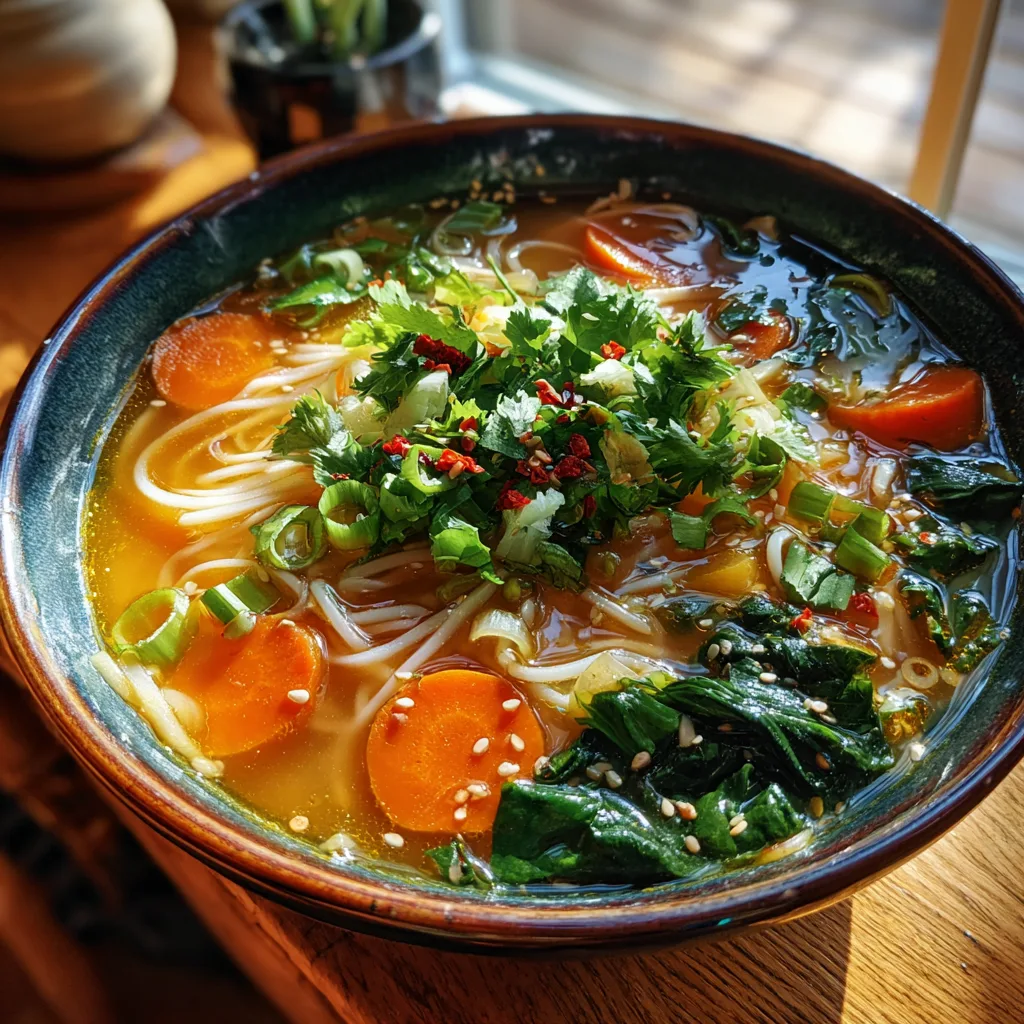
The image shows a beautiful, clear, amber-colored broth. To achieve this, you need to layer your flavors. You cannot simply throw everything into water and boil it.
Step 1: The Aromatics. You must start by sautéing the onion, celery, ginger, and garlic in a little oil. This “blooms” the spices and releases the fat-soluble flavor compounds. If you skip this, your soup will taste flat.
Step 2: The Umami Boosters. Soy sauce (or tamari) and a splash of fish sauce (optional but recommended) deepen the color and add savory richness. The saltiness from these ingredients balances the sweetness of the carrots.
Step 3: The Finish. A drizzle of toasted sesame oil at the very end gives the soup that glossy, glistening sheen you see in the photos and adds a nutty aroma that perfumes the steam rising from the bowl.
Ingredients
Gather these wholesome ingredients. Freshness is key for the aromatics!
Healing Ginger Garlic Broth with Rice Noodles
Ingredients
Equipment
Method
- Heat oil in a large pot over medium heat. Sauté onion and celery for 5 minutes until soft.
- Add minced garlic and ginger; sauté for 1-2 minutes until fragrant.
- Pour in broth and soy sauce. Add sliced carrots. Bring to a boil, then reduce heat and simmer for 15 minutes.
- Meanwhile, cook rice noodles in a separate pot of boiling water according to package instructions. Drain and rinse with cold water.
- Add spinach/bok choy to the hot broth and simmer for 1-2 minutes until wilted.
- Divide noodles into bowls. Ladle hot broth and veggies over noodles.
- Top with cilantro, green onions, chili flakes, and a squeeze of lime before serving.
Notes
The Base
- Sesame Oil or Olive Oil – 1 tablespoon. To sauté the veggies.
- Yellow Onion – 1 small, diced finely.
- Celery Stalks – 2 stalks, chopped.
- Fresh Ginger – 2 tablespoons, grated or minced. Don’t be shy with the ginger!
- Garlic – 4 cloves, minced.
- Turmeric Powder – 1/2 teaspoon. (Optional, for anti-inflammatory benefits and golden color).
The Liquids & Veggies
- Vegetable Broth or Chicken Broth – 6 cups. Use low-sodium so you can control the salt level.
- Soy Sauce or Tamari – 2 tablespoons.
- Carrots – 2 medium, peeled and sliced into rounds or half-moons.
- Spinach or Bok Choy – 2 cups, packed. If using bok choy, chop the white stems separately from the leaves.
The Noodles & Garnish
- Rice Vermicelli Noodles – 6-8 oz. Thin noodles work best for this delicate broth.
- Green Onions (Scallions) – 2 stalks, chopped (green and white parts).
- Fresh Cilantro – 1/2 cup, chopped roughly.
- Red Chili Flakes – 1/2 teaspoon (adjust to taste).
- Lime Wedges – For serving. The acidity brightens the whole dish.
- Toasted Sesame Oil – 1 teaspoon, for finishing.
Step-by-Step Instructions
Phase 1: Building the Flavor Base
1. Sauté Aromatics: In a large heavy-bottomed pot or Dutch oven, heat 1 tablespoon of oil over medium heat. Add the chopped onion and celery. Sauté for 5-6 minutes until the onion is translucent and soft.
2. Bloom Spices: Add the minced garlic, grated ginger, and turmeric (if using). Cook for another 1-2 minutes, stirring constantly. You want the garlic to be fragrant but not browned or bitter.
Phase 2: Simmering the Soup
3. Add Liquids: Pour in the vegetable (or chicken) broth and the soy sauce. Stir to scrape up any browned bits from the bottom of the pot.
4. Cook Carrots: Add the sliced carrots to the pot. Increase the heat to bring the soup to a boil, then reduce heat to low. Cover and simmer for 10-15 minutes, or until the carrots are tender but not falling apart.
Phase 3: The Greens and Noodles
5. Cook Noodles Separately (Recommended): Pro Tip: Rice noodles release a lot of starch and can make your clear broth cloudy and thick. For the cleanest soup, cook the rice noodles in a separate pot of boiling water according to package directions (usually just 2-3 minutes). Drain and rinse with cold water to stop the cooking.
6. Wilt Greens: While the noodles cook, add the spinach (or chopped bok choy) to your simmering broth. They only need 1-2 minutes to wilt.
Phase 4: Assembly
7. Combine: Divide the cooked noodles among serving bowls. Ladle the hot broth, carrots, and greens over the noodles. The heat of the broth will warm the noodles back up instantly.
8. Garnish: Top generously with fresh cilantro, chopped green onions, and a sprinkle of red chili flakes. Finish with a squeeze of fresh lime juice and a tiny drizzle of toasted sesame oil over the top for that professional shine.
Expert Tips for Perfect Noodle Soup
- Don’t Overcook Noodles: Rice vermicelli is very delicate. It goes from “perfect” to “mush” in about 30 seconds. It is better to slightly undercook them, as they will continue to soften in the hot broth.
- Fresh Ginger is Non-Negotiable: While powdered ginger is great for baking, it lacks the zing and medicinal properties needed for this broth. Buy a fresh root, peel it with a spoon, and grate it.
- Customize Your Protein: This soup is vegan as written, but it is incredibly versatile. You can add shredded rotisserie chicken, frozen shrimp, cubes of tofu, or even a soft-boiled egg for extra protein. Add cooked proteins at the very end just to warm them through.
- Adjusting Sodium: If the soup tastes too salty, add a splash of water or unsalted stock. If it tastes bland, add a pinch more salt or a dash of fish sauce. Acidity (lime juice) also helps balance saltiness.
Serving Suggestions
This soup is a complete meal, but if you want to stretch it further, try serving it with:
- Crispy Spring Rolls: The crunch contrasts nicely with the soft noodles.
- Edamame: Steamed edamame with sea salt makes a great protein-rich appetizer.
- Chili Oil: Serve a jar of crunchy garlic chili oil on the table for those who like extra heat.
Storage and Reheating
Fridge: Store the broth and the noodles in separate airtight containers. If stored together, the noodles will drink up all the broth and become bloated. The broth will keep for up to 5 days; noodles for 2-3 days.
Freezer: You can freeze the broth (without the noodles or spinach) for up to 3 months. Do not freeze the noodles; they will disintegrate upon thawing. Cook fresh noodles and add fresh greens when you reheat the stock.
Reheating: Warm the broth on the stove until simmering. Add fresh noodles or your leftover noodles and heat until warmed through.
Conclusion
This Healing Ginger Garlic Broth with Rice Noodles is proof that “healthy” doesn’t have to mean “boring.” It is a vibrant, flavor-packed meal that feels like self-care in a bowl. Whether you are nursing a cold or just looking for a light, delicious dinner option, this recipe delivers on all fronts. So grab your chopsticks and a spoon, and slurp your way to wellness.