Classic Sunday Pot Roast
🥩 Juicy Classic Pot Roast: The Sunday Dinner You’ve Been Waiting For
There are very few meals that evoke the feeling of “home” quite like a Classic Pot Roast. It is the olfactory soundtrack of a lazy Sunday afternoon. The smell of beef searing, onions caramelizing, and herbs simmering in red wine permeates the house, building anticipation for hours.
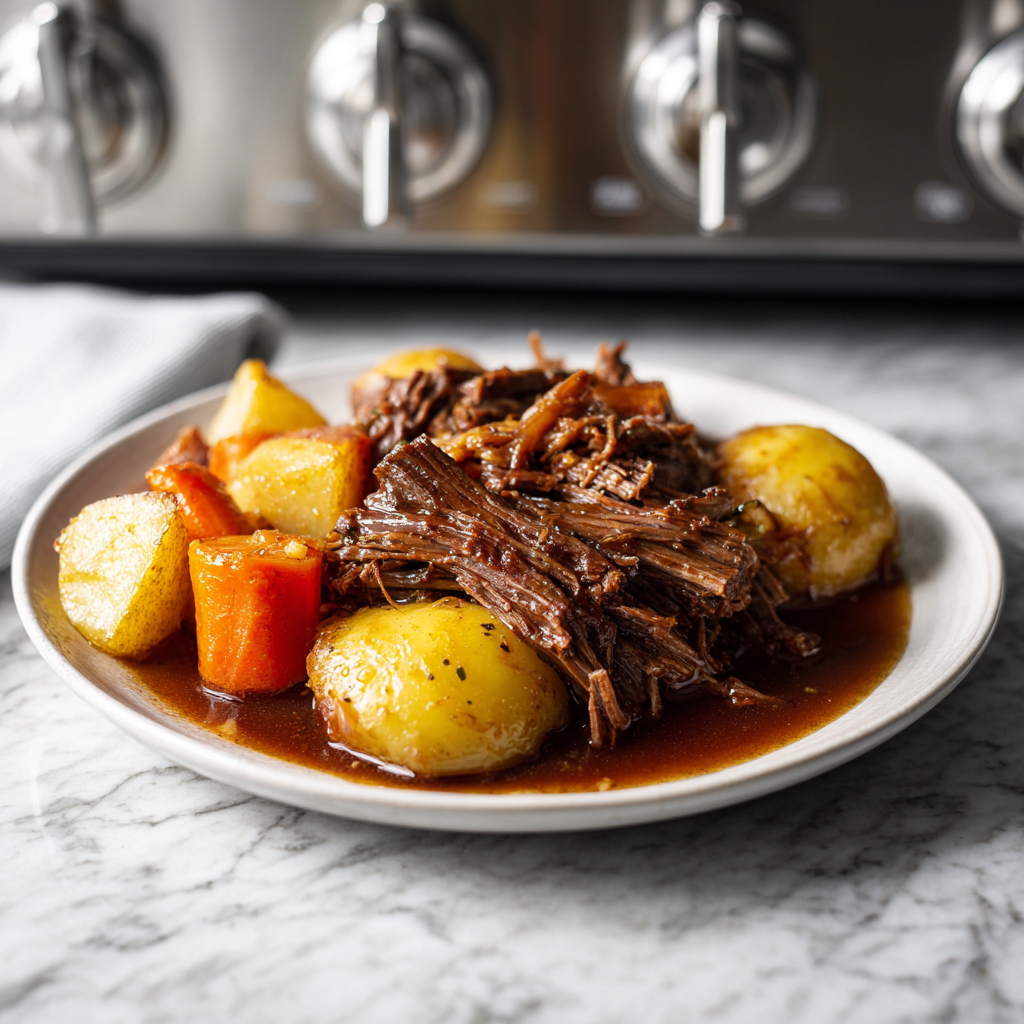
This isn’t a meal you rush. It isn’t a 30-minute miracle. It is a labor of love (though mostly hands-off love) that rewards patience with meat so tender you can eat it with a spoon, and vegetables that have soaked up every ounce of savory, beefy goodness.
If you have struggled with dry, tough roasts in the past, this recipe is your redemption. We are going back to basics: a good cut of meat, a heavy pot, and a slow, gentle braise. The result is a rich, dark, glossy gravy coating succulent strands of beef that simply melt in your mouth.
🐄 The Cut Matters: Why Chuck Roast is King
You cannot make a good pot roast with a lean cut of meat. Do not buy a “Round Roast” or a “Sirloin Roast” for this. They are too lean and will dry out into leather during the long cooking process.
You need a Chuck Roast.
The chuck comes from the shoulder area of the cow. It is a hard-working muscle, which means it is loaded with connective tissue and collagen. When you cook it quickly (like a steak), it is tough and chewy. But when you cook it slowly at a low temperature with liquid (braising), that tough collagen dissolves into gelatin. This gelatin is what gives the meat its silky, moist texture and thickens the sauce naturally, creating that coveted viscous mouthfeel.
Look for a roast with plenty of white marbling running through it. Fat equals flavor, and collagen equals tenderness.
🧪 The Science of the Braise
Braising is a magical cooking method. It combines dry heat (searing) and moist heat (simmering).
- The Maillard Reaction: We start by searing the meat aggressively on all sides. This browning creates hundreds of new flavor compounds and adds complexity to the final sauce.
- Deglazing: Adding liquid to the hot pan lifts the “fond” (the brown bits stuck to the bottom). This is pure flavor concentration.
- Low and Slow: By keeping the temperature low and the lid on, we create a humid environment that gently breaks down the muscle fibers without squeezing out the moisture.
🥣 Ingredients
This is humble, peasant food at its finest. You don’t need truffle oil or saffron. You just need quality basics.
- Beef Chuck Roast: 3-4 lbs. Boneless is easier to slice, but bone-in adds more flavor to the gravy.
- Salt & Pepper: Be generous. It’s a big piece of meat.
- Oil: Vegetable or Canola oil for searing (high smoke point).
- Onions: 2 large yellow onions, cut into thick wedges. They will melt into the sauce.
- Carrots: 1 lb, peeled and cut into large chunks. Don’t cut them too small or they will turn to mush.
- Potatoes: 1.5 lbs. Yukon Gold are best because they are creamy but hold their shape. Russets can disintegrate.
- Garlic: 4-5 cloves, smashed.
- Tomato Paste: 2 tablespoons. This adds umami and richness.
- Red Wine: 1 cup. A dry red like Cabernet Sauvignon or Merlot. If you don’t consume alcohol, substitute with more beef broth and a splash of balsamic vinegar.
- Beef Broth: 2-3 cups. Enough to come halfway up the side of the meat.
- Herbs: Fresh thyme and rosemary sprigs. Dried works too, but fresh is better for braising.
📝 Instructions
Step 1: The Sear (Crucial!)
- Prep the Meat: Take your roast out of the fridge 30 minutes before cooking. Pat it completely dry with paper towels. Wet meat steams; dry meat sears. Season liberally with salt and pepper on every single side.
- Heat the Pot: Heat 2 tablespoons of oil in a large Dutch oven over medium-high heat until it is shimmering.
- Brown: Carefully place the beef in the pot. Sear for 4-5 minutes per side without moving it. You want a deep, dark brown crust. Do not skip the edges! Once browned, remove the meat to a plate.
Step 2: The Aromatics
- Sauté: Reduce heat to medium. Add the onions and carrots (reserve potatoes for later) to the pot. Cook for 5 minutes until slightly browned. Add the garlic and tomato paste. Stir constantly for 1 minute to cook out the raw tomato flavor.
- Deglaze: Pour in the red wine. Use a wooden spoon to scrape up all the brown bits from the bottom of the pot. Let the wine simmer for 3-4 minutes to reduce slightly.
Step 3: The Braise
- Combine: Return the beef (and any juices on the plate) to the pot. Nestle it in the vegetables.
- Liquid: Pour in the beef broth until it reaches about halfway up the side of the roast. The roast should not be submerged. Toss in your herb sprigs.
- Cook: Cover with a heavy lid.
- Oven Method (Preferred): Bake at 300°F (150°C) for 3 to 3.5 hours.
- Stovetop Method: Simmer on low heat for 3 to 3.5 hours.
- Slow Cooker Method: Transfer everything to a slow cooker and cook on Low for 8 hours.
Step 4: The Potatoes
- Add Potatoes: About 45 minutes to 1 hour before the roast is done, add the potato chunks to the pot. If you add them at the beginning, they will dissolve. We want them tender but intact.
Step 5: The Gravy (Optional but Recommended)
- Once the meat is fork-tender (it should fall apart with zero resistance), remove the meat and veggies to a serving platter.
- Skim: Skim off excess fat from the surface of the liquid in the pot.
- Thicken: If you like a thicker gravy, make a slurry (1 tbsp cornstarch + 1 tbsp water) and whisk it into the boiling liquid. Let it bubble for 2 minutes until thick and viscous.
💡 Troubleshooting Common Issues
“My meat is tough.”
It isn’t done yet. Put it back in the oven. Pot roast goes through a phase where it gets tough before the collagen melts. Give it another 45 minutes.
“My vegetables are mush.”
You cut them too small or added them too early. Cut carrots and potatoes into large 2-inch chunks.
“The gravy is bland.”
Did you salt the meat enough at the beginning? If not, add salt to the gravy now. A splash of Worcestershire sauce or soy sauce can also wake up a bland gravy.
🍽️ Serving Suggestions
Classic Pot Roast is a “meat and three” meal in one pot, but it pairs beautifully with:
- Crusty Bread: To sop up that incredible gravy.
- Green Beans: A bright, crisp green vegetable contrasts nicely with the rich, soft stew.
- Mashed Potatoes: Yes, even if you have roasted potatoes in the pot, serving the meat over creamy mash is a power move.
🧊 Storage and Reheating
Leftovers: Pot roast tastes even better the next day. Store in an airtight container in the fridge for up to 4 days. The fat will solidify on top; you can remove it or keep it for flavor.
Reheating: Reheat gently in a pot on the stove, or in the oven at 350°F covered with foil. Do not microwave on high or the meat might toughen up.
Freezing: Freeze the meat and gravy in freezer-safe bags for up to 3 months. Potatoes do not freeze well (they become mealy), so try to eat those first.
🏁 Conclusion
Classic Pot Roast is the ultimate comfort food. It is forgiving, it is filling, and it feeds the soul. There is something deeply satisfying about taking a tough, inexpensive cut of meat and transforming it into a royal feast through nothing but time and heat.
So, clear your Sunday schedule, open a bottle of wine (use a cup for the pot and a glass for yourself), and let the oven do the work. Your house will smell amazing, and your family will thank you.
Juicy Classic Pot Roast
Ingredients
Equipment
Method
- Preheat oven to 300°F (150°C). Pat roast dry and season heavily with salt and pepper.
- Heat oil in a Dutch oven over medium-high heat. Sear beef on all sides until deeply browned (5 mins per side). Remove beef.
- Add onions and carrots (save potatoes) to the pot. Sauté for 5 mins. Add garlic and tomato paste; cook 1 min.
- Pour in red wine to deglaze, scraping up browned bits. Simmer for 3 minutes.
- Return beef to the pot. Add broth until it reaches halfway up the beef. Add herbs.
- Cover and bake for 2 hours.
- Add potatoes to the pot. Cover and bake for another 1 to 1.5 hours, until meat is falling apart.
- Remove meat and veggies. Skim fat from sauce. Thicken with cornstarch slurry if desired.