Ultimate Korean BBQ Steak Bowl Recipe
The Ultimate Korean BBQ Steak Bowl: A Complete Guide to Flavor, Technique, and Meal Prep
There is something undeniably comforting and deeply satisfying about a bowl of warm rice topped with savory, sweet, and perfectly caramelized meat, accompanied by fresh vegetables and a perfectly fried egg. The Korean BBQ Steak Bowl is a modern weeknight superhero, combining the rich, complex flavors of traditional Korean barbecue with the convenience and accessibility of a one-bowl meal. Whether you are a seasoned home cook looking to expand your culinary repertoire or a beginner wanting to impress your family with restaurant-quality flavors, this comprehensive guide will take you through everything you need to know to master this exceptional dish.
In recent years, “bowl food” has taken the culinary world by storm. It is not just a trend; it is a highly practical and aesthetically pleasing way to consume a balanced meal. The Korean BBQ Steak Bowl exemplifies this perfectly. It offers carbohydrates from the fluffy white rice, high-quality protein from the marinated steak and fried egg, and essential vitamins and crunch from the fresh vegetables. The magic, however, lies in the marinade—a glossy, umami-rich concoction that transforms simple cuts of beef into mouth-watering, tender bites of perfection.
Understanding the Flavor Profile of Korean BBQ
To truly appreciate and master the Korean BBQ Steak Bowl, one must understand the foundational flavors of Korean meat dishes, heavily inspired by classic Bulgogi. The secret lies in the balance of salty, sweet, savory, and nutty elements. Soy sauce provides the salty, umami base. Brown sugar or Asian pear (often used in traditional marinades) offers the sweetness that helps caramelize the meat when it hits a hot pan. Garlic and ginger bring an aromatic punch that cuts through the richness of the beef, while toasted sesame oil provides an unmistakable nutty finish that lingers on the palate.
When these ingredients meld together and are exposed to high heat, a Maillard reaction occurs, creating those beautiful, dark, sticky, and slightly charred edges on the steak. This caramelized exterior, paired with the juicy interior of the meat, is what makes Korean BBQ so universally loved. By transferring these flavors into a quick pan-fry method suitable for a bowl meal, you capture the essence of a Korean grill house right in your own kitchen.
The Anatomy of the Perfect Steak Bowl
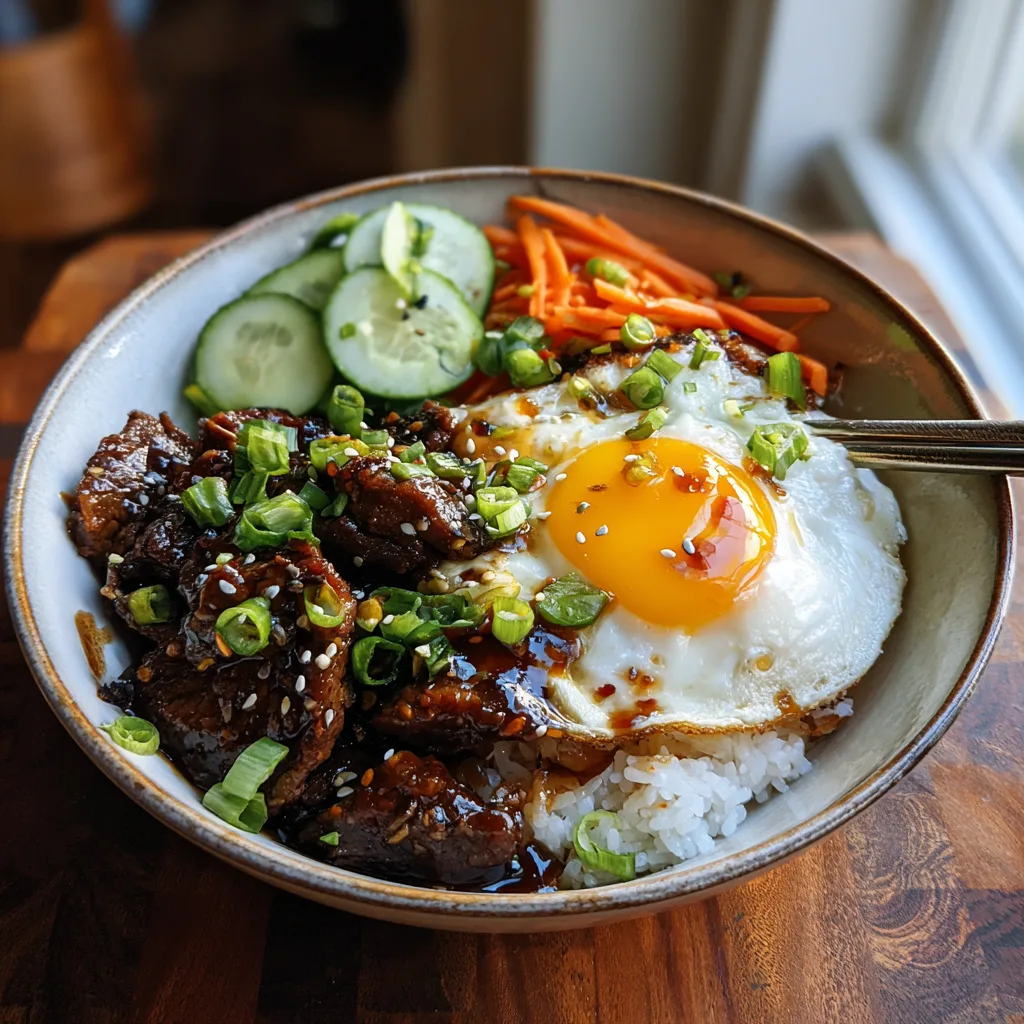
A great bowl is all about contrasting textures and complementing flavors. Let us break down the components that make up this spectacular Korean BBQ Steak Bowl:
1. The Base: Fluffy White Rice
The foundation of your bowl is crucial. Short-grain or medium-grain white rice (such as sushi rice or Calrose) is traditional and highly recommended. These varieties contain more starch, which makes the rice slightly sticky. This stickiness is essential because it helps the rice clump together slightly, making it easier to eat with chopsticks and allowing it to soak up the glorious, glossy sauce from the beef without falling apart. While jasmine rice or brown rice can be substituted for health or pantry-availability reasons, sticky white rice provides the most authentic and satisfying mouthfeel.
2. The Star: Marinated Steak
Choosing the right cut of beef is half the battle. For quick-cooking bowl meals, you want a cut that is naturally tender but robust enough to hold up to a bold marinade. Flank steak, skirt steak, or sirloin are excellent choices. Ribeye is a premium option that yields incredibly buttery, melt-in-your-mouth results. The key is to slice the meat against the grain. This shortens the muscle fibers, ensuring that every bite is tender rather than chewy. The steak is then coated in a rich, dark marinade that doubles as a pan glaze, ensuring every surface is wet, glistening, and packed with flavor.
3. The Crunch: Fresh Vegetables
To offset the heavy, rich, and savory nature of the beef, fresh vegetables are non-negotiable. Sliced English cucumbers offer a crisp, cooling, and refreshing contrast. Julienned carrots add a subtle earthiness and a satisfying crunch. These vegetables are typically served raw in this quick bowl version, though lightly pickling them in rice vinegar and sugar can elevate the dish even further by introducing a bright, acidic tang that cleanses the palate between bites of beef.
4. The Crown: The Fried Egg
No Korean-inspired rice bowl is complete without a sunny-side-up fried egg resting on top. The egg is not just for visual appeal; it serves a crucial culinary function. When you break the yolk, the rich, golden, liquid center spills out, acting as a secondary sauce that coats the beef and mixes into the rice. It adds a luxurious, velvety texture that ties the entire dish together.

5. The Garnish: Green Onions and Sesame Seeds
Garnishes do more than make the food look pretty. Chopped green onions (scallions) provide a sharp, fresh, allium bite that cuts through the sweetness of the marinade. Toasted sesame seeds add a final layer of nuttiness and a delicate textural pop.
Ingredients for Korean BBQ Steak Bowl
Gather the following ingredients to create this masterpiece. These amounts will comfortably serve four people.
For the Steak and Marinade:
- – 1.5 lbs (680g) flank steak, skirt steak, or sirloin
- – 1/2 cup low-sodium soy sauce
- – 1/3 cup packed brown sugar
- – 2 tablespoons toasted sesame oil
- – 4 cloves garlic, minced
- – 1 tablespoon fresh ginger, grated
- – 1 tablespoon rice vinegar
- – 1/2 teaspoon black pepper
- – 1 tablespoon vegetable oil (for frying)
For the Bowl Assembly:
- – 4 cups cooked short-grain or medium-grain white rice (kept warm)
- – 4 large eggs
- – 1 large English cucumber, thinly sliced
- – 1 large carrot, peeled and julienned
- – 3 green onions, thinly sliced (green and white parts)
- – 1 tablespoon toasted sesame seeds
Step-by-Step Instructions
Follow these numbered steps to achieve the perfect glossy, tender, and flavorful steak bowl.
- Prepare the Meat: Begin by placing your chosen cut of steak in the freezer for about 15 to 20 minutes. This is a crucial chef’s trick; slightly firming up the meat makes it significantly easier to slice into uniform, thin strips or bite-sized cubes. Once chilled, slice the steak across the grain into 1/4-inch thick pieces.
- Mix the Marinade: In a medium-sized mixing bowl, whisk together the soy sauce, brown sugar, toasted sesame oil, minced garlic, grated ginger, rice vinegar, and black pepper. Stir until the brown sugar is completely dissolved.
- Marinate the Steak: Add the sliced steak to the bowl with the marinade. Toss the meat thoroughly to ensure every single piece is coated in the dark liquid. Cover the bowl with plastic wrap and let it marinate in the refrigerator for at least 30 minutes. For deeper flavor, you can leave it for up to 4 hours, but avoid leaving it overnight as the salty soy sauce can begin to cure the meat, altering its texture.
- Prepare the Vegetables and Rice: While the meat is marinating, ensure your rice is cooked and keeping warm. Thinly slice the cucumber, julienne the carrot, and chop the green onions. Set these aside so they are ready for quick assembly.
- Cook the Steak: Heat a large skillet or wok over medium-high heat. Add the vegetable oil. Once the oil is shimmering and hot, use tongs to remove the steak from the marinade, letting the excess liquid drip off back into the bowl (do not discard the remaining marinade). Add the steak to the skillet in a single layer. You may need to do this in two batches to avoid overcrowding the pan, which leads to steaming rather than searing. Cook the steak undisturbed for 2 minutes to develop a dark, caramelized crust. Toss and cook for another 1-2 minutes until browned.
- Glaze the Meat: Pour the remaining reserved marinade into the skillet with the cooked beef. Let it bubble and reduce for about 1-2 minutes. The sugars will caramelize, and the sauce will thicken rapidly, coating the beef in a thick, wet, ultra-shiny glaze. Remove from heat immediately to prevent burning.
- Fry the Eggs: In a separate non-stick skillet, heat a small amount of oil or butter over medium heat. Crack the eggs into the pan and fry them sunny-side up until the whites are fully set but the yolks remain runny and brightly colored.
- Assemble the Bowls: Divide the warm, fluffy rice evenly among four wide, shallow bowls. Arrange a generous portion of the glossy, glazed steak on one side of the rice. Place the fresh cucumber slices and julienned carrots adjacent to the beef. Gently lay a sunny-side-up fried egg on top of the rice and beef.
- Garnish and Serve: Spoon any extra thickened sauce from the skillet directly over the steak and rice. Generously sprinkle the entire bowl with chopped green onions and toasted sesame seeds. Serve immediately while hot.
Korean BBQ Steak Bowl
Ingredients
Equipment
Method
- Place the steak in the freezer for 15-20 minutes to firm up, then slice thinly against the grain into bite-sized pieces or strips.
- In a bowl, whisk together the soy sauce, brown sugar, sesame oil, minced garlic, grated ginger, rice vinegar, and black pepper.
- Add the sliced steak to the marinade, toss to coat well, and let it sit in the refrigerator for at least 30 minutes.
- While marinating, prep your cucumber, carrots, and green onions, and ensure your rice is warm.
- Heat vegetable oil in a large skillet over medium-high heat. Remove steak from marinade (reserve the leftover liquid) and cook in a single layer for 2 minutes undisturbed, then toss and cook for 1-2 more minutes.
- Pour the reserved marinade into the pan with the beef. Let it boil and reduce for 1-2 minutes until it becomes a thick, glossy glaze coating the meat. Remove from heat.
- In a separate pan, fry the eggs sunny-side up until the whites are set but yolks are still runny.
- Assemble the bowls: divide the warm rice, top with the glazed beef, fresh cucumbers, julienned carrots, and a fried egg. Garnish heavily with green onions and sesame seeds.
Notes
Tips for the Best Results
To elevate your Korean BBQ Steak Bowl from good to extraordinary, consider these pro-tips:
The Art of Slicing: As mentioned, freezing the meat briefly is a game-changer. However, equally important is identifying the grain of the meat—the direction the muscle fibers run. Always cut perpendicular to these lines. This severs the tough fibers, making even cheaper cuts of meat incredibly tender.
Don’t Overcrowd the Pan: It is tempting to dump all the meat into the skillet at once to save time. Resist this urge. Overcrowding drops the temperature of the pan, causing the meat to release its juices and boil rather than fry. You will miss out on those delicious, charred edges that define good Korean BBQ.
Perfecting the Egg: For a perfect sunny-side-up egg with fully cooked whites and a pristine yolk, try the basting method. Fry the egg in a bit of oil, and once the bottom sets, add a teaspoon of water to the pan and immediately cover it with a lid for 30 seconds. The steam will gently cook the top of the white without clouding the yolk.
Variations and Substitutions
The beauty of the Korean BBQ Steak Bowl is its versatility. It serves as a fantastic canvas for various dietary needs and flavor preferences.
Alternative Proteins: If you do not eat beef, this marinade is spectacularly versatile. It works wonderfully with thinly sliced chicken thighs, ground turkey, or even pork shoulder. For a vegetarian or vegan option, firm tofu (pressed and cubed) or thick slices of portobello mushrooms soak up the glossy marinade perfectly.
Grain Swaps: While short-grain white rice is traditional, you can easily substitute quinoa, cauliflower rice, or brown rice for a lower-carb or higher-fiber alternative. The dish will still be delicious, though the texture will be slightly less sticky.
Vegetable Additions: Feel free to raid your crisper drawer. Sautéed spinach with a touch of sesame oil and garlic is a traditional side (sigeumchi namul) that fits perfectly in this bowl. Blanched bean sprouts, lightly charred broccoli, or sliced radishes also make excellent additions.
Spice It Up: The basic recipe is savory and sweet, making it family-friendly. If you crave heat, stir a tablespoon of Gochujang (Korean chili paste) or a teaspoon of red pepper flakes (Gochugaru) into the marinade. You can also serve the final bowl with a heavy drizzle of sriracha or spicy mayo.
Serving Suggestions and Pairings
When serving a rich, deeply savory meal like this, it helps to have beverages and side dishes that balance the palate. A crisp, cold light beer or a glass of dry Riesling pairs beautifully with the sweet and salty glaze of the beef. If you prefer non-alcoholic options, a cold glass of roasted barley tea (boricha) or a refreshing cucumber-infused water complements the meal perfectly.
While the bowl is a complete meal in itself, serving a side of traditional Kimchi (fermented spicy cabbage) is highly recommended. The bold acidity, spice, and effervescence of the kimchi cut right through the richness of the beef and egg yolk, elevating the entire dining experience.
Storage and Meal Prep Guide
The Korean BBQ Steak Bowl is an absolute champion for meal prep, making it a favorite for busy professionals and families.
Storage: Store the cooked rice, glazed beef, and raw vegetables in separate airtight containers in the refrigerator for up to 4 days. It is best to cook the egg fresh when you are ready to eat, as reheated fried eggs tend to become rubbery and lose their runny yolk.
Reheating: To reheat, warm the rice and beef in the microwave until steaming. Add a splash of water to the rice before microwaving to help it regain its fluffy texture. Add the fresh vegetables and a freshly fried egg just before eating to maintain the contrasting temperatures and textures.
Fun Facts and Cultural Context
The flavor profile of this bowl is heavily rooted in Bulgogi, which literally translates to “fire meat” in Korean. Historically, Bulgogi was a dish reserved for royalty and the wealthy elite during the Joseon Dynasty, originally called neobiani. It wasn’t until the 1920s that beef became more widely available and the dish evolved into the thinly sliced, marinated, and grilled staple we recognize today.
In traditional Korean dining, meat is rarely eaten alone. It is usually accompanied by rice and an array of small side dishes called banchan. This bowl concept is essentially a modernized, condensed way of enjoying a traditional Korean spread, placing the main protein, the rice, and the vegetable elements (representing the banchan) all into one convenient, harmonious vessel.
Frequently Asked Questions (FAQs)
Do I have to use a wok to make this?
No, while a wok is great for heat distribution, a large, heavy-bottomed cast-iron skillet or a wide stainless steel pan works just as beautifully to get a good sear on the meat.
Can I make the marinade ahead of time?
Absolutely! You can mix the marinade and store it in a jar in the fridge for up to a week before you plan to use it. This makes weeknight dinners even faster.
Why is my meat tough instead of tender?
There are two main culprits: either the meat was cut parallel to the grain instead of across it, or the pan was overcrowded, causing the meat to steam and boil in its own juices rather than searing quickly.
Conclusion
The Korean BBQ Steak Bowl is more than just a quick dinner; it is a symphony of flavors and textures that satisfies on every level. The combination of the hot, sticky rice, the cool crunch of the vegetables, the rich, liquid gold of the egg yolk, and the intensely savory, glossy, caramelized beef creates a culinary experience that you will crave week after week. By following the techniques outlined above—from freezing the meat for perfect slicing to boiling down the marinade into a wet, shiny glaze—you guarantee a restaurant-quality meal right from your own kitchen. Gather your ingredients, heat up your skillet, and prepare to enjoy one of the most comforting, drool-worthy bowls of food you can make.