The Ultimate Guide to Charred Cabbage Alfredo: A Low-Carb Comfort Food Revelation
When we think of comfort food, our minds inevitably drift toward heavy, starch-laden dishes: towering bowls of pasta, rich potato casseroles, or thick slices of crusty bread. However, the culinary world is undergoing a fascinating transformation. Home cooks and professional chefs alike are discovering that you can achieve that exact same level of profound, soul-warming satisfaction by elevating humble vegetables. Enter Charred Cabbage Alfredo. This dish represents a paradigm shift in how we approach both cabbage and classic Italian-American sauces. It is a masterpiece of flavor and texture, proving that low-carb, keto-friendly, or vegetarian eating does not require sacrificing an ounce of indulgence. If you have historically viewed cabbage as a boring, watery side dish or merely coleslaw fodder, prepare to have your culinary worldview completely altered.
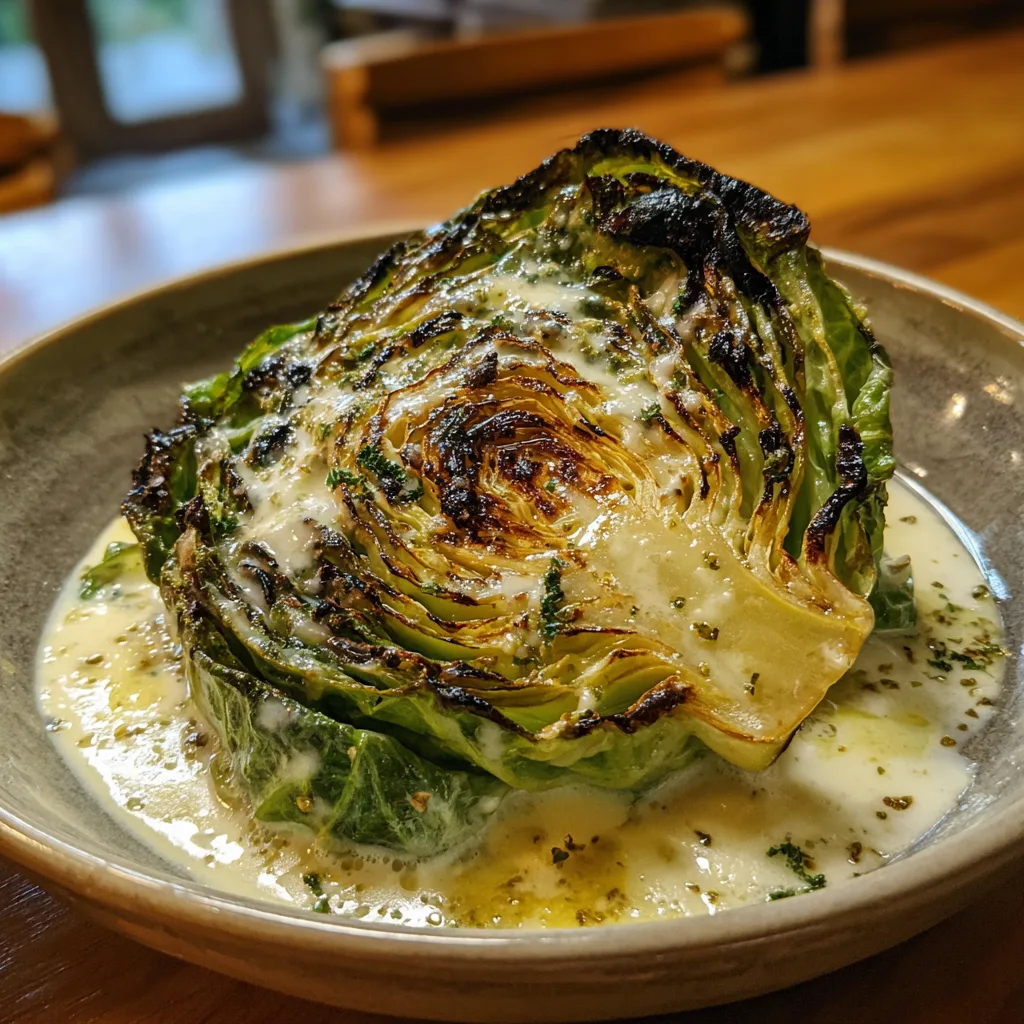
By taking thick, hearty wedges of green cabbage and subjecting them to intense heat, we transform their molecular structure. The natural sugars caramelize, the edges become smoky and crisp, and the interior melts into a tender, buttery sweetness. When you drape this deeply flavorful, charred vegetable in a blanket of rich, glossy, garlic-infused Alfredo sauce, you create a meal that rivals any traditional fettuccine dish. This comprehensive guide will walk you through the science of charring, the secrets to an unbreakable Alfredo sauce, and every step necessary to create this restaurant-quality dish in your own kitchen.
The Renaissance of the Humble Cabbage
For decades, cabbage has been criminally underappreciated in Western home kitchens. It was often boiled to death, resulting in a sulfurous, mushy side dish that generations of children politely pushed around their plates. But cabbage is, in reality, a structural and nutritional powerhouse. It belongs to the Brassica family, sharing its lineage with broccoli, Brussels sprouts, and cauliflower—all vegetables that have recently enjoyed massive spikes in popularity once people realized they were meant to be roasted, not steamed.
Green cabbage, which is the ideal variety for this recipe, is dense, tightly packed, and incredibly resilient. This structural integrity is vital because it allows the vegetable to stand up to high-heat cooking methods without disintegrating. Nutritionally, cabbage is a superstar. It is exceptionally high in Vitamin C, Vitamin K, and dietary fiber, all while being incredibly low in calories and carbohydrates. This makes it the ultimate vehicle for rich, high-fat sauces like Alfredo, balancing out the macros of the meal while providing necessary micronutrients and digestive support.
The Maillard Reaction: The Science of Charring
The success of this dish hinges entirely on one culinary principle: the Maillard reaction. This is the chemical reaction between amino acids and reducing sugars that gives browned food its distinctive flavor. It is what makes a seared steak taste better than a boiled one, and it is what transforms a wedge of raw cabbage into a smoky, sweet, umami-rich delicacy.
To achieve a proper char, you cannot be afraid of high heat. Whether you are using a cast-iron skillet on the stovetop, a screaming hot grill, or a high-temperature oven roast, the goal is to purposefully “burn” the very edges of the cabbage leaves. This blackening is not a mistake; it is a crucial flavor component. The bitterness of the charred edges provides the necessary contrast to the overwhelming richness of the heavy cream and parmesan cheese in the Alfredo sauce. Without that smoky, bitter char, the dish would simply be too heavy and one-dimensional. The char cuts through the dairy fat, engaging different parts of your palate and keeping you coming back for another bite.

The Anatomy of a Perfect Alfredo Sauce
To understand how to make a perfect Alfredo sauce for our charred cabbage, we must first look at its origins. Authentic Italian Fettuccine Alfredo, created in Rome, contains exactly three ingredients: pasta, butter, and Parmigiano-Reggiano cheese. The “sauce” is formed by emulsifying the melting cheese and butter with starchy pasta water.
However, because we are using cabbage instead of pasta, we lack the crucial starchy water needed to bind a traditional Roman Alfredo. Therefore, we must lean into the beloved Italian-American version of the sauce, which utilizes heavy whipping cream as a stable base. Heavy cream provides a luxurious, velvety texture that coats the cabbage wedges perfectly.
The secret to a flawless cream-based Alfredo lies in patience and ingredient quality. You must use fresh, high-quality heavy cream, real unsalted butter, and, most importantly, freshly grated parmesan cheese. Pre-grated cheese from a plastic tub is coated in anti-caking agents like cellulose. These agents prevent the cheese from melting smoothly, resulting in a gritty, grainy sauce. Buy a wedge of real Parmigiano-Reggiano or high-quality domestic parmesan and grate it yourself using a microplane or the fine side of a box grater. It makes an astronomical difference in the final texture of your sauce.
Ingredients for Charred Cabbage Alfredo
Gather the following ingredients to prepare four generous portions of this extraordinary comfort meal:
For the Charred Cabbage:
- – 1 large head of green cabbage (firm and tightly packed)
- – 3 tablespoons olive oil or avocado oil (a high smoke-point oil is necessary)
- – 1 teaspoon kosher salt
- – 1/2 teaspoon freshly cracked black pepper
- – 1/2 teaspoon garlic powder
- – 1/2 teaspoon smoked paprika (optional, but enhances the smoky flavor)
For the Creamy Alfredo Sauce:
- – 1/2 cup (1 stick) unsalted butter
- – 1 and 1/2 cups heavy whipping cream
- – 4 cloves fresh garlic, finely minced
- – 1 and 1/2 cups freshly grated Parmigiano-Reggiano cheese (do not use pre-grated)
- – 1/4 teaspoon ground nutmeg (the secret ingredient for depth)
- – Salt and freshly cracked black pepper, to taste
- – Fresh parsley, finely chopped (for garnish)
Step-by-Step Instructions: Achieving Perfection
Follow these meticulously detailed steps to ensure your cabbage is perfectly tender-crisp and your sauce is flawlessly smooth.
- Preheat the Oven: Preheat your oven to 425°F (220°C). High heat is essential for roasting the cabbage without turning it to mush. Line a large, heavy-duty baking sheet with parchment paper or aluminum foil for easy cleanup.
- Prepare the Cabbage: Remove any loose, damaged, or discolored outer leaves from the head of cabbage. Place the cabbage stem-side down on a stable cutting board. Using a large, sharp chef’s knife, carefully slice the cabbage in half right through the core. Then, slice each half into thick wedges (about 1.5 to 2 inches thick). Crucial step: Leave the core intact! The core acts as the anchor holding the wedge together. If you remove it, the cabbage will fall apart into loose leaves.
- Season the Wedges: Arrange the cabbage wedges in a single layer on the prepared baking sheet. Drizzle both sides of the wedges generously with the olive oil. In a small bowl, mix the kosher salt, black pepper, garlic powder, and smoked paprika. Sprinkle this seasoning mixture evenly over both sides of the cabbage wedges. Rub the oil and spices gently into the leaves.
- The Charring Process: Place the baking sheet in the preheated oven. Roast for 25 to 30 minutes. Halfway through the cooking time, carefully flip the wedges using a large spatula. You are looking for the edges to become deeply browned and even blackened in spots, while the thickest part near the core becomes tender enough to pierce easily with a fork. Once cooked, remove from the oven and set aside.
- Begin the Alfredo Sauce: While the cabbage is in its final 10 minutes of roasting, start your sauce. In a large, deep skillet or a saucepan, melt the unsalted butter over medium-low heat. Once the butter is melted and bubbling slightly, add the finely minced garlic. Sauté the garlic for exactly 60 seconds, stirring constantly, until it becomes incredibly fragrant. Do not let the garlic turn brown, as browned garlic turns bitter and will ruin the delicate flavor of the cream sauce.
- Build the Cream Base: Pour the heavy whipping cream into the skillet with the garlic and butter. Whisk gently to combine. Increase the heat slightly to medium and bring the mixture to a very gentle simmer. Allow it to simmer for 3 to 5 minutes, whisking frequently, until the liquid reduces slightly and begins to coat the back of a spoon.
- Incorporate the Cheese: Reduce the heat to the lowest possible setting. Gradually sprinkle in the freshly grated parmesan cheese a handful at a time, whisking continuously until each addition is completely melted and smooth before adding the next. Stir in the ground nutmeg, a pinch of salt, and a generous amount of black pepper. Remove the skillet from the heat immediately.
- Assemble and Serve: Transfer the hot, charred cabbage wedges to individual serving plates or a large communal platter. Generously ladle the hot, glossy Alfredo sauce directly over the cabbage, allowing it to pool beautifully on the plate. Garnish with additional grated parmesan, cracked black pepper, and freshly chopped parsley. Serve immediately while piping hot.
Charred Cabbage Alfredo
Ingredients
Equipment
Method
- Preheat oven to 425°F (220°C). Line a large baking sheet with parchment paper.
- Slice the cabbage in half through the root, then slice into 1.5-inch thick wedges. Keep the core intact to hold the wedges together.
- Place wedges on the baking sheet. Drizzle both sides with olive oil and season evenly with salt, pepper, garlic powder, and smoked paprika.
- Roast in the oven for 25-30 minutes, flipping carefully halfway through, until the cabbage is tender and edges are deeply charred.
- While cabbage finishes, melt butter in a large skillet over medium-low heat. Add minced garlic and sauté for 1 minute until fragrant.
- Whisk in the heavy cream and simmer gently for 3-5 minutes until it begins to thicken slightly.
- Reduce heat to low. Gradually whisk in the freshly grated parmesan cheese until smooth and completely melted. Stir in nutmeg, salt, and pepper. Remove from heat.
- Plate the hot charred cabbage wedges and pour the warm Alfredo sauce generously over the top. Garnish with fresh parsley and serve immediately.
Notes
Mastering the Technique: Troubleshooting Common Pitfalls
Even with a straightforward recipe, things can occasionally go awry. Here is how to navigate the most common issues when making Charred Cabbage Alfredo.
The Sauce Broke or Separated: A “broken” Alfredo sauce looks oily, grainy, and unappetizing. This happens for two main reasons: either the heat was too high when you added the cheese, causing the dairy proteins to curdle and separate from the fat, or you used pre-grated cheese coated in starches. To fix a slightly broken sauce, remove it from the heat entirely and whisk in a tablespoon of cold heavy cream vigorously. To prevent it, always remove the pan from active heat before whisking in high-quality, freshly grated cheese.
The Cabbage is Watery: If your cabbage releases too much water on the plate, diluting your beautiful Alfredo sauce, it means it was not roasted at a high enough temperature. High heat evaporates the vegetable’s surface moisture quickly, allowing it to roast and char. If the oven is too cool, the cabbage effectively steams in its own juices. Ensure your oven is fully preheated to 425°F before putting the pan inside.
Creative Variations and Protein Pairings
Charred Cabbage Alfredo is incredibly satisfying on its own, making it a stellar vegetarian main course. However, its rich flavor profile makes it an excellent canvas for customization.
Adding Protein: If you want to boost the protein content, this dish pairs flawlessly with seared chicken breast, grilled shrimp, or sliced Italian sausage. For an ultimate savory explosion, fry up half a pound of diced bacon or pancetta until crispy, drain the excess fat, and fold the crispy pork bits directly into the finished Alfredo sauce before pouring it over the cabbage.
Spice It Up: If you appreciate a touch of heat, a heavy pinch of crushed red pepper flakes added to the butter and garlic during the sauce-making process will infuse the Alfredo with a beautiful, lingering warmth that contrasts wonderfully with the cooling cream.
Alternative Cheeses: While Parmigiano-Reggiano is the traditional standard, you can experiment with other hard, aged cheeses. Pecorino Romano adds a sharper, saltier bite, while an aged Asiago brings a nuttier flavor profile to the sauce.
Conclusion
Charred Cabbage Alfredo is more than just a clever low-carb substitute for pasta; it is a standalone culinary triumph. It teaches us that treating vegetables with the same respect and high-heat techniques usually reserved for premium cuts of meat yields spectacular results. The contrast between the robust, earthy, charred crunch of the roasted cabbage and the silky, luxurious drape of the garlic parmesan cream sauce creates a dining experience that is both elegant and deeply comforting. Whether you are strictly adhering to a keto lifestyle, attempting to incorporate more vegetables into your family’s diet, or simply looking for an incredibly delicious new dinner rotation, this recipe guarantees a completely clean plate and a thoroughly satisfied palate.