Crispy Roasted Cabbage Steaks
Crispy Roasted Cabbage Steaks with Creamy Garlic Aioli: The Humble Vegetable Transformed 🥬✨
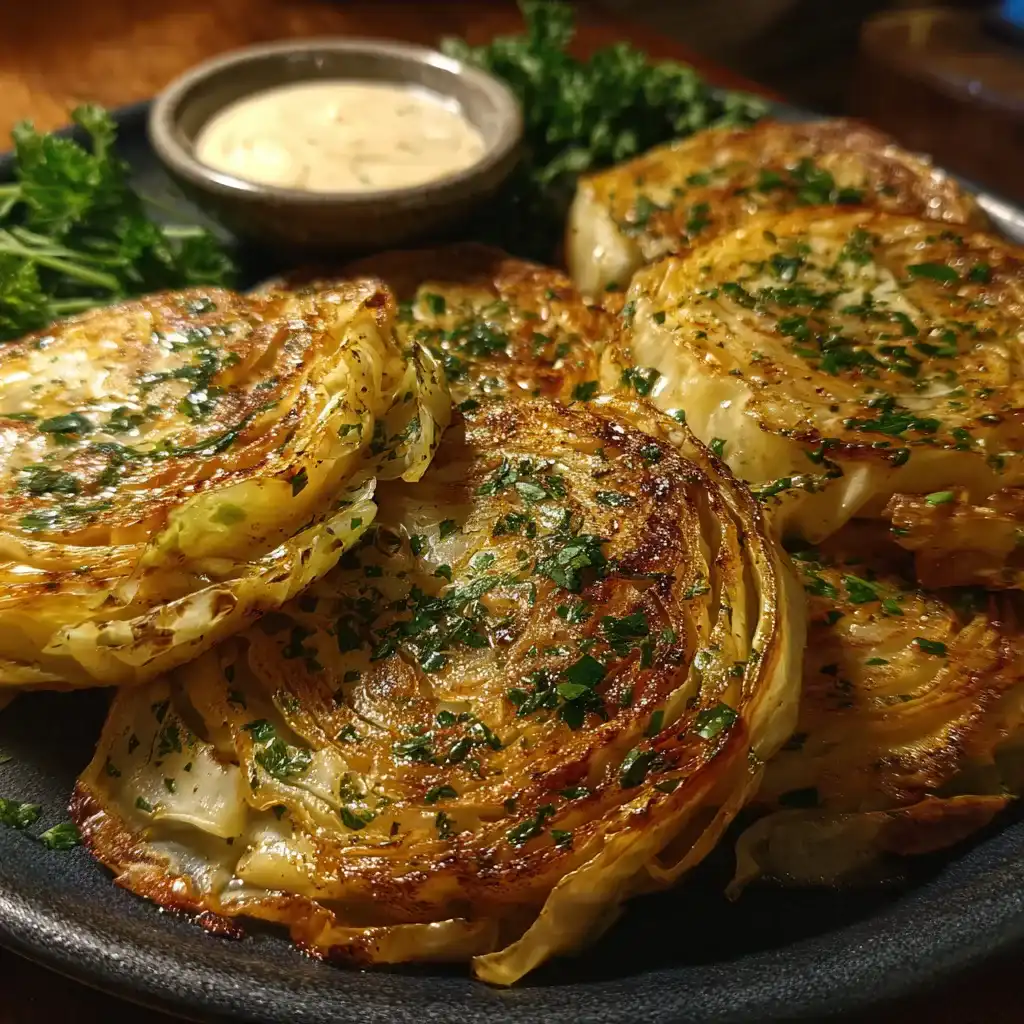
If you grew up thinking of cabbage as the soggy, boiled, sulfur-smelling component of St. Patrick’s Day dinner, prepare to have your mind completely blown. The image above depicts cabbage in its most glorious form: Roasted Cabbage Steaks. When sliced thick, brushed with fat, and subjected to high heat, this humble, budget-friendly vegetable undergoes a metamorphosis.
The edges become impossibly crispy, tasting almost like kale chips, while the core becomes tender, sweet, and buttery. It is a dish that plays with texture and flavor contrasts—savory, nutty, sweet, and charred. Whether you are Keto, Vegan, Gluten-Free, or just a lover of good food, this recipe is a game-changer. In this extensive guide, we will explore the science of roasting cabbage, the art of the perfect cut, and the secret to that creamy dipping sauce seen in the photo.
The Science: Why Roasting Changes Everything 🔥
Raw cabbage has a peppery, slightly bitter bite. Boiled cabbage releases sulfur compounds that can be unappetizing. But roasted cabbage? That is where the magic happens. This process relies on two chemical reactions:
- Caramelization: Cabbage has a surprisingly high natural sugar content. At high temperatures (400°F+), these sugars break down and turn brown, creating a nutty, sweet flavor profile similar to roasted onions.
- The Maillard Reaction: This is the chemical reaction between amino acids and reducing sugars that gives browned food its distinctive flavor. It creates the savory “umami” depth that makes these taste like “steaks” rather than just hot salad.
Choosing Your Cabbage 🥬
Not all cabbages are created equal for this specific preparation. To achieve the result in the image, selection is key.
Green Cabbage: The standard “cannonball” cabbage. This is the best choice for steaks. It is dense, holds its shape well when sliced, and can withstand high heat without falling apart.
Savoy Cabbage: This has crinkly, lacy leaves. It makes for incredible texture and extra crispiness, but it is more delicate and cooks faster. If using Savoy, reduce your cooking time.
Red Cabbage: While delicious, red cabbage is denser and takes longer to cook. It also tends to bleed color, so it won’t have that golden-brown aesthetic seen in the photo.
The Cutting Technique 🔪
The structural integrity of your “steak” depends on how you cut it. You must leave the core intact.
1. Prep: Remove the loose, damaged outer leaves of the cabbage. Rinse and dry thoroughly.
2. The Base: Slice a thin layer off the bottom of the stem so the cabbage creates a flat base and can stand upright.
3. The Slice: Cutting from top to bottom, slice the cabbage into 1-inch to 1.5-inch thick slabs. If you cut them too thin, they will burn. Too thick, and the center will be raw when the outside is done.
4. The Core: Do not cut the core out! The core binds the leaves together. If you remove it, your steak will collapse into coleslaw.
Ingredients
This recipe creates a savory, rich side dish that serves 4.
The Steaks:
– 1 medium head of green cabbage (approx. 2-3 lbs)
– 1/4 cup extra virgin olive oil (or melted butter for richer flavor)
– 3 cloves garlic, minced
– 1 teaspoon smoked paprika (adds a bacon-like flavor)
– 1/2 teaspoon onion powder
– Salt and freshly cracked black pepper to taste
– 1 tablespoon fresh lemon juice
The Creamy Dipping Sauce (Spicy Aioli):
– 1/2 cup mayonnaise (or Greek yogurt for a lighter version)
– 1 tablespoon Sriracha or chili garlic sauce
– 1 teaspoon lemon juice
– 1/2 teaspoon garlic powder
– A pinch of salt
Garnish:
– Fresh chopped parsley or cilantro
Instructions
Roasted Garlic Cabbage Steaks
Ingredients
Equipment
Method
- Preheat oven to 425°F (220°C). Line a baking sheet with parchment paper.
- Slice the bottom stem off the cabbage to create a flat base. Slice the cabbage vertically into 1-inch thick steaks.
- In a small bowl, mix olive oil, minced garlic, smoked paprika, onion powder, salt, and pepper.
- Place cabbage steaks on the baking sheet. Brush generously with the oil mixture on both sides.
- Roast for 20-25 minutes until edges are crispy and brown.
- Carefully flip the steaks and roast for another 10-15 minutes until the center is tender.
- Meanwhile, mix mayonnaise, Sriracha, and garlic powder to create the dip.
- Remove cabbage from oven, drizzle with lemon juice, garnish with herbs, and serve with the dip.
Notes
- Preheat: Preheat your oven to 425°F (220°C). High heat is non-negotiable for crispy edges. Line a large baking sheet with parchment paper for easy cleanup, or grease it directly for better browning.
- Prepare the Cabbage: Using the technique described above, slice your cabbage into 1-inch thick steaks. You should get 4-6 good steaks from a medium head. Place them on the baking sheet, ensuring they are not touching. Crowding creates steam, and steam kills crispiness.
- Make the Marinade: In a small bowl, whisk together the olive oil (or melted butter), minced garlic, smoked paprika, onion powder, salt, and pepper.
- Season: Brush the oil mixture generously over both sides of the cabbage steaks. Don’t be shy—cabbage is a sponge and needs the fat to conduct heat into the leaves.
- Roast: Place in the oven and roast for 20-25 minutes.
- The Flip (Carefully!): Remove the pan. The bottoms should be deeply browned. Very carefully flip the steaks using a large spatula. If a few outer leaves fall off, that’s okay—those become the “chef’s treat” crispy bits.
- Finish: Roast for another 10-15 minutes until the other side is golden and the center is tender when pierced with a knife.
- The Acid Hit: As soon as they come out of the oven, drizzle the steaks with the fresh lemon juice. This acid cuts the richness and brightens the earthy flavor.
- Make the Sauce: While the cabbage roasts, whisk together the mayonnaise, Sriracha, lemon juice, garlic powder, and salt until smooth.
- Serve: Transfer to a platter, sprinkle with fresh parsley, and serve immediately with the dipping sauce on the side.
Troubleshooting: Avoiding the “Soggy Steak” 🌧️
The biggest complaint people have with roasted vegetables is sogginess. Here is how to avoid it:
Dry your veggie: If you rinse your cabbage, dry it completely. Any water left on the leaves will boil in the oven.
High Heat: Do not roast below 400°F. Low heat slowly steams the vegetable; high heat blasts the moisture away.
Don’t Crowd: Airflow is essential. If your pan is too small, use two pans.
Variations to Elevate the Dish 🧀🥓
Once you master the basic recipe, try these twists:
1. The Bacon Blue
Top the roasted steaks with crumbled bacon and blue cheese crumbles during the last 2 minutes of cooking. The salty, funky cheese pairs perfectly with the sweet cabbage.
2. The Parmesan Crust
Mix grated Parmesan cheese with panko breadcrumbs. Sprinkle this over the steaks after flipping them. It creates a crunchy, cheesy crust that is irresistible.
3. Asian Fusion
Swap the olive oil for sesame oil. Season with ginger powder instead of paprika. Glaze with a mix of soy sauce and maple syrup in the final 5 minutes.
Serving Suggestions 🍽️
Roasted Cabbage Steaks are versatile. They can be:
The Main Event: For a vegetarian dinner, serve two steaks over a bed of quinoa or wild rice with roasted chickpeas.
The Side Dish: They pair beautifully with pork chops, roast chicken, or sausages. The sweetness of the cabbage complements savory meats perfectly.
Conclusion
This dish is proof that you don’t need expensive ingredients to create a gourmet experience. With just a head of cabbage, some good oil, and the right technique, you can create a dish that is visually stunning (as seen in our reference photo) and deeply satisfying. It is healthy, low-carb, and bursting with flavor. So next time you are in the produce aisle, don’t walk past that humble green head—grab it, roast it, and enjoy the crunch.