Fruit Rooster Centerpiece Platter
Fruit Rooster Centerpiece Platter: The Ultimate Party Wow Factor!
Need a centerpiece for your next gathering that is both stunning and healthy? Look no further than the remarkable Fruit Rooster Centerpiece Platter. This isn’t just any fruit display; it’s a piece of edible art, guaranteed to stop traffic and initiate endless conversations. Combining the natural vibrant colors and varied textures of tropical fruits into the likeness of a stately rooster, this platter elevates food presentation to a whole new level, showing everyone that you don’t need artificial ingredients to create a true ‘wow’ factor. It’s perfect for summer BBQs, kid’s parties, holiday celebrations, and any event where you want to add a splash of creative joy and fresh energy to the table.
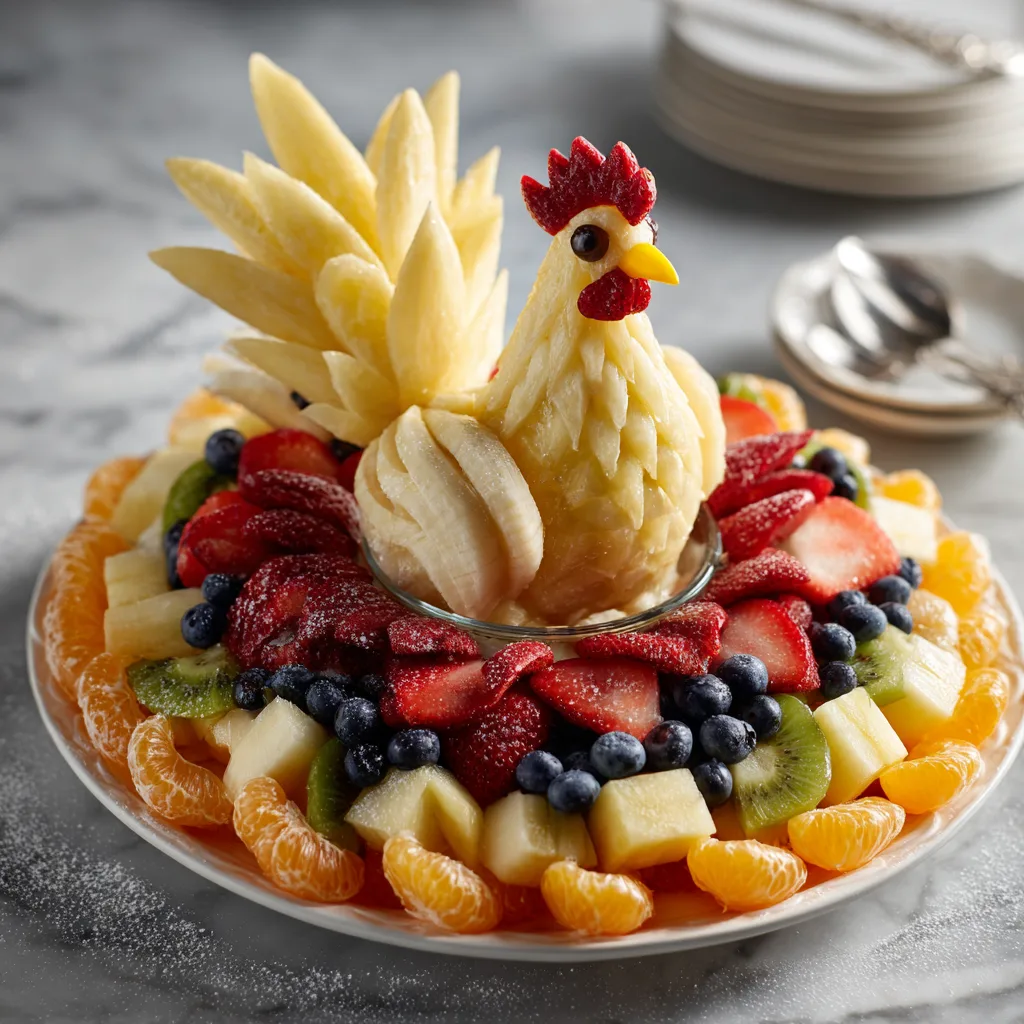
The beauty of this platter is in its ingenious construction. A central banana is transformed into the rooster’s head, complete with a carefully carved fruit comb and wattle, and a simple berry eye. This ‘head’ joins with bananas in a bowl and a majestic pineapple crown, forming a spectacular, feathery ‘body’ that demands attention. Surrounding this avian centerpiece is a structured mandala of fresh fruits, perfectly arranged to showcase nature’s diverse bounty. It’s a visually spectacular display that celebrates the vibrant hues of mandarins, pineapples, strawberries, and blueberries. Every element is carefully chosen and placed, making it as pleasing to the eye as it is to the palate. Let’s make food fun again!
This comprehensive guide will show you exactly how to construct this edible masterpiece from start to finish. From selection of the perfect, firm bananas to the final detailed garnishes, we’ll walk you through the entire process. Creating this platter is more than just a job; it’s a fun, engaging, and rewarding process that taps into your inner artist. Whether you are a seasoned party planner or a parent looking for a creative snack idea, this is a project you can achieve with impressive results. Get ready to impress your guests, make healthy food incredibly fun, and create a core memory that revolves around the art of fresh fruit.
The Art of the Edible Platter
Food presentation is an ancient art form that goes far beyond simply making food look palatable. It’s about creating an experience, engaging the senses, and signaling care and attention to detail. An elaborate fruit platter like our Fruit Rooster takes this to the extreme, but at its core, it’s about making healthy food a celebrated part of any event. When you serve food in a fun and visually dramatic way, people are not just eating; they are partaking in a shared moment. It’s a non-verbal way to make an occasion feel special and to encourage guests to interact and enjoy themselves. The visual spectacle becomes a conversation starter, fostering connections and making the gathering more memorable.
Furthermore, in a world often saturated with processed and sugary snacks, an intricate, fresh fruit display offers a powerful alternative. It presents nature’s candy in a context of high art and effort, making it more desirable and appreciated. It challenges the notion that healthy food is boring or that great presentation is only for high-end dining. It shows that with a bit of creativity and time, you can turn simple, whole ingredients into something extraordinary. This platter is not just a centerpiece; it’s a statement about celebrating nature’s provisions in a fun, elevated, and shared experience.
Constructing a platter like this also connects us to traditions that value the beauty and meaning behind food presentation. While perhaps not a traditional dish from any one cuisine, it speaks to the universal value of creating beauty and making the act of eating a shared celebration. Let’s bring that value back to our modern tables, starting with a fruit rooster!
Detailed Instructions for Construction
Creating this platter is about construction as much as preparation. Think of it as building a fruit-based diorama. Follow these detailed steps for a flawless and sturdy Fruit Rooster Centerpiece.
Ingredients List: Nature’s Bounty, Perfectly Sourced
- For the Fruit Mandala Border:
- 3 bags of mandarin oranges, segments with pith intact (or more, depending on platter size).
- 2 whole pineapples, top and bottom trimmed, skin peeled, and diced into 1-inch chunks (reserve the leafy crown and a 4-inch base section for the rooster).
- 1 lb fresh strawberries, hulled and cut into thin rounds.
- 2 pints fresh blueberries.
- For the Central Rooster (Body, Head, and Tail):
- 1 bunch of medium bananas (ensure they are firm and mostly unblemished, with stems on). You will use 1 for the head, 3-4 for the body, and 1 attached to the pineapple.
- 1 reserved pineapple crown with a small section of fruit attached to bananas (this forms the tail and feathers).
- 1 section of cantaloupe or carrot, for the comb and wattle (approx. 4 inches, for detailed carving).
- 1 small blueberry or dark seed, for the eye.
- 1-2 fresh mint sprigs, for final garnish.
- Powdered sugar, for a subtle finish.
Phase 1: Platter Prep and the Mandala Border
This forms the structured framework for the entire masterpiece.
- Choose a sturdy, clean, rectangular white platter.
- Mandarin Border: Start at one corner and begin carefully arranging the mandarin segments in a single, perfectly straight line along the edge. Continue this process all the way around the perimeter of the platter, creating a flawless, structural border of orange segments. Ensure they are placed as tightly together as possible for a neat look.
- Internal Frame: Inside the mandarin border, create the next structured ring. Alternate rows of the remaining fruits to form concentric bands. We recommend creating a row of pineapple chunks, followed by a row of strawberry rounds, and then a ring of blueberries. Keep the structure tight and the lines clean. Adjust the number of rings to fill the available space before placing the central bowl.
Phase 2: Building the Central Rooster Centerpiece
This is the main artistic challenge, turning whole fruits into the semblance of a majestic rooster.
- Select a central clear glass bowl that is stable and slightly deeper than a cereal bowl.
- Rooster body: Place this bowl centrally on the prepared platter. In the bowl, arrange 3-4 bananas horizontally, curving slightly, to form the main shape of the rooster’s body. Secure them with some of the surrounding diced fruit mixture (a combination of diced mango, strawberries, and blueberries) so they stand on their own. This mixture should be dense enough to act as structural support, much like concrete and rebar. Fill the rest of the bowl with the diced fruit mixture, pressing it gently to pack it, leaving only the tops of the bananas exposed.
- The Head Construction: This is a key step.
- Choose one very firm, ideally straight banana. Maintain its stem; this will be the rooster’s beak.
- Using a very sharp paring knife, meticulously carve a detailed comb and wattle from the cantaloupe or carrot. The comb is the prominent, multi-spiked crest on top; the wattle is the fleshy, pendant lobe below the beak. Reference the hero image for structure. These pieces should be carved with precision to give them personality.
- Attach the comb and wattle: Carefully create small slits on the top and underside of the banana head and gently insert the carved fruit pieces into the slits. A toothpick (carefully hidden) can be used for extra stability, but a tight fit is best.
- Eye: Carefully create a small indent with a skewer and place a single blueberry or a dark seed into the indent to form the eye. Press it in firmly.
- Assemble the Head: Secure the fully constructed banana ‘head’ to the front of the horizontal bananas in the bowl. You may use a toothpick to pin the ‘head’ to the top-most banana of the body. Angle it for a majestic, alert pose.
- The Feathered Tail:
- Prepare the reserved pineapple crown. Keep a 4-inch section of the pineapple fruit attached to the base of the crown.
- Attach a firm banana vertically into the 4-inch pineapple fruit base using a toothpick or skewer. This vertical banana with the pineapple crown forms the feathery tail assembly.
- Assembly: Join this entire vertical tail structure (pineapple crown + attached banana) to the rear of the horizontal bananas forming the body in the glass bowl. Secure it by nestling it into the fruit mixture and, if necessary, pinning the vertical banana to the rear of the body bananas. The bananas should form a continuous ‘S’ curve. The bananas should look like they are a flock of birds flying in formation behind the head, culminating in the single feather-duster tail.
- Final Securement and Finishing: Fill any gaps around the central rooster assembly with remaining diced fruits to ensure a packed, secure look and feel. Garnish with mint sprigs at the base of the central bowl for a touch of green. Right before serving, give the entire platter a subtle, elegant dusting of powdered sugar to make it shimmer, simulating a touch of frost or dew.
Pro Tips for Platter Perfection
Creating this platter is a detailed process, and these expert tips will help ensure yours turns out perfectly every time.
- Choose Your Bananas Wisely: This is arguably the most critical tip. You need incredibly firm, mostly unblemished, medium-sized bananas with their stems still on. Firm bananas are not only easier to carve for the head, but they provide the necessary structural integrity for the body and tail. Overly soft or ripe bananas will fail structurally and will brown too quickly, ruining the effect.
- Work Efficiently and Keep it Cold: Fresh fruit wilts and oxidizes. Prepare as much as possible, then assemble efficiently. Keep all your pre-cut fruits and the bananas chilled in the refrigerator until the last possible moment before assembly. A cold platter holds its structure better and tastes fresher.
- The Anti-Browning Trick: To keep your carved banana head looking pristine for longer, briefly dip the cut surfaces and the un-carved banana skin in a mixture of lemon or lime juice and water (or use an ascorbic acid solution). Pat it dry gently before attaching the fruit parts. This slows down oxidation and browning.
- Detail is Key: Don’t rush the carving of the comb and wattle. Use a very sharp paring knife for clean, precise cuts. The detail in these elements gives the rooster its personality and elevates the platter from simple to exceptional. Reference the image often.
- Choose a Sturdy, Flat Platter: The structure of the mandala depends on a perfectly flat surface. A sturdy ceramic or heavy-gauge metal platter is best. Avoid any platter with a central hump or significant lip that might distort your carefully arranged lines of fruit.
- Plan Your Garnish: The final garnish of mint and a dusting of powdered sugar makes the entire display pop. Place the mint leaves at the base of the central bowl where they look like they are part of the nest. Don’t overdo it with the powdered sugar; a very light, subtle dusting is all that’s needed for an elegant finish.
Creative Variations and Personalizations
The core concept of a fruit-carved rooster is incredibly versatile. Here are some ways to make it your own or adapt it for different occasions:
- Celebrate with the Peacock: Swap the pineapple crown with an elaborate, colorful display of fruit skewers. Make alternating rows of grapes (green and red), blueberries, raspberries, and mango balls on wooden skewers, and arrange them into a dramatic, fanned-out tail, mimicking a peacock’s magnificent display. This is a brilliant and highly interactive option.
- Go for the Farmyard Friend: Try creating different carved animal heads from apples, pears, or whole watermelons. For example, a watermelon basket can be carved into the shape of a pig or a shark. An apple swan is another classic piece of fruit art. You can surround any of these creative fruit-animals with their own structured fruit mandala.
- Miniature Platter for One: Scale the entire concept down for a single, personal fruit serving. Use a much smaller, single banana head and body, and a clear ramekin for the central bowl. Create a small-scale mandala on a saucer or small plate. This makes a spectacular, personal treat for a brunch or a healthy dessert.
- Incorporate Holiday Themes: Adapt the fruit and the design to different holidays. For the Lunar New Year, add more mandarin oranges and perhaps make a dragon or a tiger centerpiece instead of a rooster. For Easter, create a bunny out of white fruits and surround it with a mandala in pastel colors. The possibilities are truly endless, limited only by your imagination and the abundance of fresh fruit available!
Serving Suggestions & Accompaniments
Serving this platter requires as much care as constructing it. Make the experience a celebrated moment at your event.
Keep the platter in the refrigerator until right before you intend to serve it. This is not only for food safety but to maintain the integrity of the structures. Place it in a central, eye-catching location. Provide small, elegant fruit forks or skewers next to the platter so guests can easily select individual pieces from the mandala and from the bowl. The platter is meant to be dismantled and enjoyed, so encourage guests to dive in!
To take the experience to the next level, provide some delicious, healthy dipping sauces on the side. This adds another layer of flavor and makes the act of eating even more interactive. We recommend providing two or three contrasting options. For a light and healthy dip, try a simple yogurt-honey dip made from Greek yogurt, a drizzle of honey, and a dash of vanilla. For a more indulgent treat, a warm chocolate ganache or a simple chocolate sauce made from melted chocolate and a touch of cream is a spectacular choice for dipping. A simple citrus-honey glaze made from mandarin juice, honey, and a pinch of cinnamon is another great, fresh-flavored option. Place these in small, elegant bowls next to the main platter and watch your guests delight in the pairing!
Storage and Make-Ahead
Given that fresh fruit wilts and browns, this platter is best assembled as close to serving time as possible. However, you can make-ahead all the preparation steps to save significant time on the day of your event.
To Make-Ahead: Prepare all your non-oxidizing fruits (mandarins, pineapples, strawberries, and blueberries) the day before. Cover and store them separately in the refrigerator. Meticulously carve the rooster’s head, comb, and wattle, but store them individually in an airtight container lined with a damp paper towel to maintain moisture. Do NOT pre-cut or prepare the bananas for the body or tail assembly, as they will brown and soften. Prepare any dipping sauces up to 3 days in advance and keep them chilled.
Storage of Leftovers: Leftover fruit (not part of the constructed rooster assembly) can be stored in an airtight container in the refrigerator for up to 3 days. While not ideal, you can carefully dismantle the rooster and store the individual fruits for a short period. The best way to use any leftover fruit is to blend it into smoothies or use it as a topping for yogurt or oatmeal. The carved elements and bananas, unfortunately, have a very short lifespan once prepared, so they should be used the same day they are constructed. The best way to avoid waste is to construct a platter scaled to your guest count!
Conclusion
The Fruit Rooster Centerpiece Platter is more than just a party appetizer; it’s a testament to the power of fresh ingredients and creative vision. It takes nature’s candy and transforms it into a spectacle that celebrates beauty, fosters conversation, and makes healthy food the star of any event. While it does require care and detailed execution, the fun and reward of constructing this edible masterpiece are worth every moment. This is a platter that creates not just a meal, but a memory. So grab your sharpest knife, a large platter, and the best fruit nature has to offer. Make your next event truly unforgettable and bring the joy of edible art to your table. Happy creating, and enjoy your stunning, edible, Fruit Rooster masterpiece!
Fruit Rooster Centerpiece Platter
Ingredients
Equipment
Method
- Phase 1: Platter Prep and the Mandarin Border. Start at one corner and carefully arrange the mandarin segments in a single, perfectly straight line along the edge. Continue all the way around the perimeter, creating a flawless, structural border.
- Inside the mandarin border, create the next structured ring. Alternate rows of pineapple chunks, strawberry rounds, and blueberries. Keep the structure tight and the lines clean. Fill the available space with these concentric rings before placing the central bowl.
- Phase 2: Building the Central Rooster Centerpiece. Select a sturdy clear glass serving bowl and place it centrally on the platter. Pack the bowl with the bananas, curve them vertically and secure with a dense mixture of diced mango, strawberries, and blueberries. Fill the bowl completely with the diced fruit mixture, pressing gently to pack it, leaving only the tops of the bananas exposed.
- The Head Construction: Choose one very firm, straight banana with its stem (this will be the beak). Using a sharp paring knife, meticulously carve a detailed comb and wattle from the cantaloupe or carrot. Reference the image for structure.
- Attach the carved comb and wattle pieces by carefully creating small slits in the banana and gently inserting them. A toothpick can be hidden for extra stability, but a tight fit is best. For the eye, create a small indent with a skewer and place a single blueberry or a dark seed into it. Press it in firmly.
- Assemble the Head: Secure the fully constructed banana head assembly to the front of the horizontal body bananas in the bowl, pinning it to the top-most banana if necessary. Angle it for a majestic pose.
- The Feathered Tail: Prepare the reserved pineapple crown, keeping a 4-inch section of the pineapple fruit attached to the base. Attach a firm banana vertically into the pineapple fruit base using a toothpick/skewer. This whole unit is the tail assembly.
- Join this vertical tail structure (pineapple crown + attached banana) to the rear of the body bananas in the glass bowl, securing it by nestling it into the fruit mixture and, if necessary, pinning it to the rear of the body bananas. The bananas should form a continuous ‘S’ curve, culminating in the single feather-duster tail.
- Final Garnish: Fill any gaps around the central rooster assembly with remaining diced fruits to ensure a packed, secure look. Garnish with mint sprigs at the base of the central bowl and right before serving, give the entire platter a subtle, elegant dusting of powdered sugar.