Teriyaki Chicken Rice Bowls
Better-Than-Takeout Teriyaki Chicken Rice Bowls: The Ultimate 30-Minute Meal
There is a reason why the “rice bowl” has become a staple in modern dining. It satisfies a primal craving for variety and texture: the warmth of fluffy grains, the savory punch of protein, and the refreshing crunch of vegetables. Among the pantheon of rice bowls, one reigns supreme: the Teriyaki Chicken Bowl.
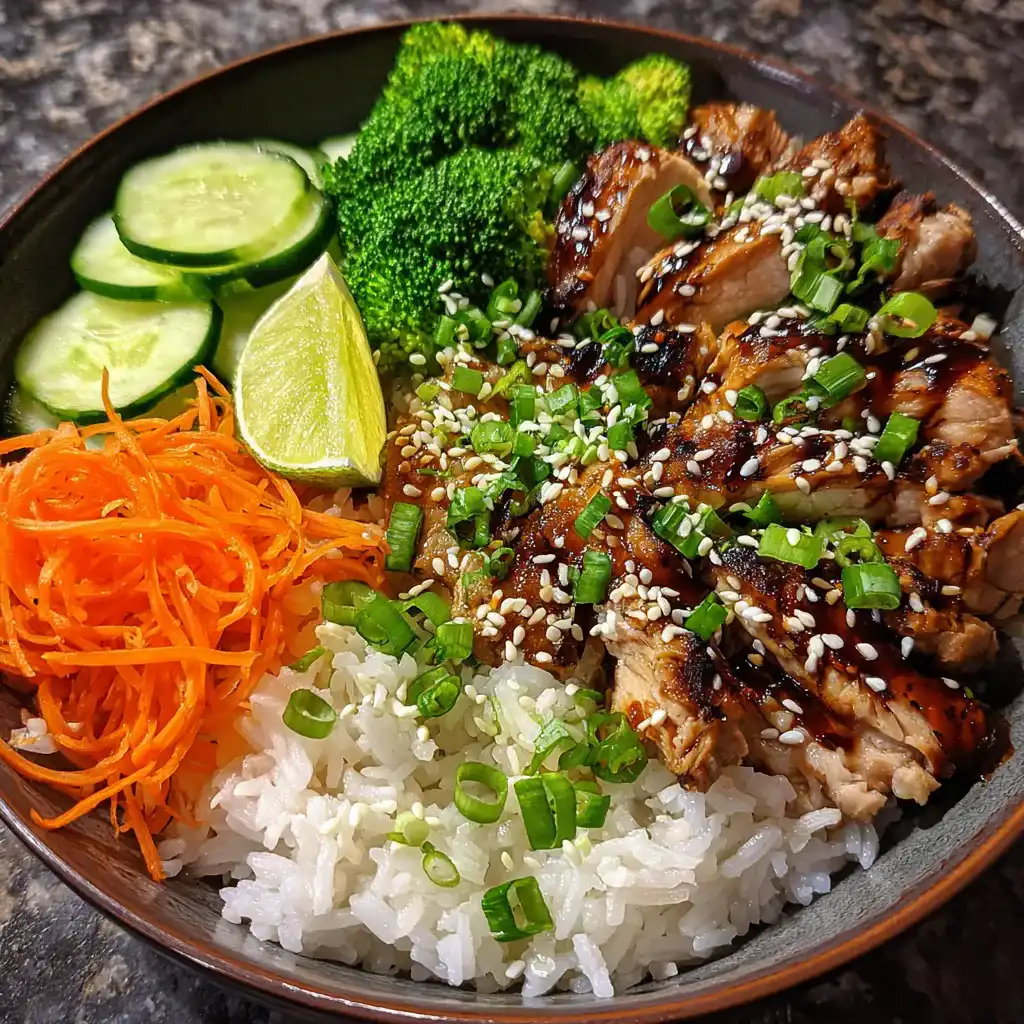
Looking at the image above, you can almost taste the balance. You see the dark, glossy lacquer on the chicken—a sign of a perfectly reduced sauce. You see the vibrant green of the broccoli and the bright orange of the shredded carrots, promising nutritional density alongside comfort. This isn’t just a bowl of food; it’s a masterclass in texture and flavor contrast.
While it is tempting to grab a bottle of pre-made sauce from the grocery store, I am here to tell you that the secret to a restaurant-quality bowl lies in making your own glaze. It takes less than five minutes, uses pantry staples, and lacks the cloying, artificial aftertaste of bottled versions. In this guide, we will break down how to achieve that perfect sticky chicken, how to prep your veggies for maximum crunch, and how to assemble a bowl that looks as good as it tastes.
The Holy Grail: Homemade Teriyaki Sauce
Authentic teriyaki is a Japanese cooking technique (teri meaning luster or shine, and yaki meaning grilled or broiled). The sauce is traditionally a simple mixture of soy sauce, sake (or mirin), and sugar. Western adaptations often add garlic, ginger, and cornstarch to create a thicker, stickier glaze that clings to the meat.
For this recipe, we are bridging the gap. We want the depth of flavor from fresh aromatics but the convenience of a sauce that thickens quickly. The key is balance. You need the saltiness of the soy sauce to cut through the sweetness of the brown sugar, and the acidity of the mirin (sweet rice wine) to round it all out. When this mixture hits the hot pan, the sugars caramelize, coating the chicken in that signature dark, mahogany glaze you see in the photos.
Chicken Thighs vs. Chicken Breasts
Let’s settle the debate right now: for the best Teriyaki Chicken, use boneless, skinless chicken thighs. Chicken breast is lean, but it dries out quickly, especially when subjected to the high heat needed to sear the meat and caramelize the sauce. Thighs have a higher fat content, which keeps them juicy and tender even if you accidentally cook them a minute too long.
If you absolutely must use chicken breasts, pound them to an even thickness before cooking and be vigilant about not overcooking them. However, if you want that melt-in-your-mouth texture shown in our main image, thighs are the way to go.
The Vegetable Component: Cooked vs. Raw
A great rice bowl is all about the interplay of temperatures. Notice in the picture how we have steamed broccoli (warm/tender) paired with cucumber and carrots (cold/crisp). This contrast keeps the palate engaged.
The Broccoli: Briefly steamed or blanched. You want it bright green and “al dente,” not mushy and olive-colored.
The Carrots: Raw and shredded. This adds a natural sweetness and a snappy crunch that mimics a slaw.
The Cucumber: Sliced thin and raw. This provides a cooling, hydration element that cuts through the salty, rich sauce.
Ingredients
Here is your shopping list for a vibrant, healthy, and delicious dinner. The sauce ingredients are likely already in your pantry.
Homemade Teriyaki Chicken Bowl
Ingredients
Equipment
Method
- Cook rice according to package instructions.
- In a small bowl, whisk together soy sauce, brown sugar, mirin, ginger, and garlic.
- Heat oil in a large skillet over medium-high heat. Sear chicken thighs for 5 minutes per side until cooked through. Remove and set aside.
- Pour the sauce mixture into the hot skillet. Let bubble for 1 minute.
- Stir in the cornstarch slurry and cook for 30 seconds until the sauce thickens and becomes glossy.
- Return chicken to the pan and toss to coat thoroughly in the glaze.
- Assemble bowls with a base of rice, topped with glazed chicken, steamed broccoli, carrots, and cucumber.
- Garnish with sesame seeds, green onions, and a squeeze of lime juice.
Notes
For the Chicken & Sauce:
- – 1.5 lbs boneless, skinless chicken thighs
- – 1 tablespoon cooking oil (vegetable or canola)
- – 0.5 cup soy sauce (low sodium recommended)
- – 0.25 cup water
- – 0.25 cup brown sugar, packed
- – 2 tablespoons mirin (sweet rice wine) or apple cider vinegar
- – 1 tablespoon honey
- – 1 teaspoon fresh ginger, grated
- – 2 cloves garlic, minced
- – 1 teaspoon cornstarch dissolved in 1 tablespoon water (slurry)
For the Base & Veggies:
- – 3 cups cooked jasmine or sushi rice
- – 1 large head of broccoli, cut into florets
- – 1 large carrot, shredded or julienned
- – 0.5 English cucumber, sliced
For the Garnish:
- – 1 tablespoon sesame seeds (toasted)
- – 2 green onions (scallions), chopped
- – 1 lime wedge per bowl
Instructions
Follow these step-by-step instructions to build your bowl. Timing is everything here—start your rice first!
- Make the Sauce Base: In a small bowl or jar, whisk together the soy sauce, 0.25 cup water, brown sugar, mirin, honey, grated ginger, and minced garlic. Set aside.
- Prep the Chicken: Pat the chicken thighs dry with paper towels (dry meat sears better). Cut them into bite-sized chunks or leave them whole if you prefer slicing them after cooking. lightly season with a pinch of black pepper (skip the salt, the soy sauce has enough).
- Sear the Chicken: Heat the oil in a large skillet or wok over medium-high heat. Add the chicken pieces in a single layer. Don’t crowd the pan; cook in batches if necessary. Sear for 4–5 minutes per side until golden brown and cooked through. Remove chicken from the pan and set aside.
- Thicken the Sauce: Pour the sauce mixture into the same hot skillet. It will bubble rapidly. Let it simmer for 1–2 minutes to reduce slightly. Stir in the cornstarch slurry. The sauce will thicken into a glossy glaze almost immediately.
- Glaze the Chicken: Add the cooked chicken back into the pan. Toss well to coat every piece in the thick sauce. Let it cook for another minute so the flavors meld. Remove from heat.
- Prepare Veggies: While the chicken cooks, steam your broccoli florets for 3–4 minutes until bright green. Shred your carrots and slice your cucumbers.
- Assemble the Bowl: Scoop a generous portion of fluffy rice into the bottom of the bowl. Place the glazed chicken on one side. Arrange the steamed broccoli, shredded carrots, and cucumber slices in distinct sections around the chicken.
- Garnish and Serve: Sprinkle the chicken generously with sesame seeds and chopped green onions. Squeeze a fresh lime wedge over the whole bowl just before eating to brighten the flavors.
Tips for the Perfect Bowl
The “Sticky” Factor
If your sauce is too runny, let it simmer longer before adding the chicken back in. If it becomes too thick and gummy (like taffy), splash in a tablespoon of hot water to loosen it up. The perfect consistency should coat the back of a spoon without dripping off instantly.
Rice Matters
While you can use brown rice or cauliflower rice for a healthier twist, white jasmine or short-grain sushi rice offers the best texture for soaking up the extra sauce. Rinse your rice under cold water before cooking until the water runs clear to remove excess starch—this prevents it from becoming gloopy.
Meal Prep Hero
This recipe is a meal prep champion. The components store well separately. Keep the rice, chicken, and broccoli in one container (to be heated), and the carrots and cucumbers in a separate small bag or container (to stay cold). When ready to eat, heat the hot ingredients and then top with the cold, crunchy veggies.
Variations to Try
Don’t feel restricted by the ingredients listed. The teriyaki bowl is a canvas for whatever is in your fridge.
- Spicy Kick: Add a tablespoon of Sriracha or a teaspoon of red pepper flakes to the sauce while it simmers for a spicy teriyaki version.
- Pineapple Twist: Add chunks of fresh pineapple to the pan when you add the chicken back in. The warm fruit complements the salty sauce beautifully.
- Veggie Swap: No broccoli? Use snap peas, bok choy, or bell peppers. Edamame beans are also a fantastic addition for extra protein and color.
- Salmon Option: This exact sauce recipe works perfectly with salmon. Pan-sear salmon fillets and brush the glaze on during the last minute of cooking.
Conclusion
The Teriyaki Chicken Rice Bowl is the ultimate answer to the question, “What’s for dinner?” It is fast enough for a Tuesday night but satisfying enough to feel like a treat. By taking control of the ingredients—using fresh ginger, real garlic, and crisp vegetables—you elevate a standard takeaway dish into a nutritious, balanced meal.
The beauty of this bowl is in its customizability. You control the sweetness, the salt, and the sides. Once you master that simple homemade sauce, you will never look at the bottled aisle the same way again. So get your wok hot, your veggies chopped, and enjoy the satisfaction of a perfectly built bowl.