The Ultimate Guide to Homemade Peach Custard Pie
There is a unique magic that occurs during the peak of summer. It is the short but spectacular season when peaches reach their absolute zenith—bursting with juice, intoxicatingly fragrant, and glowing with that perfect, velvety blush. It is also the season of slow-churned ice cream, warm evenings, and, most importantly, the comforting joy of freshly baked pies. While a standard peach pie is undeniably delightful, there is a classic, slightly sophisticated variation that deserves a permanent spot in your summer dessert rotation: the Peach Custard Pie.
This dessert is a masterful interplay of textures and flavors. It begins with the fundamental requirement of any great pie: a supremely flaky, buttery crust. Inside this golden foundation, we layer slices of sweet peaches (fresh or high-quality canned, depending on the season). The key to this specific recipe, however, is the filling that envelops the fruit—a rich, velvety vanilla custard. As it bakes, this custard sets around the peaches, absorbing their essence while providing a smooth, creamy counterpoint to the slightly textured fruit and the crispy crust. If you are looking for the absolute best summer dessert recipe, you have found it. This guide will walk you through creating a bakery-quality, homemade peach custard pie from scratch.
A Brief History of Custard Pies
The concept of a custard pie—combining a sweet pastry shell with a milk- or cream-based filling thickened by eggs—dates back centuries, long before the first peach orchard was planted in North America. Custards themselves are ancient, known to both the Greeks and the Romans, who realized that heating milk and eggs gently created a stable, luxurious liquid. In medieval Europe, savory and sweet custards were baked into pastry shells (then often called coffins), which served more as a storage container than an edible element. These early versions were the progenitors of modern classics like Quiche Lorraine and our beloved desserts.
When English and Dutch settlers arrived in the New World, they brought their traditions of pie-making with them. In the Southern colonies, where peaches were introduced (originally by Spanish explorers) and flourished, they quickly became a prized ingredient for jams, preserves, and pastries. It was likely inevitable that the rich, creamy custard tradition would eventually merge with the bounty of the Southern peach harvest. The result is this timeless comfort food—the Peach Custard Pie. It is a dessert born of blending cultures and making the most of a beautiful, brief harvest season.
Why You Will Love This Peach Custard Pie
There are countless reasons this recipe will become a new favorite, but here are just a few:
- The Perfect Texture Combination: Flaky pastry, soft-but-firm peaches, and a incredibly smooth, velvety custard. Every bite offers a satisfying mix of sensations.
- Aromatic Vanilla Custard: The standard peach pie filling (often just fruit, sugar, and flour) can be beautiful, but the egg-and-cream custard adds depth, richness, and that classic “homemade comfort” flavor of vanilla and subtle dairy.
- Versatility: This recipe excels with ripe, fresh peaches in the height of summer, but it is also exceptionally good with well-drained canned or thawed frozen peaches, meaning you can enjoy a taste of summer even in January.
- Elegant Simplicity: This pie looks sophisticated and bakery-standard (especially when you shingle the peaches), but the actual process is straightforward and beginner-friendly.
H2: Ingredients Section
H4: Flaky All-Butter Pie Crust (for one 9-inch crust)
- 1 ½ cups (188g) All-purpose flour: Provides the structural foundation.
- ½ cup (113g) Unsalted butter, VERY cold and cubed: This is the secret to flakiness. The cold butter melts in the oven, creating pockets of steam.
- 1 tablespoon Granulated sugar: Adds just a hint of sweetness and aids in browning.
- ½ teaspoon Salt: Essential for balancing the flavors.
- 3 to 5 tablespoons Ice-cold water: Just enough to bind the dough without activating too much gluten.
H4: Peach Filling and Custard
- 2 cups Sliced peaches: This is about 3 to 4 medium-sized peaches. Ensure fresh peaches are peeled and pitted. If using canned, drain very well and pat dry.
- 2 large Eggs: Provide the structure and thickening power for the custard.
- 1 cup Heavy cream: Adds the essential richness and smooth mouthfeel.
- ½ cup Granulated sugar: Sweetens the custard and the peaches.
- 1 teaspoon Vanilla extract: A high-quality pure vanilla extract makes a significant difference.
- 1 tablespoon Cornstarch: An extra safeguard to ensure the custard sets perfectly and isn’t too liquid from the fruit juices.
- Pinch of Nutmeg (Optional): Adds a very subtle, classic warmth.
- Flaky sea salt (Optional, for garnish): A light dusting after baking pops the flavors.
The Science and Importance of Blind Baking
If there is one technical step that home bakers often skip but shouldn’t, it is blind baking (pre-baking) the pie shell. For any pie with a liquid or semi-liquid filling like custard, this step is absolutely non-negotiable. Here is why:
A wet filling like custard will seep into raw pastry dough faster than the crust can bake. This leads to the dreaded “soggy bottom”—a dense, gummy layer of undercooked dough that ruins the pie’s texture. Blind baking creates a barrier. We bake the empty crust (weighted down with pie weights or dried beans) until the surface is set. When the custard is poured in, it can’t penetrate the crust’s cooked barrier. The result is a bottom crust that is just as flaky and crisp as the decorative top edges. It guarantees a bakery-quality texture. While it adds a bit of time to the recipe, the quality improvement is immense.
H2: Step-by-Step Instructions Section
- Prepare and Chill the Dough: In a large bowl, whisk together the flour, sugar, and salt. Add the VERY cold, cubed butter. Using a pastry blender or two knives, cut the butter into the flour until the mixture resembles coarse meal with some pea-sized pieces of butter still visible. This is crucial for flakiness. Sprinkle in the ice water, one tablespoon at a time, mixing with a fork just until the dough comes together. Form into a disc, wrap in plastic, and refrigerate for at least 1 hour.
- Shape the Crust: On a lightly floured surface, roll the chilled dough into a 12-inch circle. Carefully transfer the dough to a standard 9-inch pie dish, gently pressing it into the bottom and up the sides. Do not stretch the dough, as this will cause it to shrink in the oven. Trim any excess, leaving a 1-inch overhang. Fold the overhang under and flute the edges for a decorative look. Chill the shaped shell for another 15 minutes while the oven preheats to 420°F (215°C).
- Blind Bake the Shell: Line the chilled pie shell with parchment paper and fill it entirely with pie weights or dried beans. Bake for 12 to 15 minutes, or until the edges are just starting to take on color. Remove the paper and weights and bake for an additional 2 to 3 minutes, just to set the bottom surface. Set the crust aside to cool slightly while you prepare the filling. **Reduce the oven temperature to 375°F (190°C).**
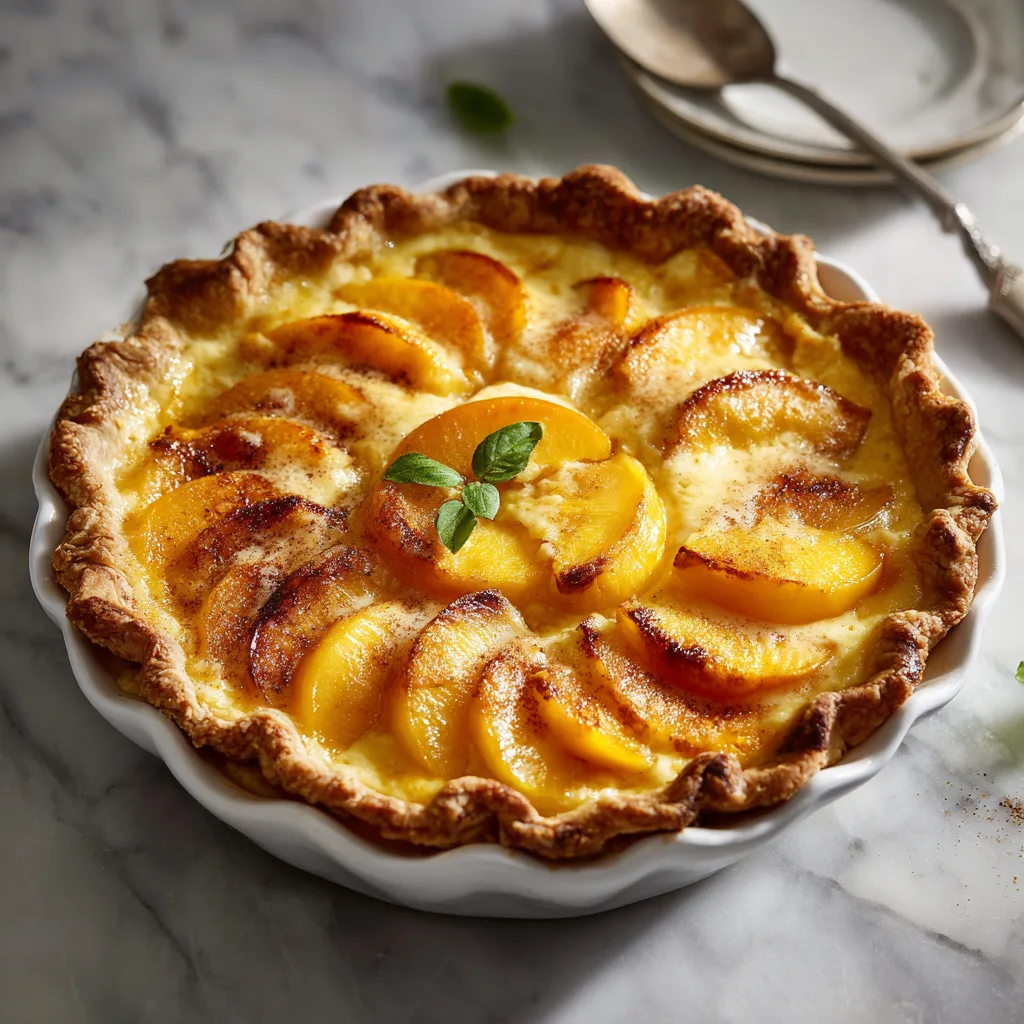
- Arrange the Peaches: Peel, pit, and slice your peaches (if fresh) into uniform wedges about ¼ to ½ inch thick. (If using canned, ensure they are drained and dried). Arrange the peach slices elegantly in the partially cooled pie shell. A “shingled” or concentric circle pattern is traditional and ensures even distribution of fruit and custard. **(Refer to image 1, top half).**
- Prepare the Custard Filling: In a medium mixing bowl, whisk together the eggs, sugar, heavy cream, vanilla extract, cornstarch, and the optional pinch of nutmeg until completely smooth. Do not over-whisk, as you do not want to create excess air bubbles; you are aiming for a silky liquid, not a foamy one.
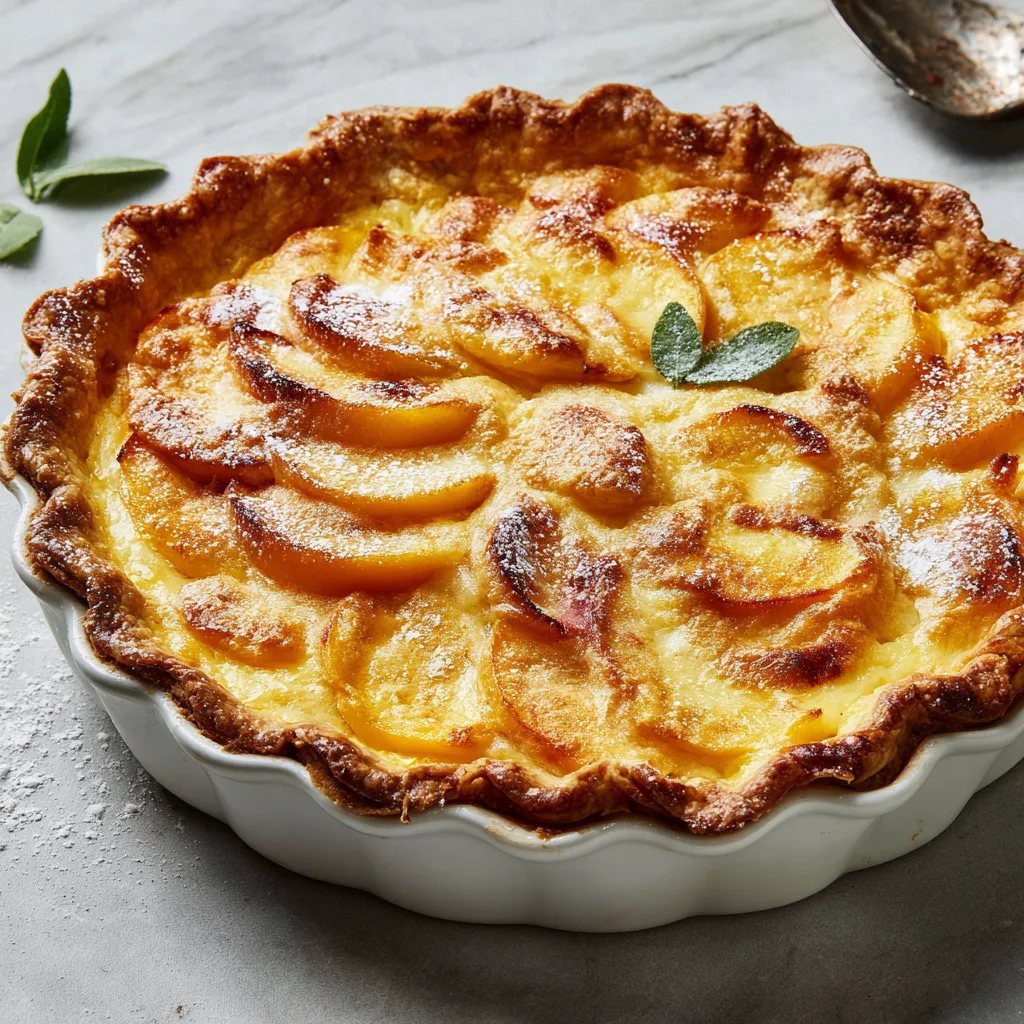
- Assemble and Bake: Carefully pour the prepared custard filling directly over the arranged peach slices in the pie shell. **(Refer to image 1, top half, and image 2).** Placing the pie dish on a baking sheet makes transporting it easier. Bake at 375°F (190°C) for 35 to 45 minutes. The pie is done when the edges are golden, the custard is puffed, and the center still has a slight jiggle to it. It should not be sloshy, but it will continue to set as it cools.
- Cool and Chill: This is the hardest step. Let the pie cool completely on a wire rack at room temperature. This will take at least 1 to 2 hours. Once cool, transfer the pie to the refrigerator for at least an additional 1 hour, or ideally 4 hours, to allow the custard to set firmly for clean slicing. For best flavor, bring the pie back to room temperature (about 20 minutes) before serving.
Homemade Peach Custard Pie
Ingredients
Equipment
Method
- For the crust: In a large bowl, whisk together the flour, 1 tbsp sugar, and salt. Add the cold, cubed butter. Using a pastry blender, cut the butter into the flour until the mixture resembles coarse meal with some pea-sized pieces of butter remaining. Drizzle in the ice-cold water, one tablespoon at a time, mixing with a fork just until the dough comes together. Form into a disc, wrap tightly in plastic, and refrigerate for at least 1 hour.
- Shape the crust: Preheat the oven to 420°F (215°C). On a lightly floured surface, roll the chilled dough into a 12-inch circle. Gently transfer to a standard 9-inch pie dish, pressing it into the bottom and sides without stretching. Trim excess, leaving a 1-inch overhang; fold the overhang under and flute the edges. Chill the shaped shell for 15 minutes.
- Blind bake: Line the chilled pie shell with parchment paper and fill it with pie weights or dried beans. Bake for 12 to 15 minutes, until the edges are just golden. Remove weights and paper; bake for an additional 2-3 minutes to set the bottom crust. Cool slightly. **Reduce oven temperature to 375°F (190°C).**
- Assemble the pie: Peel, pit, and slice peaches (if fresh) into uniform wedges. Arrange them elegantly (e.g., in concentric circles, ‘shingled’) in the partially cooled pie crust.
- Prepare custard: In a medium bowl, whisk together the eggs, 1/2 cup sugar, heavy cream, vanilla extract, cornstarch, and the pinch of nutmeg until completely smooth and cohesive.
- Bake: Place the pie dish on a baking sheet. Carefully pour the custard filling over the peaches in the pie shell. Bake at 375°F (190°C) for 35-45 minutes, until the edges are golden, the custard is puffed, and the center still has a slight jiggle (but isn’t sloshy).
- Cool and serve: Let the pie cool completely on a wire rack at room temperature (about 1.5 hours). Transfer to the refrigerator for at least 1 hour (ideally 4) to set the custard firmly before slicing. Serve slightly chilled or at room temperature.
Notes
Troubleshooting Common Pie Pitfalls
Baking can be finicky, but knowing how to correct common issues is half the battle. Here is what to watch out for:
- Custard Won’t Set: The most common issue with custard pies. This is usually due to incorrect ingredient ratios (not enough egg yolk or heavy cream) or, most likely, underbaking. Check the center for the correct ‘slight jiggle’—if it is sloshy, it needs more time. Also ensure your cornstarch was well-whisked and wasn’t expired.
- Custard Cracks: Cracking on the surface is a sign of overbaking. High heat causes the eggs to seize and separate from the water in the dairy. Keep a close watch on the jiggle—as soon as the sloshiness stops and the jiggle is centralized and slight, remove it.
- The Custard is Weeping (Watery Center): This often happens if the pie is sliced while it is still warm. The custard must cool and chill completely to lock its structure. A weeping pie can also be caused by overbaking, as the proteins shrink and squeeze out the liquid.
- Shrunken Crust: Stretching the dough while lining the pie dish activates gluten, which pulls back when heated. Always gently lift and drape the dough. Also, not chilling the shaped shell before blind baking can cause shrinkage.
Delicious Variations to Try
While the classic peach custard pie is perfection, you can easily adapt this recipe to suit different tastes or seasons:
- Nectarine Custard Pie: Nectarines are closely related to peaches and often have an even more intensely ‘peach’ flavor. They do not require peeling (their skin is smooth), making the prep even faster. Substitute one-for-one.
- Almond Peach Custard Pie: Peach and almond are a timeless pairing. Substitute ½ teaspoon of the vanilla extract for ½ teaspoon of almond extract in the custard. Garnish the baked pie with sliced, toasted almonds.
- Bourbon Peach Custard Pie: Add 1 tablespoon of high-quality bourbon to the custard mixture. The subtle smokiness adds complexity to the sweet peaches and cream. This is especially good with caramelized canned peaches.
- Spiced Crumble Top: Instead of leaving the top plain, replace the shingled peach slices with chopped peaches. After pouring the custard, top the entire pie with a classic oat and brown sugar crumble topping before baking. It creates a “peach crisp” texture.
Serving and Storage Instructions Section
The Peach Custard Pie is a refined dessert that doesn’t need much accompaniment, but it is versatile enough to pair with classic summer staples.
H4: How to Serve
- A Classic Pair: A scoop of high-quality vanilla bean ice cream on a warm (but not hot) slice is the quintessential pairing.
- Keep it Simple: A light dusting of powdered sugar and cinnamon right before serving looks elegant. A pinch of flaky sea salt elevates the flavors.
- Fresh Accent: Serve with a few fresh berries (raspberries or blueberries) for a bright, acidic pop that cuts the custard’s richness. A sprig of fresh mint is a beautiful garnish.
H4: How to Store and Reheat
- Refrigeration: Because this pie contains dairy and eggs, it must be stored in the refrigerator. Wrap any leftovers tightly with plastic wrap directly against the custard surface to prevent it from absorbing other fridge odors. It is best enjoyed within 3 days.
- Reheating: Custard pies are traditionally served cold, which gives the cleanest slices and best texture. However, if you prefer a warm pie, reheat a slice gently. Do not use a microwave, which can overcook and ruin the custard’s texture. Instead, place a slice in a 300°F (150°C) oven for 10-15 minutes, just until warmed through.
- Freezing: Unfortunately, custard-based pies do not freeze well. The freezing process damages the stable milk-and-egg matrix, causing it to weep heavily and become watery upon thawing. Enjoy this pie fresh!
Conclusion
Homemade Peach Custard Pie is more than just a dessert; it is a celebration of the simple, potent joy of peak summer fruit and classic comfort baking. By using an all-butter crust, dedicating time to the critical step of blind baking, and gently setting the aromatic vanilla custard around shingled peach slices, you are creating an experience that is far greater than the sum of its parts. This guide has provided you with the technical knowledge—the ‘how’ and the ‘why’—to ensure success, from a perfectly crisp bottom crust to a flawless, crack-free custard. The next time you see a basket of fragrant, blushing peaches, bring them home, preheat your oven, and treat your family and friends to this timeless, creamy, and spectacularly flavorful summer dessert.