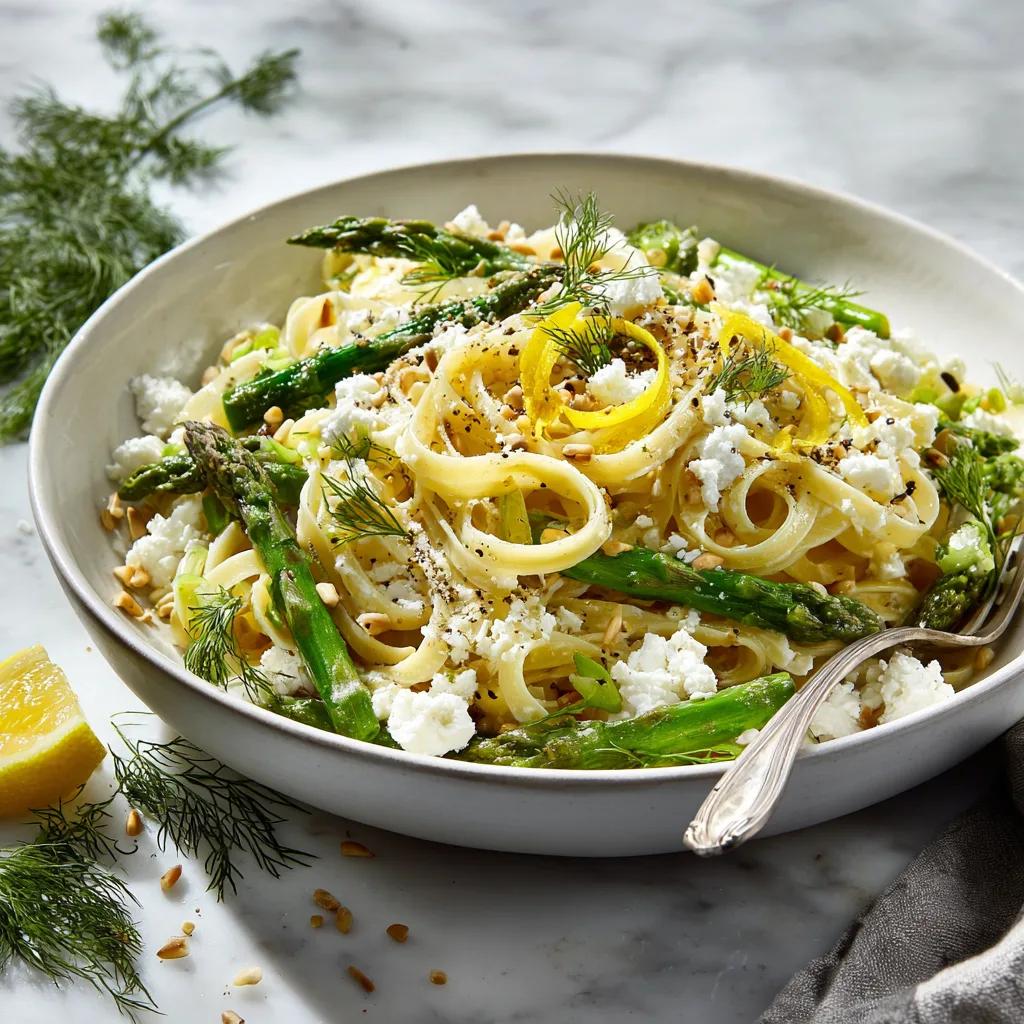
Vibrant Spring Lemon-Feta Asparagus Pasta: A Fresh and Easy Weeknight Dinner
Introduction: Capturing the Essence of Spring in a Bowl
As the cold, heavy days of winter begin to fade and the first signs of spring emerge, our culinary cravings undergo a natural and profound shift. We instinctively move away from the dense, slow-cooked stews and heavy cream sauces that comforted us during the darker months, and we begin to seek out meals that are bright, vibrant, and effortlessly fresh. Nothing captures this seasonal transition quite like the Spring Lemon-Feta Asparagus Pasta. This dish is an absolute celebration of springtime produce, bringing together the earthy, crisp bite of freshly harvested asparagus with the sharp, sunny acidity of lemon and the rich, salty creaminess of high-quality feta cheese.
What makes this recipe truly extraordinary is its brilliant juxtaposition of simplicity and sophistication. At its core, it is a humble pasta dish that can be pulled together in under thirty minutes, making it an absolute lifesaver for busy weeknights when you want a homemade meal without spending hours over a hot stove. Yet, the flavor profile is so elegantly balanced and visually stunning that it would be perfectly at home at a weekend dinner party or a celebratory spring brunch. The magic lies in the technique—specifically, the way the starchy pasta water emulsifies with the olive oil, lemon juice, and melting feta to create a luxurious, glossy sauce that coats every single strand of pasta without feeling heavy. In this comprehensive guide, we will explore the science of this emulsification, the secrets to selecting the best seasonal ingredients, and exactly how to master this vibrant springtime classic.
The Magic of Spring Produce: Why Asparagus is the Star
Asparagus is the undisputed harbinger of spring in the culinary world. While it is technically available year-round in many modern supermarkets thanks to global shipping, locally grown, freshly harvested spring asparagus possesses a sweetness, tenderness, and snappy texture that its out-of-season counterparts simply cannot match.
When selecting asparagus for this pasta dish, pay close attention to the thickness of the spears. Both thick and thin spears are delicious, but they behave differently in the pan. Pencil-thin asparagus cooks incredibly quickly and provides a delicate, snappy crunch. They are perfect if you want to toss them into the boiling pasta water for just the final minute of cooking. Thick asparagus spears, on the other hand, are meatier and boast a deeper, more robust flavor. If you choose thick spears, you may want to snap off the woody ends and lightly peel the bottom halves of the stalks with a vegetable peeler. This ensures that every bite is perfectly tender and prevents any stringy textures from interrupting the smoothness of your pasta dish.
Regardless of the thickness you choose, the key to preparing asparagus is avoiding the dreaded mushiness. Asparagus should be cooked until it is tender-crisp—meaning it yields easily to a bite but still retains a vibrant, bright green color and a slight structural resistance. Overcooked, olive-green asparagus will not only ruin the visual appeal of your Spring Lemon-Feta Asparagus Pasta but will also detract from the fresh, lively textures that make the dish so successful.
The World of Feta: Choosing the Right Cheese
Feta is an ancient cheese with a rich history, and the type of feta you select will dramatically impact the final flavor and texture of your pasta. Feta is a brined curd cheese traditionally made in Greece from sheep’s milk or a mixture of sheep’s and goat’s milk. The intense, salty, and tangy profile of feta is the perfect foil to the earthy asparagus and the acidic lemon.
If you want the absolute best results for this recipe, you must heed one crucial rule: Do not buy pre-crumbled feta. Pre-crumbled cheeses are tossed in anti-caking agents (like cellulose or potato starch) to prevent the crumbles from sticking together in the plastic tub. While this is convenient for a quick salad, those starches prevent the cheese from melting properly into a sauce. When you toss pre-crumbled feta into hot pasta, it tends to remain chalky and separate.
Instead, seek out a block of high-quality feta submerged in a bath of salty brine. When crumbled by hand directly into the hot pasta, the moisture and high fat content of the block feta allow it to gently melt and meld with the olive oil and pasta water, creating a creamy, cohesive, and remarkably rich sauce. Greek feta is the classic choice, offering a sharp and crumbly texture. If you prefer a milder, creamier profile, look for French sheep’s milk feta, which is noticeably softer and less aggressively salty. Bulgarian feta, often made with a higher ratio of sheep’s milk, provides an intensely tangy and robust flavor that stands up beautifully to heavy doses of lemon and garlic.

The Science of the Sauce: The Power of Pasta Water
This recipe does not rely on heavy cream, butter, or complex roux-based sauces. Instead, it utilizes a fundamental Italian culinary technique: emulsifying fat with starchy pasta water. As your pasta boils, it releases starches into the cooking water. This cloudy, salty water is liquid gold.
When you transfer your hot, al dente pasta to the skillet containing the olive oil, garlic, and lemon juice, you will also add a splash of this reserved pasta water. Through the magic of vigorous tossing and stirring, the starches in the water act as an emulsifier, forcing the oil and the water to bind together rather than separate. The addition of the crumbled feta further stabilizes this emulsion, resulting in a sauce that is surprisingly rich, glossy, and thick enough to cling to every noodle. Understanding this simple chemical reaction elevates your home cooking from good to professional.
Ingredients Breakdown
Because the ingredient list is short and straightforward, the quality of each individual component is paramount. Here is what you will need:
- Pasta (12 oz): Long shapes like linguine, spaghetti, or fettuccine work beautifully for twirling, while short, textured shapes like penne, fusilli, or farfalle (bowties) are excellent at catching the crumbled cheese and small pieces of asparagus in their ridges.
- Fresh Asparagus (1 bunch, about 1 lb): Washed, woody ends snapped off, and cut into 1.5-inch pieces on the bias for an elegant presentation.
- Feta Cheese (6 oz): A block of feta packed in brine, drained and crumbled by hand.
- Extra Virgin Olive Oil (1/4 cup): This acts as the base of your sauce. Use a high-quality, fruity olive oil that you would be happy to use in a salad dressing.
- Fresh Lemon (1 large): You will need both the zest and the juice. The zest provides aromatic essential oils without acidity, while the juice provides the bright, sharp tang.
- Garlic (3 to 4 cloves): Finely minced. Garlic adds a savory depth that balances the sharp lemon and salty cheese.
- Fresh Herbs (1/4 cup, chopped): Fresh dill is incredibly traditional and pairs flawlessly with both lemon and feta. If you are not a fan of dill, fresh basil or flat-leaf parsley are excellent substitutes.
- Toasted Pine Nuts or Walnuts (1/4 cup): Optional, but highly recommended for a buttery, toasted crunch that adds incredible textural contrast to the soft pasta.
- Salt and Freshly Cracked Black Pepper: Use salt sparingly, as the feta and pasta water are both quite salty. Be generous with the black pepper.
Step-by-Step Instructions
- Boil the Water: Bring a large pot of water to a rolling boil. Season it generously with salt. It should taste pleasantly salty, like the sea. This is your only chance to season the pasta itself from the inside out.
- Cook the Pasta: Add your chosen pasta to the boiling water and cook according to the package directions until it is al dente (firm to the bite).
- Blanch the Asparagus: During the last 2 to 3 minutes of the pasta’s cooking time, carefully drop the prepared asparagus pieces directly into the boiling water with the pasta. This is a brilliant, time-saving technique that perfectly cooks the asparagus and flavors the pasta water with a subtle earthiness.
- Reserve the Liquid Gold: Right before you drain the pasta and asparagus, use a heatproof measuring cup to scoop out at least 1 full cup of the starchy cooking water. Set it aside. This step is critical; do not pour all the water down the drain! Drain the pasta and asparagus.
- Aromatize the Oil: In a large, deep skillet or Dutch oven, heat the extra virgin olive oil over medium-low heat. Add the minced garlic. Sauté gently for 1 to 2 minutes, stirring constantly. You want the garlic to soften and release its fragrance, but you must not let it brown or burn, as burnt garlic will introduce a harsh bitterness to the entire dish.
- Build the Emulsion: Add the drained hot pasta and asparagus into the skillet with the garlic oil. Immediately pour in 1/2 cup of your reserved pasta water, the lemon zest, and the freshly squeezed lemon juice.
- Toss and Melt: Toss the pasta vigorously. As you toss, sprinkle in half of the crumbled feta cheese. The heat of the pasta, combined with the starchy water and the stirring motion, will cause the feta to melt slightly and emulsify with the oil and lemon juice, creating a silky sauce. If the pasta seems dry, add more of the reserved pasta water, a splash at a time, until the desired glossy consistency is reached.
- Garnish and Serve: Remove the skillet from the heat. Fold in the fresh dill (or basil), the toasted pine nuts, and the remaining crumbled feta cheese (keeping some pieces intact for texture). Season generously with freshly cracked black pepper. Taste for salt, adding a pinch only if necessary. Serve immediately in warm bowls.
Spring Lemon-Feta Asparagus Pasta
Ingredients
Equipment
Method
- Bring a large pot of generously salted water to a boil. Add the pasta and cook according to package instructions until al dente.
- During the last 2 to 3 minutes of the pasta’s cooking time, add the chopped asparagus directly into the boiling water.
- Before draining, scoop out and reserve at least 1 cup of the starchy pasta cooking water. Drain the pasta and asparagus.
- In a large skillet, heat the olive oil over medium-low heat. Add the minced garlic and sauté for 1 to 2 minutes until fragrant, being careful not to brown it.
- Add the hot drained pasta and asparagus to the skillet with the garlic oil. Pour in 1/2 cup of the reserved pasta water, the lemon zest, and the lemon juice.
- Toss the pasta vigorously while adding half of the crumbled feta cheese. The heat and tossing will melt the feta and emulsify the liquids into a creamy sauce. Add more pasta water if the dish seems dry.
- Remove from heat. Fold in the remaining feta cheese, fresh dill, and toasted pine nuts. Season generously with freshly cracked black pepper and salt to taste.
- Serve immediately in warm bowls, garnished with extra lemon zest if desired.
Notes
Pro Tips for Culinary Success
To guarantee that your Spring Lemon-Feta Asparagus Pasta is an absolute triumph every single time you make it, keep these professional kitchen tips in mind:
- Zest Before You Juice: It is nearly impossible to zest a lemon after it has been cut in half and squeezed. Always use a microplane to remove the bright yellow zest (avoiding the bitter white pith underneath) before you cut the lemon open for its juice.
- The Shocking Technique: If you are making this dish ahead of time for a cold pasta salad variation, you must shock the asparagus. Instead of boiling it with the pasta, blanch it separately for 2 minutes and immediately plunge it into a bowl of ice water. This stops the cooking process instantly and locks in that vibrant, electric green color.
- Toast Your Nuts: Raw pine nuts are fine, but toasting them unlocks a whole new dimension of buttery, complex flavor. Simply place them in a dry skillet over medium heat for 3 to 5 minutes, tossing constantly until they are golden brown and fragrant. Watch them like a hawk, as they can burn in the blink of an eye.
Delicious Variations and Protein Additions
While this recipe is a spectacular vegetarian main course exactly as written, it also serves as a incredibly versatile canvas for your favorite additions. Here are a few ways to customize the dish to suit your family’s preferences:
- Add Grilled Chicken: Thinly sliced, lemon-herb marinated grilled chicken breast is a natural pairing. Toss the warm chicken strips in at the very end.
- Garlic Butter Shrimp: Sauté large shrimp in a separate pan with a touch of butter, garlic, and smoked paprika. Arrange the pink, plump shrimp over the top of the pasta bowls right before serving for an elegant seafood twist.
- Crispy Pancetta or Bacon: For a salty, smoky crunch, render diced pancetta or thick-cut bacon in the skillet before adding the garlic. The pork fat will replace some of the olive oil and add a deeply savory, irresistible undertone to the sauce.
- Spring Pea and Spinach Boost: Maximize the spring produce by tossing in a handful of fresh sweet peas and a few generous handfuls of baby spinach when you add the hot pasta to the skillet. The heat of the pasta will wilt the greens perfectly.
- The Vegan Adaptation: To make this dish entirely plant-based, substitute the traditional feta cheese with a high-quality almond- or tofu-based vegan feta alternative. Ensure you use plenty of starchy pasta water to help bind the olive oil and lemon juice into a cohesive sauce.
Serving Suggestions
This dish is vibrant and robust enough to stand on its own, but pairing it with the right sides can elevate your meal into a true feast. Serve the pasta alongside a warm, crusty baguette or homemade garlic bread—perfect for swiping up any leftover lemon-feta sauce at the bottom of the bowl. For a side dish, a simple arugula salad dressed with a light balsamic vinaigrette offers a peppery bite that complements the creamy feta beautifully. When it comes to wine pairings, look for a crisp, high-acid white wine. A chilled New Zealand Sauvignon Blanc, a bright Italian Pinot Grigio, or an unoaked Chardonnay will echo the citrus notes of the dish perfectly.
Storage and Reheating Instructions
Like most dishes that rely on an emulsion of pasta water and fat, this Spring Lemon-Feta Asparagus Pasta is best enjoyed immediately while hot and glossy. However, leftovers can absolutely be saved.
Storage: Allow the pasta to cool to room temperature, then transfer it to an airtight container. It will keep well in the refrigerator for up to 3 days.
Freezing: It is strongly advised not to freeze this dish. Freezing fundamentally changes the cellular structure of both the asparagus (making it mushy) and the feta cheese (making it grainy and separated). The fresh herbs will also turn black and slimy upon thawing.
Reheating: Reheating pasta can often dry it out. The best way to resurrect this dish is to place the cold pasta in a skillet over medium-low heat. Add a splash of water, chicken broth, or a squeeze of fresh lemon juice to the pan. Cover with a lid for a few minutes to let the steam gently reheat the noodles and melt the cheese back into a sauce, stirring gently. Microwaving is possible, but do so in short bursts with a damp paper towel over the bowl to retain moisture.
Conclusion
The Spring Lemon-Feta Asparagus Pasta is more than just a quick weeknight dinner; it is a culinary ode to the changing of the seasons. By relying on fresh, high-quality ingredients and utilizing simple but highly effective cooking techniques—like cooking the asparagus with the pasta and emulsifying the sauce with starchy water—you can create a dish that is light, bright, and utterly satisfying. The next time you find yourself staring at a beautiful bunch of fresh asparagus in the market, remember this recipe. With just a few staple ingredients and a hot pan, you can bring the bright, renewing flavors of spring directly to your dinner table.