Muffin Tin Sushi Bake Cups: The Ultimate Bite-Sized Appetizer
Introduction: The Sushi Bake Phenomenon, Miniaturized
In the ever-evolving world of culinary trends, the sushi bake emerged as a magnificent fusion of traditional Japanese flavors and comforting American casserole culture. It took the deconstructed elements of a California roll or a spicy salmon roll—seasoned sushi rice, creamy seafood filling, spicy mayonnaise, and savory seaweed—and baked them into a warm, dip-friendly dish that completely revolutionized potlucks and family dinners. However, as beloved as the traditional, large-format sushi bake is, it presents a few logistical challenges. Scooping it onto individual squares of nori can be messy, the structural integrity of the rice can falter, and portion control is virtually non-existent when faced with a massive, bubbling 9×13 pan of creamy, savory goodness.
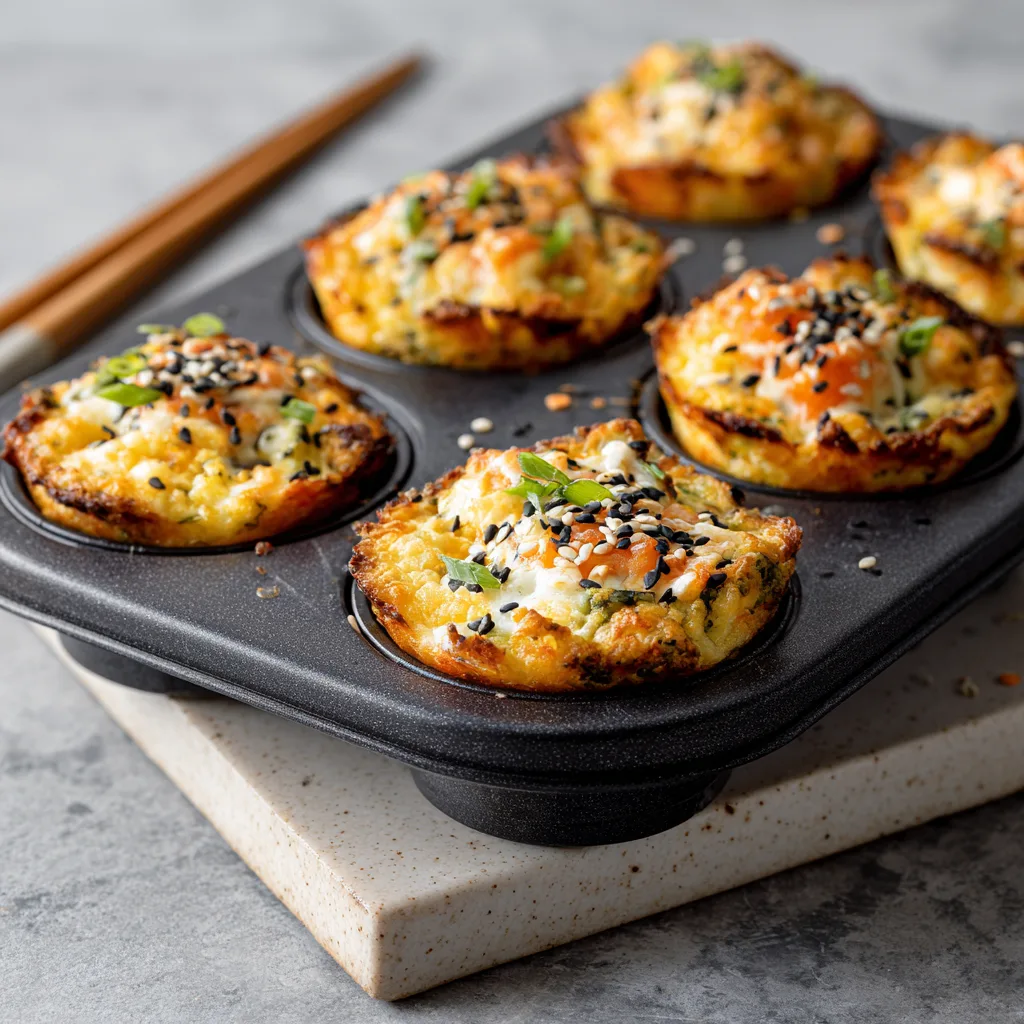
Enter the brilliant evolution of this viral dish: Muffin Tin Sushi Bake Cups. This ingenious method takes the massive flavor profile of the original bake and compartmentalizes it into perfectly portioned, structurally sound, bite-sized cups. By utilizing a standard muffin tin, each serving gets its own crispy nori shell, a beautifully compressed layer of seasoned sushi rice, and a generous dollop of the creamy, umami-rich seafood filling. The result is a highly portable, mess-free, and visually stunning appetizer that is guaranteed to steal the show at any gathering.
The beauty of the muffin tin method lies in the texture. In a traditional casserole-style bake, only the very top layer achieves that desirable golden-brown caramelization. By portioning the dish into cups, you increase the surface area exposed to the heat, resulting in a delightfully toasted top on every single bite, while the nori base crisps up beautifully against the hot metal of the pan. Whether you are hosting a formal dinner party, looking for a unique game-day snack, or simply craving the flavors of your favorite sushi roll without the hassle of a bamboo mat, these Muffin Tin Sushi Bake Cups are the ultimate culinary solution.
Why You Will Absolutely Love These Mini Sushi Bake Cups
Beyond the obvious aesthetic appeal, there are numerous practical and culinary reasons why this recipe will quickly become a staple in your entertaining repertoire. First and foremost is the ease of consumption. Traditional sushi bakes require a two-handed operation: holding the nori sheet in one hand and awkwardly spooning the filling with the other. These muffin tin cups are an elegant, one-handed affair. You simply pick one up, take a bite, and enjoy the perfect ratio of rice, seafood, and crispy seaweed in every mouthful.
Secondly, the customizability is unparalleled. When making a large casserole, you are generally committed to a single flavor profile. With a muffin tin, you have twelve individual canvases to play with. You can make half the batch with spicy crab and the other half with a milder garlic butter salmon. You can top some with jalapeños for the heat-seekers and leave others plain. This adaptability makes it the perfect recipe for accommodating diverse palates and dietary preferences within a single batch.
Finally, these cups offer incredible make-ahead potential. The rice and the filling can be prepared well in advance, meaning that when your guests arrive, all you have to do is assemble the cups and pop them in the oven. They bake quickly and fill your kitchen with an intoxicating, savory aroma that will instantly stimulate appetites.

Essential Ingredients for Muffin Tin Sushi Bakes
Creating the perfect sushi bake cup requires a careful balance of textures and flavors. Here is a comprehensive breakdown of the essential components.
The Rice Foundation
- Short-Grain Sushi Rice: This is non-negotiable. Long-grain varieties like basmati or jasmine lack the necessary starch content to hold together. You need the sticky, plump nature of authentic Japanese short-grain rice to create a solid base that won’t crumble when you bite into the cup.
- Rice Vinegar: Provides the essential sharp, bright acidity that cuts through the rich, creamy topping.
- Granulated Sugar and Kosher Salt: These are dissolved into the rice vinegar to create sushi vinegar (awase-zu), balancing the tanginess with sweetness and seasoning the rice throughout.
- Nori Sheets: Roasted seaweed sheets, cut into squares, serve as the edible wrapper for your cups. They provide a vital oceanic flavor and a crispy textural contrast.
The Creamy Seafood Filling
- Imitation Crab Meat (Surimi): A staple of the classic California roll, surimi provides a sweet, mild flavor and a satisfying, shreddable texture that acts as the bulk of the filling.
- Cooked Salmon: Adding cooked salmon (either fresh baked or high-quality canned) elevates the filling, providing richness, healthy fats, and a deeper seafood flavor profile.
- Kewpie Mayonnaise: A Japanese mayonnaise made exclusively with egg yolks (rather than whole eggs) and a unique blend of vinegars. It is richer, creamier, and slightly sweeter than American mayonnaise and is absolute crucial for authentic flavor.
- Cream Cheese: Softened cream cheese is the secret to a beautifully cohesive, rich, and bubbling bake. It binds the seafood together and melts luxuriously in the oven.
- Sriracha Sauce: For that essential kick of heat. You can adjust the quantity based on your personal spice tolerance.
The Garnishes and Toppings
- Furikake: A dry Japanese seasoning blend typically containing dried seaweed, sesame seeds, salt, and sometimes dried fish or bonito flakes. It adds a massive punch of umami, visual appeal, and a delicate crunch.
- Unagi (Eel) Sauce: A thick, sweet, and savory soy-based glaze that provides a beautiful glossy finish and a caramel-like sweetness.
- Green Onions (Scallions): Thinly sliced for a fresh, sharp, and vibrant green contrast to the heavy, baked elements.
- Toasted Sesame Seeds: For a final touch of nuttiness and visual flair.
Step-by-Step Instructions: How to Make Sushi Bake Cups
Follow these detailed steps to ensure perfectly formed, delicious muffin tin sushi cups every single time.
- Wash and Cook the Rice: Place your short-grain sushi rice in a fine-mesh strainer and rinse it under cold water until the water runs completely clear. This removes excess surface starch and prevents the rice from becoming a gummy paste. Cook the rice according to your rice cooker’s instructions or using the stovetop absorption method.
- Prepare the Sushi Vinegar: While the rice is cooking, combine the rice vinegar, granulated sugar, and kosher salt in a small microwave-safe bowl. Microwave for 20-30 seconds, then stir vigorously until the sugar and salt are completely dissolved.
- Season the Rice: Once the rice is cooked, transfer it immediately to a large, wide bowl (traditionally a wooden hangiri, but a large glass bowl works fine). Pour the vinegar mixture evenly over the hot rice. Use a rice paddle or wooden spoon to gently fold the rice, using a slicing motion rather than a stirring motion to avoid mashing the grains. Allow the seasoned rice to cool to room temperature.
- Prepare the Nori: Take standard-sized sheets of roasted nori and use sharp kitchen shears to cut them into squares. Depending on the size of your muffin tin, cutting one sheet into four equal squares usually yields the perfect size.
- Mix the Seafood Filling: In a medium mixing bowl, shred the imitation crab meat finely. Flake the cooked salmon into the bowl, ensuring there are no bones. Add the softened cream cheese, Kewpie mayonnaise, and Sriracha. Use a fork or a spatula to mash and mix everything together until it forms a uniform, creamy paste.
- Assemble the Cups: Lightly grease your muffin tin with cooking spray or sesame oil to prevent sticking. Take a square of nori and gently press it into a muffin cavity, allowing the edges to fold and ruffle naturally. Scoop about 1.5 to 2 tablespoons of the seasoned sushi rice into the nori cup. Wet your fingers slightly (to prevent sticking) and press the rice down firmly into an even layer. Sprinkle a generous pinch of furikake over the pressed rice layer.
- Add the Topping: Spoon about 2 tablespoons of the creamy seafood filling on top of the rice in each cup. Spread it out slightly so it covers the rice layer evenly.
- Bake to Perfection: Preheat your oven to 400°F (200°C). Place the muffin tin in the oven and bake for 12 to 15 minutes. You are looking for the filling to be hot and bubbling, with the top beginning to turn a beautiful golden brown. For an extra charred finish, switch the oven to broil for the final 1-2 minutes, watching carefully to prevent the nori from burning.
- Garnish and Serve: Remove the tin from the oven and let it rest for 3 to 5 minutes before carefully lifting the cups out (a small offset spatula or a butter knife helps with this). Drizzle the tops with extra Kewpie mayo and unagi sauce. Garnish with freshly sliced green onions and toasted sesame seeds. Serve warm.
Muffin Tin Sushi Bake Cups
Ingredients
Equipment
Method
- Rinse the sushi rice under cold water until clear. Cook according to package directions. While hot, transfer to a wide bowl.
- In a small bowl, microwave the rice vinegar, sugar, and salt for 20 seconds. Stir until dissolved. Pour over the hot rice and fold gently to combine. Let cool slightly.
- Preheat your oven to 400°F (200°C). Lightly grease a 12-cup muffin tin.
- In a medium bowl, mix the shredded crab, flaked salmon, softened cream cheese, Kewpie mayo, and Sriracha until smooth and well combined.
- Press one nori square into each muffin cup. Wet your fingers slightly and press about 1.5 to 2 tablespoons of the seasoned sushi rice firmly into the bottom of each nori cup.
- Sprinkle a small pinch of furikake over the rice layer in each cup.
- Top the rice evenly with the creamy seafood mixture (about 2 tablespoons per cup).
- Bake for 12-15 minutes until the tops are bubbly and slightly golden. Broil for an additional 1-2 minutes for a toasted finish if desired.
- Remove from the oven and let sit for 5 minutes. Carefully remove the cups from the tin.
- Drizzle with extra Kewpie mayo and unagi sauce. Garnish with green onions, sesame seeds, and extra furikake. Serve warm.
Notes
Pro Tips for Success
To elevate your sushi bake cups from good to spectacular, keep these professional culinary tips in mind.
- The Importance of Wet Hands: Sushi rice is incredibly sticky. Keep a small bowl of water mixed with a splash of rice vinegar near your workstation. Dipping your fingers in this water before pressing the rice into the muffin tins will save you immense frustration and yield a perfectly smooth rice base.
- Room Temperature Ingredients: Ensure your cream cheese is completely softened to room temperature before attempting to mix the filling. Cold cream cheese will result in a lumpy filling that won’t melt smoothly in the oven.
- Do Not Overpack: While it is tempting to stuff as much filling as possible into each cup, overpacking will cause the filling to bubble over the edges during baking, making them difficult to remove from the tin and messy to eat. Leave a small margin at the top of the nori.
- The Broiler is Your Friend: The textural contrast between the creamy interior and a slightly scorched, caramelized top is the hallmark of a great sushi bake. Do not skip the final minute under the broiler, but watch it like a hawk—sugar-rich Kewpie mayo goes from perfectly toasted to burnt in seconds.
Delicious Variations to Try
The base recipe is merely a canvas. Once you master the technique, try these phenomenal flavor variations.
The Spicy Tuna Cup
Replace the crab and salmon with high-quality, sashimi-grade tuna, finely diced. Mix it with Kewpie mayo, a generous amount of Sriracha, a dash of sesame oil, and a splash of soy sauce. Because tuna cooks very quickly, reduce the baking time slightly, or simply bake the rice cups first and add the spicy tuna mixture raw right before serving for a hot/cold contrast.
The Scallop Dynamite Cup
For a truly decadent, steakhouse-style appetizer, use bay scallops or chopped sea scallops in place of the surimi. Mix with the mayo, cream cheese, and a handful of shredded mozzarella or mild cheddar cheese. The cheese adds a rich, stringy element that pairs beautifully with the sweet scallops.
The Vegan Teriyaki Tofu Cup
Press and finely crumble firm tofu. Sauté the tofu crumbles in a pan with a thick teriyaki sauce until caramelized. Use this as your filling, mixed with vegan mayonnaise and dairy-free cream cheese alternative. Top with extra teriyaki sauce and thinly sliced jalapeños.
Serving Suggestions and Pairings
These muffin tin sushi bake cups are incredibly rich and savory, so they pair best with sides and beverages that offer acidity, freshness, and palate-cleansing properties.
- Cucumber Sunomono Salad: A traditional, light, and tangy Japanese cucumber salad dressed in rice vinegar perfectly cuts through the heavy creaminess of the baked cups.
- Edamame: Lightly steamed edamame pods tossed in coarse sea salt or a spicy garlic chili crisp provide a wonderful, interactive side dish that fits the theme perfectly.
- Beverage Pairings: Crisp, dry beverages work best. Consider a chilled, dry sake (like a Junmai or Ginjo), a crisp, cold Japanese lager, or a refreshing glass of iced green tea or genmaicha (roasted brown rice tea).
Storage, Freezing, and Reheating Instructions
While Muffin Tin Sushi Bake Cups are undeniably best enjoyed fresh out of the oven, leftovers can be managed with care.
Refrigeration: Store leftover cups in an airtight container in the refrigerator for up to 3 days. Be aware that the refrigerator environment will cause the rice to harden and the nori to become slightly soggy.
Reheating: Do not use the microwave! Microwaving will turn the nori rubbery and the filling excessively greasy. The best way to reheat is to place the cups back in a muffin tin or on a baking sheet and warm them in a 350°F (175°C) oven for 8-10 minutes, or until the center is hot. Alternatively, an air fryer set to 320°F (160°C) for 4-5 minutes works exceptionally well and helps re-crisp the seaweed.
Freezing: Freezing fully assembled baked cups is not recommended, as the mayonnaise and cream cheese can separate and become grainy upon thawing, and the rice texture will degrade significantly. However, you can freeze the cooked, seasoned rice and the mixed (unbaked) seafood filling in separate, airtight containers for up to one month. Thaw safely in the refrigerator overnight before assembling and baking.
Frequently Asked Questions (FAQ)
Do I have to use imitation crab?
Not at all. While imitation crab (surimi) is traditional for this specific flavor profile, you can use real lump crab meat if you prefer a more luxurious dish. Just be sure to pick through the real crab carefully to remove any stray shell fragments before mixing.
Can I make these without a muffin tin?
If you don’t have a muffin tin, you can form the rice into small, flat patties (similar to onigiri), place them on a parchment-lined baking sheet, top them with the filling, and bake them flat. They won’t have the distinctive cup shape, but the flavors will be identical.
Why is my rice hard after baking?
Hard rice is usually the result of two things: either the rice was not fully cooked and steamed before baking, or the rice was pressed too forcefully into the muffin tin, compacting the grains into a dense brick. Press firmly enough to hold a shape, but gently enough to keep the rice slightly airy.
Conclusion
Muffin Tin Sushi Bake Cups represent the pinnacle of modern, fusion appetizer design. They take the beloved, complex flavors of a sushi roll and the comforting warmth of a baked casserole, distilling them into a perfect, portable, and aesthetically pleasing format. By mastering the crucial steps of preparing the sushi rice, balancing the rich filling, and executing the bake, you unlock a recipe that is as fun to make as it is to eat. Whether you follow the classic crab and salmon profile or invent your own daring combinations, these cups are guaranteed to bring a touch of viral culinary magic to your next meal.