Blistered Cabbage Steaks with an Irresistible “Swangy” Glaze
Cabbage is perhaps one of the most underrated and versatile vegetables in the entire produce section. For far too long, it has been relegated to the sidelines of coleslaws or boiled into submission in soups. But there is a cooking technique that completely transforms this humble brassica from pedestrian to profound, and that method is blistering. When subjected to high heat, cabbage leaves caramelize, char, and develop a sweet, nutty flavor that is truly remarkable. Our Blistered Cabbage Steaks with a “Swangy” Glaze are the ultimate expression of this vegetable’s potential.
What makes this dish so special? It is the perfect marriage of texture and flavor. The blistering process creates layers of smoky, crispy exterior, while the dense core of the cabbage becomes incredibly tender and sweet. When you apply the rich, velvety, and yes, “swangy” glaze, you create an addictive complexity. This glaze—a dark, sticky reduction of soy, vinegar, ginger, garlic, and a touch of sweetness—is designed to be both sweet and tangy, balancing the smokiness of the char. This dish is not just a side; it can stand proudly as a light main course, especially when paired with grains or protein.
Creating perfect cabbage steaks requires a little technique, but once you know the rules, it is surprisingly simple. We will guide you through the process of choosing the right cabbage, cutting the perfect “steak” to ensure even cooking, mastering the high-heat blister, and creating that signature “Swangy” glaze. This is a dish that will impress your family and friends, all while keeping your cooking healthy, easy, and incredibly flavorful.
What is “Swangy” Glaze?
The term “swangy” is our affectionate, slightly humorous word for the unique flavor profile of this reduction. It is not just sweet, nor is it simply tangy; it is a profound combination of both, with deep umami notes. It has a powerful, slightly aggressive flavor that *swings* between these notes, creating dynamic contrast. It draws inspiration from Asian glazes but is customized for maximum impact on charred vegetables. When applied thickly, it adheres to the rough texture of the blistered leaves, creating a sticky, caramelized, and utterly addictive coating.
The base is usually built on a high-quality, aged soy sauce for profound umami. We use rice vinegar for a bright, clean, less aggressive acidity. Garlic and ginger, the aromatics, are essential for depth. A touch of sweetener, like maple syrup or honey, is crucial to help the glaze caramelize and balance the other elements. A final dash of sesame oil and chili flakes provides a warm, slightly nutty finish with a gentle kick. Mastering this glaze is the key to unlocking the full, dynamic potential of this recipe.
The Essential Components of a Perfect Cabbage Steak
Choosing Your Cabbage
You can use either green or red cabbage for this recipe, although green cabbage is often preferred because its leaves are slightly less dense and easier to blister evenly. Look for a heavy, compact head with tightly closed leaves. For the best “steak,” select a medium-sized cabbage, as a very large one will yield uneven steaks.
Cutting the Perfect Cabbage Steak
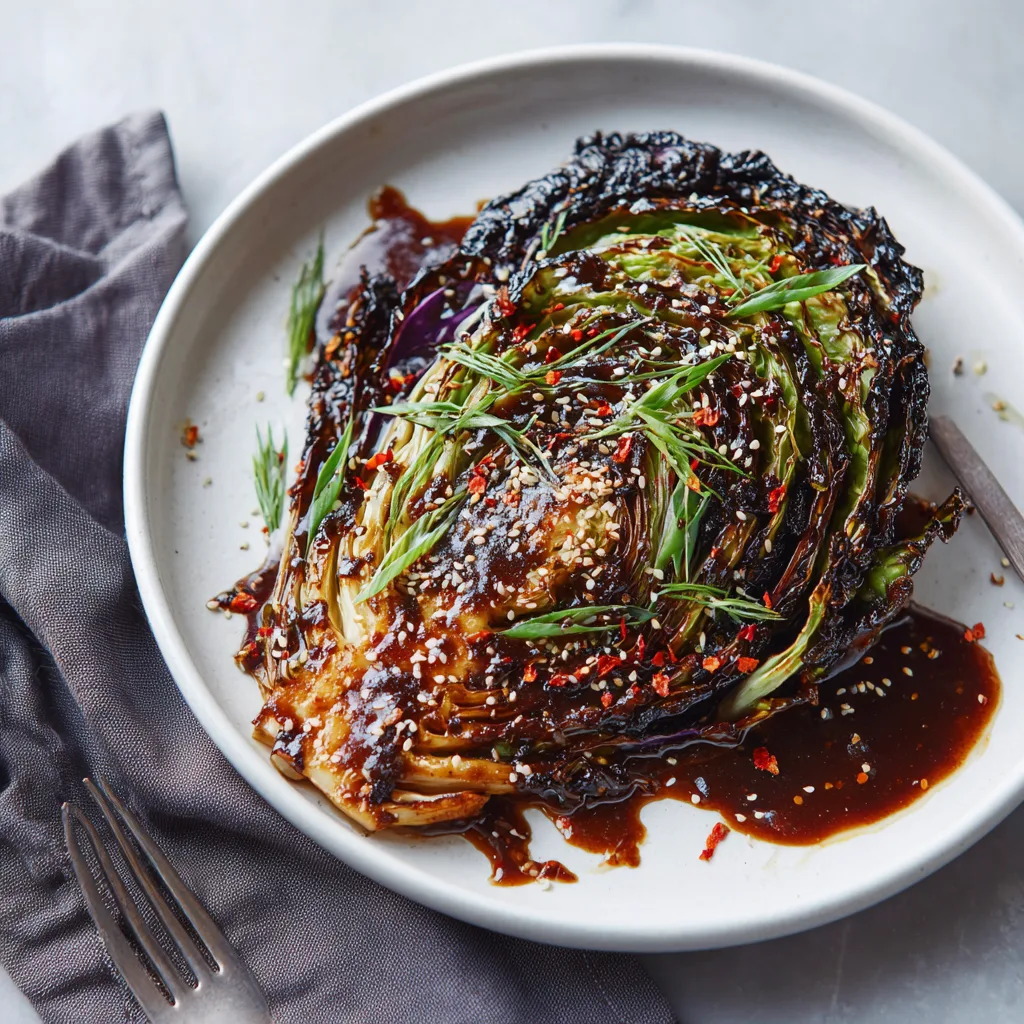
The goal is to cut thick, even steaks that hold together. This is where many people go wrong. You want a sharp knife to make clean, straight cuts. Trim the stem end but keep enough of the core intact; this is the anchor that holds your cabbage layers together during cooking. Slice the cabbage into roughly 3/4-inch to 1-inch thick slabs. Thinner slabs will turn to mush, and thicker ones won’t cook through before the edges burn. We cut ours into large, impactful wedges as seen in our hero image, but a full horizontal slice works too.
High-Heat Blistering
Blistering, the key technique, requires serious heat. A cast-iron skillet is ideal because it retains heat so well. Heat the skillet until it is smoking before adding your cabbage. Use a neutral oil with a high smoke point, like avocado or vegetable oil. Do not crowd the pan! Give your steaks room to char and for the moisture to evaporate. Resist the urge to move them constantly; let them rest undisturbed for several minutes until a deep, dark brown char has developed. If using an oven, place your steaks on a baking sheet and roast at a very high temperature, 425°F (220°C) or higher, on the bottom rack, turning once halfway through.
Detailed, Step-by-Step Cabbage Steak Recipe
Ingredients
- – 1 medium head green cabbage (approx. 2-3 lbs)
- – 3 tablespoons olive oil (or other high-smoke point neutral oil)
- – 1/2 teaspoon kosher salt
- – 1/4 teaspoon ground black pepper
- – For Garnish: Toasted white sesame seeds, red chili flakes, sliced scallions
Ingredients for the “Swangy” Glaze
- – 3 cloves garlic, minced
- – 1 tablespoon fresh ginger, grated
- – 1/2 cup soy sauce (or tamari for gluten-free)
- – 1/4 cup rice vinegar (unseasoned)
- – 2 tablespoons maple syrup or honey (adjust for desired sweetness)
- – 1 tablespoon toasted sesame oil
- – 1/2 teaspoon red chili flakes (optional, for heat)
Instructions
- Prepare the Cabbage: Remove any loose or damaged outer leaves from the cabbage. Trim the stem end, but leave the core mostly intact. Carefully slice the cabbage head horizontally into 3/4-inch thick round “steaks” or large, impactful wedges (about 6-8 depending on the size of the head). Ensure the core is still connecting the layers in each steak. Pat the cut surfaces dry with a paper towel.
- Season: Drizzle both sides of the cabbage steaks generously with the olive oil. Use your hands to distribute the oil evenly. Season both sides with salt and black pepper.
- Make the “Swangy” Glaze: In a small saucepan over medium heat, combine the minced garlic, grated ginger, soy sauce, rice vinegar, maple syrup, toasted sesame oil, and red chili flakes (if using). Bring the mixture to a simmer, stirring occasionally. Reduce the heat to low and let the glaze gently simmer for 5-7 minutes, until it has thickened slightly and becomes glossy. Do not let it boil vigorously, as it can turn bitter. It should hold a thick line on a spoon. Set aside.
- Blister the Cabbage (Skillet Method): Heat a large cast-iron skillet (or other heavy-bottomed pan) over high heat until it is lightly smoking. Place the cabbage steaks in the hot pan. *Do not crowd the pan!* Work in batches if necessary.
- Caramelize and Char: Cook, undisturbed, for 4-6 minutes, or until the bottom surface has a deep, rich brown char (blistering). Reduce heat slightly if it’s burning too fast. Carefully flip the steaks. The first side should look deeply caramelized and smoky. Cook the second side for another 3-5 minutes, until it too is blistered and the cabbage is becoming tender throughout. A knife should easily pierce the center.
- Finish and Glaze: While the cabbage is hot, use a pastry brush to thickly apply the “Swangy” Glaze to the charred surfaces, focusing on the dark caramelized sections. Apply generously, letting the glaze seep into the layers. Cover the pan and let it rest for 1 minute for the glaze to heat through and slightly set. (Alternatively, if using the oven, roast for 15-20 minutes, turn, apply glaze heavily, and finish for 5 more minutes).
- Garnish and Serve: Transfer the glazed cabbage steaks to a serving platter. Garnish immediately with toasted sesame seeds, chili flakes, and sliced scallions. Serve hot.
Tips for Success and Troubleshooting
The biggest challenge with cabbage steaks is achieving the perfect blister without turning the center to mush. Here are our expert tips for guaranteed success.
Mastering temperature
This cannot be emphasized enough: the pan must be *very* hot. If you don’t hear a loud sizzle when the cabbage hits the pan, the pan isn’t hot enough. It is this intense, initial heat that creates the dark caramelization quickly before the interior moisture has a chance to turn the cabbage steaming soft. If your skillet isn’t hot enough, the cabbage will steam rather than sear, resulting in a rubbery, soft steak.
Do Not Crowd the Pan
Leave ample space between your cabbage steaks. If they are touching, they will trap steam and moisture, preventing the high-heat char from forming and causing the cabbage to steam itself soft. Use a large pan or work in small batches for the best results.
Checking for Tenderness
Cabbage density varies, so cooking times can fluctuate. After flipping, check the tenderness by inserting a sharp knife into the thickest part of the core. It should enter easily. If the exterior is getting too charred before the center is tender, you can transfer the skillet to a 375°F (190°C) oven to finish cooking for 5-7 minutes.
Fixing Broken Glaze
If your glaze breaks (separates), it means the butter or oil was added too quickly or the mixture got too hot. You can often save it! Place a teaspoon of boiling water in a clean bowl or blender and slowly whisk the broken sauce into it, one teaspoon at a time. This usually re-emulsifies the sauce. Alternatively, start over with a fresh egg yolk and emulsify the broken sauce into it.
Creative Variations on Blistered Cabbage Steaks
This simple technique can be adapted to any number of flavor profiles. Once you have mastered the “Swangy” glaze, try one of these other great ideas!
Balsamic & Herb Blistered Cabbage
Omit the “Swangy” ingredients. Instead, use a glaze made from balsamic reduction, olive oil, dried oregano, and red pepper flakes. Drizzle it over the charred cabbage for a bright, Mediterranean flavor profile. Finish with fresh basil.
Miso-Maple Glazed Cabbage
Replace the “Swangy” ingredients with a mixture of white miso paste, maple syrup, rice vinegar, and a touch of sriracha. This variation offers a savory, funky umami profile that is less aggressive than the “Swangy” version and incredibly satisfying.
Cheesy Charred Cabbage
Instead of a glaze, top your charred cabbage with a simple sprinkle of parmesan cheese, black pepper, and perhaps some toasted breadcrumbs during the last minute of cooking. The high heat will melt the cheese into the smoky char, creating an irresistible topping.
Protein Boost
To turn this into a substantial main course, you can top your glazed cabbage with protein. Try crumbled crispy tofu, grilled chicken strips, or even flaked smoked salmon. Arrange the protein over the cabbage before the final garnish for a complete and delicious meal.
Serving Suggestions for Blistered Cabbage Steaks
This dish is incredibly versatile. We have seen it serve as a main, a side, and even a unique element in a larger spread. Here are some of our favorite ways to serve these blistered steaks.
- Over Grains: Serve one or two glazed cabbage steaks over a bed of quinoa, brown rice, or even creamy polenta. The soft grains will absorb any leftover glaze, creating a perfect and complete meal.
- With a Steak: The robust, dynamic flavor profile pairs beautifully with grilled beef, lamb, or even pork chop. The acidity of the “Swangy” glaze cuts through the richness of the meat.
- As Part of a Mezze Platter: Serve a glazed wedge alongside hummus, grilled flatbread, or roasted red peppers. Its dark, charred appearance provides a striking visual contrast to the other elements.
- In a Warm Salad: Slice the finished, glazed cabbage and toss it with arugula, toasted walnuts, and perhaps a warm goat cheese medallion for a sophisticated warm salad.
Frequently Asked Questions (FAQ)
Can I make these cabbage steaks ahead of time?
Blistered cabbage steaks are best served hot, immediately after cooking. While you can prepare the glaze and cut the cabbage ahead of time, the blistering process itself and the final glazing should be done just before serving to maintain the perfect balance of charred exterior and tender core. Reheating blistered cabbage can sometimes make it soft and rubbery.
Can I roast these in the oven instead?
Yes! To roast, place your seasoned cabbage steaks on a baking sheet on the bottom rack of your oven preheated to 425°F (220°C). Roast for 15-20 minutes until they are blistered and tender. Flip them once halfway through. For the last 5 minutes, turn up the oven to broil or apply the glaze heavily and finish roasting to caramelize the glaze. However, the cast-iron skillet provides the best char and temperature control.
Is the glaze too spicy?
The “Swangy” glaze in this recipe has just enough chili to provide depth, not aggressive heat. It is a slow, warm spice that balances the sweet and tangy notes. If you are sensitive to heat, omit the red chili flakes and adjust the black pepper. If you love spice, add an extra 1/2 teaspoon of sriracha or increase the chili flakes.
Try This Recipe Today!
There is no reason to relegate cabbage to the bottom of the vegetable crisper. This Blistered Cabbage Steaks with a “Swangy” Glaze recipe is the ultimate low-effort, high-impact recipe that will change the way you cook and eat cabbage forever. It is healthy, quick, incredibly flavorful, and guaranteed to impress. Gather your ingredients, get that cast-iron skillet smoking, and discover the absolute magic of blistered cabbage.
Blistered Cabbage Steaks with a Swangy Glaze
Ingredients
Equipment
Method
- Prepare Cabbage: Trim stem but leave core intact. Cut cabbage into 3/4-inch thick round slabs. Pat dry.
- Season: Drizzle both sides with olive oil, salt, and pepper.
- Make Glaze: Simmer garlic, ginger, soy sauce, rice vinegar, maple syrup, sesame oil, and chili flakes for 5-7 minutes until slightly thick and glossy. Keep warm.
- Blister Cabbage: Heat cast-iron skillet on high until lightly smoking. Add cabbage (do not crowd, work in batches).
- Char and Caramelize: Cook undisturbed for 4-6 minutes for deep char. Flip and cook 3-5 minutes until tender. Transfer to serving platter.
- Glaze: Brush the hot charred surfaces heavily with the Swangy Glaze.
- Garnish: Immediately top with toasted sesame seeds, chili flakes, and sliced scallions. Serve hot.