Luxurious Lemon Butter Lobster Risotto
Luxurious Lemon Butter Lobster Risotto: A Restaurant-Quality Date Night Meal
There are certain dishes that scream “luxury,” and right at the top of that list is Lobster Risotto. It is the kind of meal you order at a high-end seaside restaurant, sipping white wine while looking out at the water. But here is a secret that chefs might not want you to know: it is actually incredibly easy to make at home. In fact, making it in your own kitchen often yields better results because you can control the creaminess of the rice and the tenderness of the lobster.
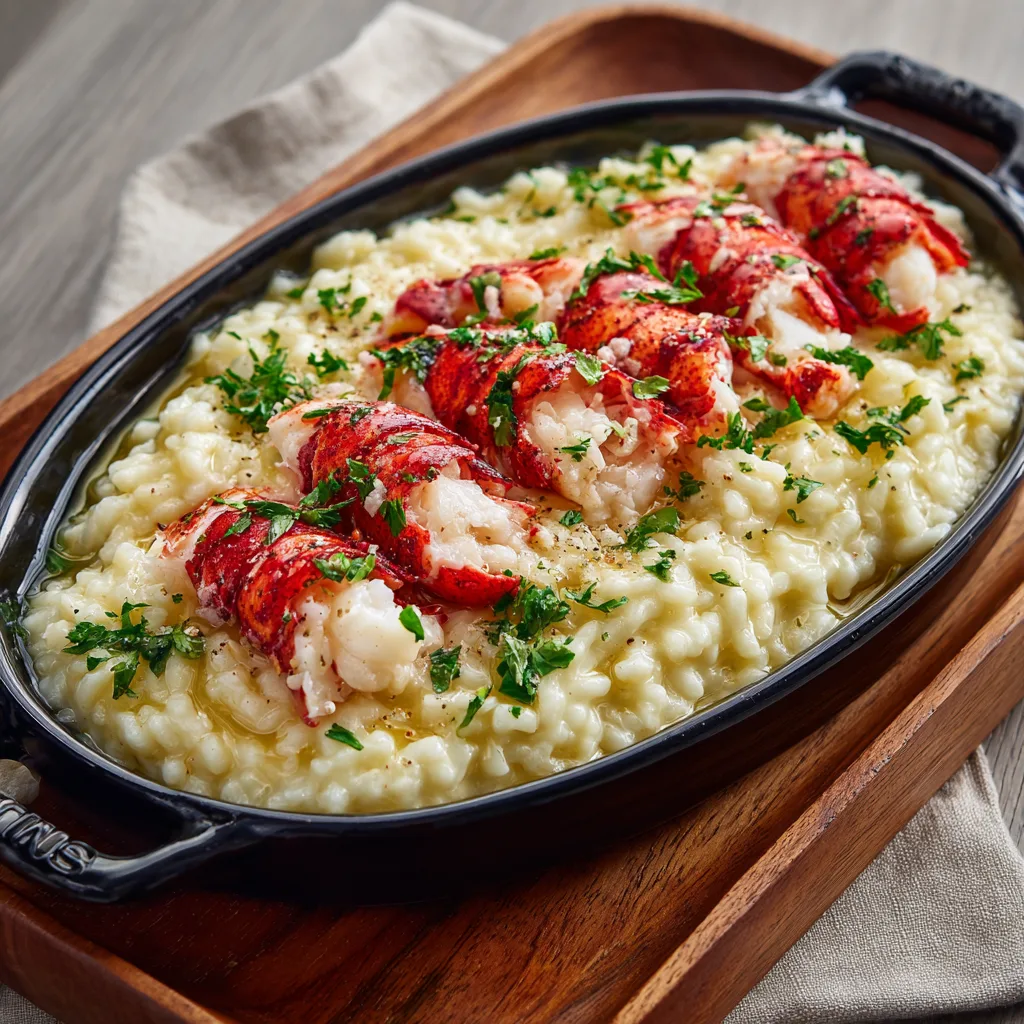
This Lemon Butter Lobster Risotto is the ultimate indulgence. Imagine creamy, al dente Arborio rice, slow-cooked in a rich seafood stock and white wine, finished with mounds of parmesan cheese and bright lemon zest. But the real star is the topping: succulent, sweet chunks of lobster tail that have been poached gently in butter. It is rich, it is tangy, and it is sophisticated.
Whether you are planning a romantic Valentine’s Day dinner, celebrating an anniversary, or simply want to treat yourself to a gourmet weekend meal, this recipe is your ticket to culinary stardom. In this guide, we will break down the intimidation factor of risotto and show you exactly how to achieve that perfect “wave” texture that Italians are famous for.
Why This Recipe Works
- The Texture: We focus on the “all’onda” style of risotto—meaning “like a wave.” It is creamy and flowing, never sticky or gluey.
- Flavor Balance: Lobster is naturally sweet and rich. By pairing it with lemon and fresh parsley, we cut through that richness with necessary acidity and freshness.
- Separate Cooking: Unlike some recipes that boil the lobster with the rice (resulting in rubbery seafood), we cook the lobster separately in butter and place it on top. This ensures perfectly tender meat every single time.
- Impressive Presentation: The contrast of the bright red lobster against the creamy pale rice makes for a stunning visual centerpiece.
Lemon Butter Lobster Risotto
Ingredients
Equipment
Method
- Bring stock to a simmer in a separate saucepan and keep warm over low heat.
- In a skillet over medium heat, melt 2 tbsp butter. Sauté lobster chunks for 3-5 minutes until opaque. Set aside.
- In a large heavy pot, heat olive oil and 2 tbsp butter. Add shallots and cook until soft (2 mins). Add garlic and cook 30 seconds.
- Add Arborio rice and toast, stirring constantly, for 1-2 minutes.
- Pour in white wine and stir until fully evaporated.
- Add warm stock one ladle at a time, stirring frequently. Wait until liquid is absorbed before adding the next ladle. Repeat for 18-20 minutes until rice is al dente.
- Remove pot from heat. Vigorously stir in cold butter, parmesan cheese, lemon juice, and lemon zest until creamy.
- Plate the risotto and top with the cooked lobster chunks. Garnish with parsley and serve immediately.
Notes
The Key Ingredients
To make a dish this simple shine, quality ingredients are non-negotiable. Here is what you need:
For the Risotto Base
- Arborio Rice: This is the most critical ingredient. You cannot substitute long-grain or jasmine rice. Arborio (or Carnaroli) is a short-grain rice with high starch content that releases during cooking to create that natural creaminess.
- Shallots and Garlic: Shallots offer a milder, sweeter flavor than onions, which is perfect for delicate seafood dishes.
- Dry White Wine: Use a Pinot Grigio or Sauvignon Blanc. If you wouldn’t drink it, don’t cook with it! The acid in the wine helps tenderize the rice grains.
- Seafood or Chicken Stock: Seafood stock reinforces the lobster flavor, but a high-quality chicken stock works wonderfully as a neutral base that lets the butter and cheese shine.
- Parmesan Cheese: Freshly grated from a block. Pre-shredded cheese contains anti-caking agents that will make your risotto grainy.
For the Lobster
- Lobster Tails: Cold-water lobster tails usually have sweeter meat than warm-water varieties. You can buy them fresh or frozen. If frozen, thaw completely in the fridge before cooking.
- Unsalted Butter: You need a good amount to poach the lobster and finish the risotto.
- Lemon: You will need both the zest (for the rice) and the juice (for the lobster/finishing).
- Fresh Parsley: For color and a herbal lift.
How to Make Perfect Risotto (Step-by-Step)
Phase 1: Prep the Lobster
- Clean the Meat: Using kitchen shears, cut down the center of the top shell of the lobster tails. Crack the shell open and pull the meat out. Chop the meat into large, bite-sized chunks.
- Sauté: In a skillet, melt 2 tablespoons of butter over medium heat. Add the lobster chunks. Cook for 3-5 minutes, turning gently, until the meat is opaque and white/red. Do not overcook!
- Season: Squeeze a little lemon juice over the lobster and set it aside on a plate. Keep the juices in the pan—they are liquid gold.
Phase 2: The Base
- Warm the Broth: In a saucepan, bring your stock to a simmer and keep it warm on a back burner. Adding cold stock to hot rice “shocks” the grain and ruins the cooking process.
- Sauté Aromatics: In a large, heavy-bottomed pot (like a Dutch oven), melt butter and olive oil. Add finely diced shallots and cook until translucent. Add minced garlic and cook for just 30 seconds until fragrant.
- Toast the Rice: Add the Arborio rice to the pot. Stir constantly for 1-2 minutes. The grains should become slightly translucent on the edges with a white center. This “toasting” step helps the rice hold its shape later.
- Deglaze: Pour in the white wine. It will hiss and steam. Stir constantly until the wine has almost completely evaporated.
Phase 3: The Slow Cook
- Ladle by Ladle: Add one ladle of hot stock to the rice. Stir gently. Wait until the liquid is almost absorbed before adding the next ladle.
- Patience is Key: Repeat this process for about 18-20 minutes. Keep the heat at a medium simmer. You don’t need to stir constantly, but stir frequently to release the starch.
- Check Doneness: Around the 18-minute mark, taste the rice. It should be soft but still have a slight “bite” in the center (al dente). If it’s crunchy, keep adding stock.
Phase 4: Mantecatura (The Finishing Touch)
- Remove from Heat: Once the rice is cooked, turn off the flame. This step is crucial.
- Whipped Effect: Vigorously stir in the remaining cold butter, the grated parmesan cheese, and the lemon zest. Stir quickly to emulsify the fats with the starch. This creates the glossy, creamy texture.
- Season: Taste and add salt and pepper. Remember, parmesan is salty, so taste first!
Phase 5: Assembly
- Plate: Pour the risotto into a serving dish. It should spread out slowly.
- Top: Arrange the cooked lobster chunks on top. Drizzle any reserved lobster butter from the skillet over the dish.
- Garnish: Sprinkle with fresh chopped parsley and serve with lemon wedges.
Expert Tips for Success
Don’t Wash the Rice: Never rinse Arborio rice. Unlike sushi rice or basmati, you want the surface starch. That starch is what makes risotto creamy without adding heavy cream.
The “Flow” Test: When you plate risotto, if you tilt the plate, the rice should move slowly like lava. If it stands up in a stiff pile, it’s too dry (add a splash more stock). If it runs like soup, it’s too wet.
Lobster Alternatives: Lobster is expensive. This recipe works beautifully with large shrimp (prawns) or even sea scallops. The cooking method for the rice remains exactly the same.
Variations to Try
- Spicy Kick: Add a pinch of red pepper flakes to the butter when cooking the lobster for a subtle heat that pairs well with the lemon.
- Asparagus & Peas: For a “Primavera” version, stir in blanched asparagus tips and sweet peas during the last 2 minutes of cooking the rice.
- Saffron: Add a pinch of saffron threads to your warm stock for a “Risotto Milanese” style base, turning the rice a beautiful golden yellow.
Storage and Reheating
Fridge: Risotto is best eaten immediately. However, leftovers can be stored in an airtight container for up to 2 days.
Reheating: Risotto thickens significantly in the fridge. To reheat, place it in a saucepan with a splash of water or stock. Stir gently over low heat until it loosens up and becomes creamy again. Microwave heating is possible but often results in a gummy texture.
Arancini: If you have leftover cold risotto, don’t throw it away! Roll it into balls, stuff with a cube of mozzarella, breadcrumb the outside, and fry them to make delicious Arancini balls.
This Lemon Butter Lobster Risotto is more than just dinner; it is an experience. It proves that with a little patience and the right technique, you can create magic in your own kitchen.