Slow Cooker Korean Beef
The Dinner Time Game-Changer: Unleashing the Flavor of Slow Cooker Korean Beef
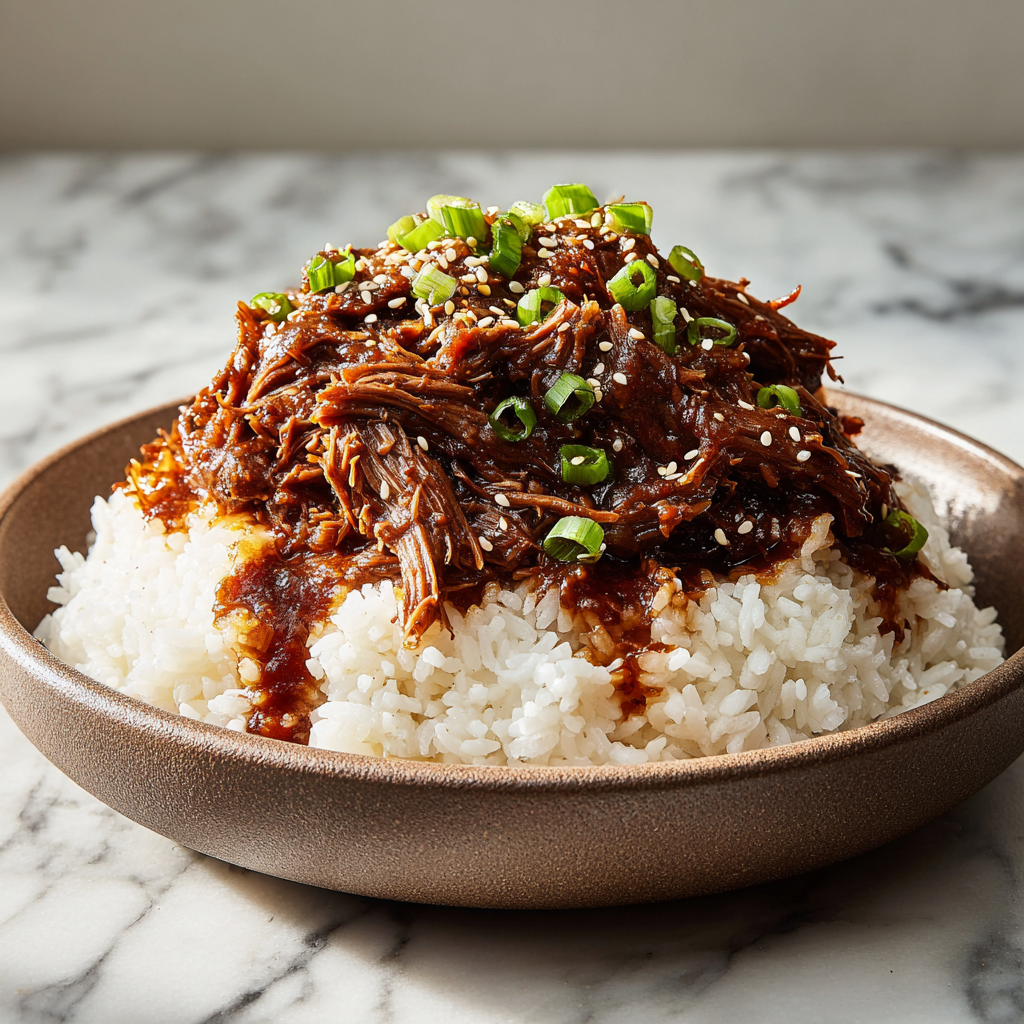
In the culinary world, few appliances hold the revered status of the slow cooker (or Crockpot). It is the true hero of the busy weeknight, turning tough, inexpensive cuts of meat into fork-tender masterpieces while demanding minimal attention. Among the pantheon of slow cooker classics, one recipe has risen to prominence, combining convenience with complex, global flavor: Slow Cooker Korean Beef. This dish takes the intensely savory, slightly sweet, and perfectly balanced notes of traditional Korean Bulgogi or Galbi and adapts them to the low-and-slow cooking method, resulting in shredded beef that is literally dripping with a thick, glossy, irresistible sauce. It is the ultimate “set-it-and-forget-it” meal that delivers restaurant-quality taste with pantry-staple ingredients. This comprehensive guide will walk you through the preparation, delve into the science of slow-cooked flavor, troubleshoot common pitfalls, and offer creative ways to serve this versatile, comforting dish.
The Science of Tenderness: Why the Slow Cooker is King
The secret to the phenomenal tenderness of Korean Beef lies entirely in the cooking vessel. Tougher cuts of meat, like chuck roast, are rich in connective tissue, specifically a protein called collagen. When meat is cooked quickly at high temperatures (like grilling), the collagen contracts and squeezes out moisture, resulting in a dry, chewy product.
However, the slow cooker operates at low temperatures (typically between $170^\circ \text{F}$ and $280^\circ \text{F}$) over an extended period. At this lower, slower temperature, the collagen does not contract; instead, it undergoes a magical transformation called hydrolysis. This is where the tough collagen dissolves and melts into gelatin, which then saturates the muscle fibers of the beef. This gelatin is what gives the sauce its signature thick, gooey, viscous consistency and provides the meat with its incredibly tender, juicy, and fall-apart texture. The long cooking time also allows the intense Korean marinade—rich in soy sauce, garlic, ginger, and sesame oil—to fully penetrate and flavor every single strand of the shredded beef. This process ensures that the beef is not just tender but deeply seasoned from the inside out, making the slow cooker the perfect tool for replicating authentic Korean flavor depth with minimal effort.
Ingredients – The Foundation of Flavor
The Korean Beef sauce, or marinade, is a masterclass in the balance of the five basic tastes: sweet, sour, salty, bitter, and umami. The recipe utilizes a foundation of salty soy sauce, sweet brown sugar, aromatic garlic and ginger, and rich sesame oil to achieve this intricate profile.
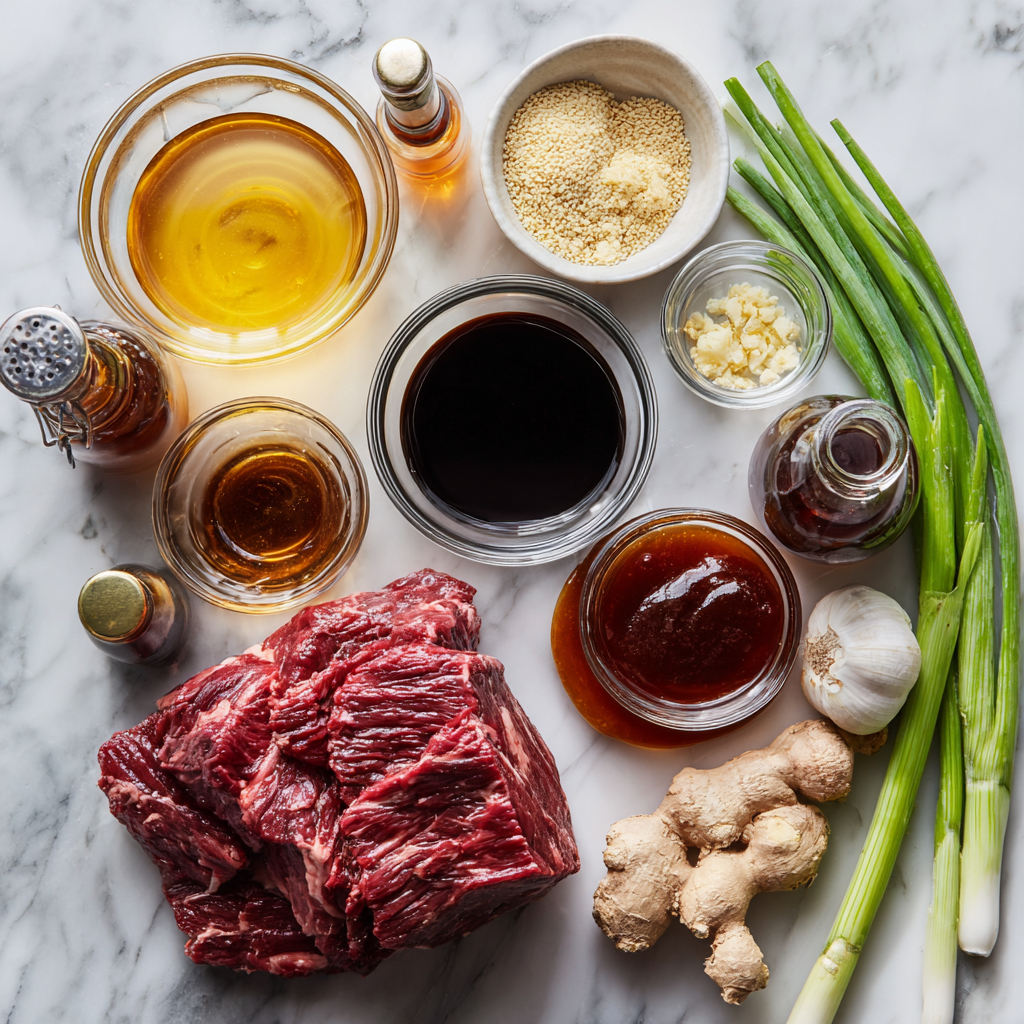
— Ingredients —
- 3-4 pounds Beef Chuck Roast: A well-marbled cut is essential for maximizing tenderness and flavor.
- 1/2 cup Soy Sauce (low sodium recommended): Provides the salty and umami base.
- 1/2 cup Brown Sugar (packed): Adds molasses flavor and balances the saltiness.
- 1/4 cup Honey or Maple Syrup: Adds a secondary layer of sweetness and contributes to the sauce’s glossy, reflective surface.
- 1/4 cup Sesame Oil: Delivers the signature nutty, toasted Korean aroma.
- 4 cloves Garlic, minced: Essential aromatic.
- 1 tablespoon Fresh Ginger, grated: Adds a pungent, spicy depth.
- 1 tablespoon Sriracha or Gochujang (Korean chili paste, adjust to taste): Provides subtle heat and complexity.
- 1/2 cup Beef Broth or Water: Prevents scorching and aids in the slow-cooking process.
- 2 tablespoons Cornstarch (mixed with 2 tablespoons cold water): Used at the end to thicken the sauce.
- Garnish: Sliced Green Onions and Sesame Seeds.
- For Serving: Cooked white rice.
The quality of the sesame oil is important here; look for toasted sesame oil for the most intense, authentic flavor. For the beef, while chuck roast is ideal, a bottom round or brisket can also be used, though they may require an extra hour of cooking time due to their lower fat content.
The Masterclass: Instructions for the Perfect Shred
While the slow cooker does most of the heavy lifting, a few key steps ensure the beef is perfectly cooked, and the final sauce is exquisitely thick and glossy.
— Instructions —
- Prepare the Beef: Trim any large, excess chunks of fat from the chuck roast, but do not remove all of it, as some fat is needed for flavor and moisture. Pat the beef dry with paper towels. Optional: Sear the beef in a hot pan for 3 minutes per side before placing it in the slow cooker for deeper flavor.
- Make the Sauce: In a medium bowl, whisk together the soy sauce, brown sugar, honey, sesame oil, minced garlic, grated ginger, Sriracha/Gochujang, and beef broth. Whisk until the sugars are mostly dissolved.
- Combine and Cook: Place the beef chuck roast into the bottom of the slow cooker insert. Pour the sauce mixture evenly over the beef, ensuring it is mostly covered.
- The Slow Cook: Cover the slow cooker and cook on LOW for 6 to 8 hours or on HIGH for 3 to 4 hours. The beef is ready when it is completely fork-tender and falls apart with minimal resistance. Do not lift the lid during cooking, as this releases heat and prolongs the required time.
- Shred the Beef: Once cooked, use two forks to remove the beef from the slow cooker and transfer it to a large cutting board or shallow dish. Shred the beef completely.
- Thicken the Sauce: Skim any large pools of surface fat from the sauce remaining in the slow cooker insert. Turn the slow cooker setting to HIGH. Whisk the cornstarch with the cold water to create a slurry, and then slowly whisk the slurry into the sauce in the slow cooker. Cook for $15$ to $20$ minutes, or until the sauce has reduced and achieved a thick, heavy, and glossy viscous consistency.
- Return and Serve: Return the shredded beef to the thickened sauce in the slow cooker. Toss gently to coat every piece fully in the gooey, dark brown sauce. Serve immediately over hot, white rice, garnished with plenty of sliced green onions and sesame seeds.
The final thickening step is essential for that signature, restaurant-style thick sauce that clings to the shredded beef. If the sauce is not thick enough after $20$ minutes, simply add another small cornstarch slurry (1 teaspoon cornstarch mixed with 1 teaspoon cold water) and continue cooking until desired thickness is reached.
Beyond the Bowl: Versatility and Serving Suggestions
While the classic pairing is a generous scoop over a bed of fluffy white rice, the versatility of the Korean Beef is one of its greatest strengths. It can be adapted for appetizers, sandwiches, and healthy alternatives, making it a fantastic candidate for weekly meal prep.
- Tacos/Sliders: The shredded beef is perfect for stuffing into small slider buns or soft corn tortillas. Top with a crunchy Asian slaw (cabbage, carrots, cilantro) dressed with a light sesame vinaigrette for contrast.
- Lettuce Wraps: For a low-carb option, serve the beef in crisp butter lettuce or romaine cups. The contrast between the warm, savory beef and the cool, fresh lettuce is delightful.
- Noodle Bowls: Serve the beef and a generous amount of the thick, gooey sauce over a bowl of chilled soba noodles, adding pickled daikon radish, cucumber, and a hard-boiled egg for a hearty, flavorful main dish.
- Freezer Meal Prep: The cooked and shredded Korean Beef freezes exceptionally well. Portion the beef (sauce included) into airtight containers and freeze for up to three months. This makes it an ideal “cook once, eat many times” ingredient for busy households.
The key to successful alternative serving is to always include a fresh, crunchy element (like quick-pickled veggies or raw slaw) to cut through the richness of the heavy, viscous beef sauce.
The Last Word: A Culinary Victory Over Time
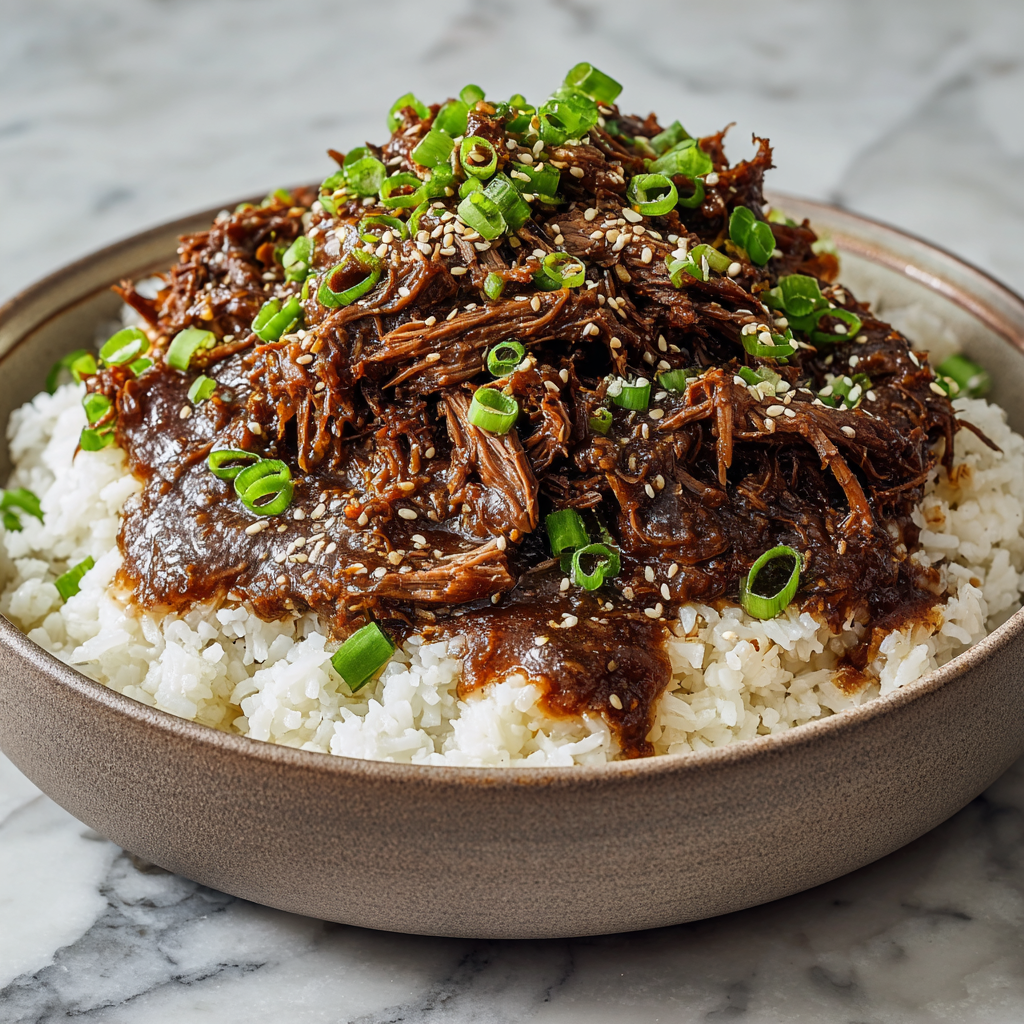
Slow Cooker Korean Beef is more than just an easy meal; it’s a culinary philosophy that proves that patience yields the greatest reward. It takes the humble chuck roast and, through the slow magic of heat and time, transforms it into a flavor-saturated, impossibly tender dish that pleases everyone from picky eaters to discerning foodies. The result is a vibrant, deeply satisfying main course—a glossy, gooey mountain of beef that ensures your weeknight dinner is nothing short of a culinary victory. The deep, caramelized flavors speak for themselves, confirming that sometimes, the best cooking is the cooking you don’t have to watch.