Hearty Red Wine Beef Stew
From Hearth to Home: Why the Beef Stew Remains the Ultimate Comfort Food
The appeal of Beef Stew transcends seasonal trends and culinary fads. It is a dish that speaks a universal language of comfort, warmth, and sustenance. Slow-cooked until the beef is impossibly tender and shrouded in a thick, rich, aromatic gravy, a proper beef stew is a triumph of patience and simple, high-quality ingredients. When elevated with the complexity and depth of red wine—drawing inspiration from French classics like Beef Bourguignon—and served alongside a simple mound of fluffy rice, it transforms from a humble pot meal into an elegant, soul-satisfying centerpiece. This article provides the definitive blueprint for mastering this hearty classic, exploring the chemistry behind its depth of flavor, offering crucial techniques for achieving that signature, thick, gooey, viscous sauce, and suggesting contemporary ways to serve this timeless dish.
The Alchemical Secret: Red Wine and the Maillard Reaction
What truly elevates a beef stew from good to unforgettable is the depth of flavor created by a few key steps. The foundation lies in two culinary processes: the Maillard reaction and deglazing with red wine.
First, searing the beef is non-negotiable. This high-heat step activates the Maillard reaction, a complex chemical process where amino acids and reducing sugars react, creating hundreds of new flavor compounds. This produces the rich, dark brown crust on the exterior of the beef, imparting nutty, roasted, and savory notes. Searing creates the essential first layer of flavor, known as fond, that sticks to the bottom of the cooking pot.
Second, red wine is the catalyst. Adding wine after the vegetables have softened and scraping up the fond (the step known as deglazing) accomplishes several things: it lifts those complex Maillard flavors back into the sauce, and the acidity of the wine breaks down the tough protein fibers in the beef during the slow braising process. As the wine reduces, its sugars caramelize and its volatile alcohol compounds evaporate, leaving behind a concentrated, deep, almost purple-brown essence that contributes significantly to the stew’s color and the beautiful glossy surface of the final gravy. Using a hearty, dry red like a Cabernet Sauvignon or a Merlot is recommended to ensure the wine holds up to the long cooking time without becoming overly sweet.
Ingredients – Building the Broth and the Body
A great stew requires a balance of fat, acid, starch, and aromatics. We use chuck roast for its high collagen content (the source of the gelatin that thickens the sauce), flour for the initial coating, and a medley of root vegetables for sweetness and texture.
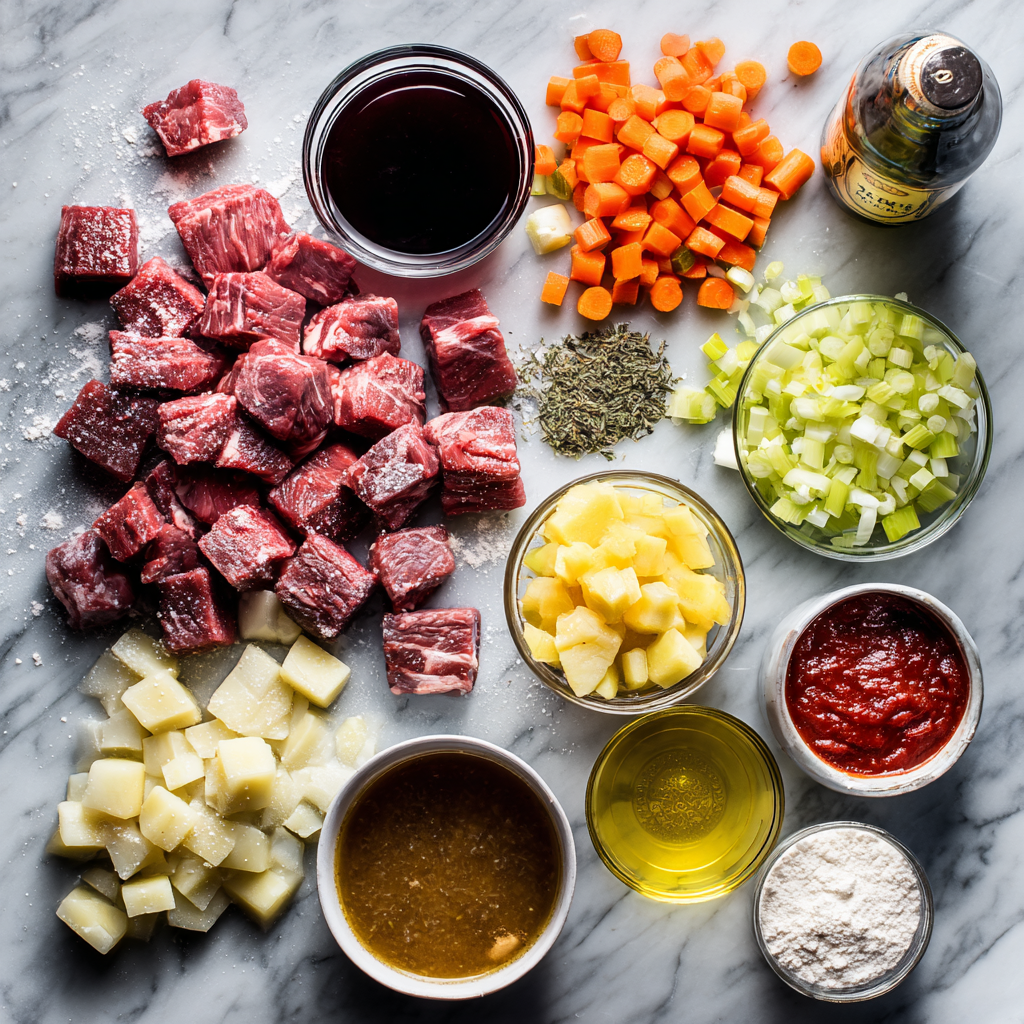
— Ingredients —
- 3 pounds Beef Chuck Roast, trimmed and cut into $1.5$-inch cubes.
- 1/4 cup All-Purpose Flour (for dredging).
- 2 tablespoons Olive Oil or neutral cooking oil.
- 1 large Yellow Onion, roughly chopped.
- 3 Carrots, peeled and roughly chopped into $1$-inch pieces.
- 2 stalks Celery, roughly chopped into $1$-inch pieces.
- 4 cloves Garlic, minced.
- 2 tablespoons Tomato Paste (adds umami and color).
- 1.5 cups Dry Red Wine (Cabernet, Merlot, or Pinot Noir).
- 4 cups Beef Broth (low sodium).
- 1 pound Potatoes (e.g., Yukon Gold or Red Potatoes), cut into $1.5$-inch cubes.
- Herbs: 2 Bay Leaves, 1 teaspoon dried Thyme, and 1 teaspoon dried Rosemary.
- Seasoning: Salt and freshly cracked black pepper.
- For Serving: Cooked white rice.
The choice of vegetable is key: carrots, celery, and onions form the classic mirepoix, the aromatic foundation of the stew. Adding a small amount of tomato paste is a professional trick; its concentrated flavor adds a depth of savory umami that is essential for a truly rich, dark gravy.
The Masterclass: Instructions for the Thick and Glossy Gravy
The process of creating a beef stew is deliberate, with each step contributing a layer of flavor and texture. Follow these instructions precisely to achieve the signature heavy, viscous consistency of the gravy.
— Instructions —
- Prep and Sear the Beef: Pat the beef cubes completely dry and toss them with the flour, salt, and pepper until lightly coated. Heat the olive oil in a large heavy-bottom stainless steel saucepan or Dutch oven over high heat. Sear the beef in batches (do not overcrowd the pan) until a deep brown crust forms on all sides. Remove the beef and set aside.
- Sauté the Aromatics: Reduce the heat to medium. Add the onions, carrots, and celery to the pot and cook, scraping up the brown bits (fond) from the bottom, for $5$ to $7$ minutes until the vegetables soften. Add the minced garlic and tomato paste and cook for $1$ minute until fragrant.
- Deglaze with Wine: Pour in the $1.5$ cups of red wine. Bring to a simmer and use a wooden spoon to scrape all the caramelized fond from the bottom of the pot. Let the wine simmer and reduce by about half ($5$ to $7$ minutes). This step is crucial for the depth of flavor.
- Braise the Stew: Return the seared beef to the pot. Add the $4$ cups of beef broth, the bay leaves, thyme, and rosemary. Bring the liquid to a gentle simmer, cover the pot tightly, and reduce the heat to maintain a very low, gentle bubble. Braise the beef for $1.5$ to $2$ hours.
- Add Potatoes: After the initial braising time (when the beef is starting to become tender but is not fully fall-apart yet), add the cubed potatoes. Continue to simmer gently for another $45$ minutes to $1$ hour, or until the potatoes are tender and the beef is fork-tender.
- Achieve Viscosity: The flour from the initial dredge should naturally thicken the stew to a heavy viscous consistency. If you desire a thicker, gooier sauce, remove the bay leaves, and if needed, make a simple slurry of 1 tablespoon of cornstarch mixed with $2$ tablespoons of cold water. Stir the slurry into the simmering stew and cook for $5$ minutes until the sauce achieves a glossy, reflective surface and a thick, heavy consistency.
- Rest and Serve: Season the stew to taste with additional salt and pepper. Allow the stew to rest, off the heat, for $10$ minutes before serving. This allows the liquid to redistribute. Serve piping hot, ladled generously over a mound of freshly cooked white rice.
The secret to a truly gooey and viscous sauce is the combination of the collagen melting into gelatin and the initial flour dredge. A final cornstarch slurry can be used as a finishing move, but the base thickness should come from the long, slow reduction.
Troubleshooting and Texture Mastery: The Stew Doctor
Stew can be forgiving, but problems can arise, especially regarding texture. Here is how to fix the most common issues:
Problem: Watery Gravy: The most frequent complaint. The flour dredge either wasn’t enough or the liquid hasn’t reduced sufficiently. The Fix: Remove a ladle of the broth, mix it thoroughly with 2 tablespoons of flour or cornstarch until smooth, and return it to the simmering pot. Simmer vigorously for $10$ minutes.
Problem: Dry Beef: This usually means the meat was cooked too fast or not long enough. The Fix: There is no magic bullet for dried-out meat, but if it is merely tough, return it to the low heat for another hour. It cannot be overcooked at low, slow braising temperatures; it can only become more tender.
Problem: Greasy Surface: Too much fat rendered out of the beef. The Fix: The easiest solution is to let the stew cool slightly, skim the solidified fat from the top with a spoon, and then reheat.
Problem: Flat Flavor: The flavors haven’t melded. The Fix: Add a tablespoon of balsamic vinegar or Worcestershire sauce to deepen the savory notes. A pinch of sugar can also brighten the overall taste. Stew is always better the next day, as the ingredients continue to marry.
The ultimate texture goal is a sauce that clings to the meat and vegetables, maintaining its heavy, viscous consistency as it’s poured over the rice, not a thin liquid that immediately runs off.
Versatility and Contemporary Servings
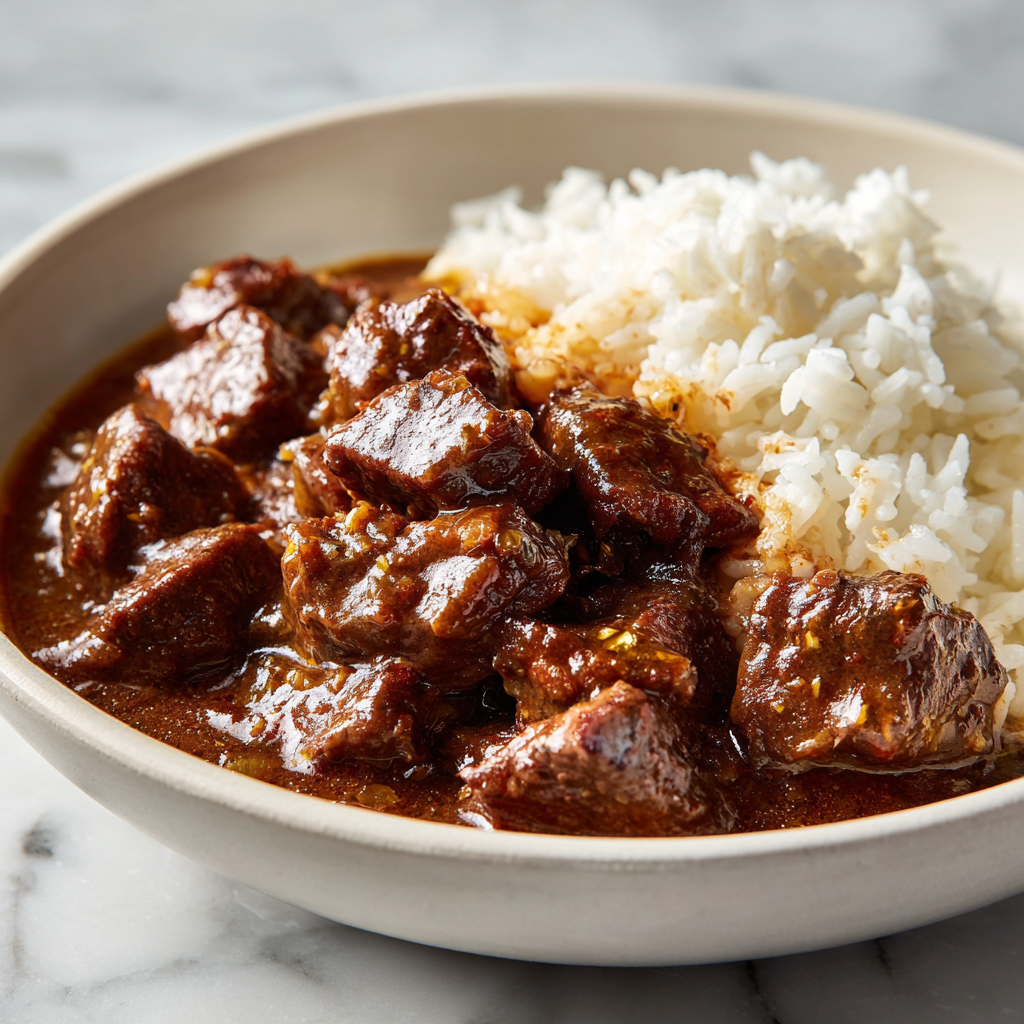
While the image shows the traditional plating with white rice, this Red Wine Beef Stew is versatile enough to be paired with other comforting starches.
- Creamy Polenta: Serving the rich stew over buttery, creamy polenta offers a sophisticated, smooth alternative to rice, making the dish feel more European.
- Mashed Potatoes: The classic pairing, mashed potatoes, serve as the perfect vehicle for soaking up every last drop of the thick, gooey gravy.
- Crusty Bread: Provide large slices of toasted, crusty sourdough or baguette for dipping and scraping the pot clean.
- Dumplings: For a true old-world comfort meal, drop soft, homemade herb dumplings directly into the simmering stew during the last 30 minutes of cooking.
This stew is also a freezer champion. Like the Korean Beef, the cooked stew base (without the rice) freezes and reheats beautifully. The chilling process actually helps the flavors concentrate and the fat solidify for easy skimming later, resulting in an even richer, more complex taste when reheated.
The Enduring Legacy of the Long Simmer
The Red Wine Beef Stew stands as a magnificent example of how simple, humble ingredients, when subjected to the slow, steady heat of the kitchen, can yield extraordinary results. It requires patience, but the return—the rich, tender, melt-in-your-mouth beef and the complex, thick, glossy sauce—is a profound reward. It’s a dish that demands you slow down, enjoy the process, and then savor the ultimate comfort of a truly well-made meal. This stew is a weekend project that transforms a weeknight, proving that the most memorable flavors often take time.