White Garlic Pizza Sauce
White Garlic Pizza Sauce: The Creamy, Savory Secret to Perfect Homemade Pizza 🍕🧄
When most people think of pizza, their minds immediately drift to a classic red tomato sauce. It’s tangy, it’s acidic, and it’s traditional. But there is a whole other world of pizza deliciousness waiting for you on the “white side.” Enter the White Garlic Pizza Sauce—a rich, creamy, velvety concoction that transforms a standard pizza night into a gourmet dining experience.
This isn’t just melted cheese; this is a structured, flavor-packed sauce that serves as the perfect foundation for toppings like spinach, artichokes, grilled chicken, or simply more cheese. If you have ever had a “Pizza Bianca” at a high-end Italian restaurant and wondered why it tasted so much more luxurious than your delivery order, the secret is in the white sauce.
In this comprehensive guide, we are going to walk you through making the ultimate White Garlic Pizza Sauce at home. We will discuss the science of the roux, how to achieve that perfect viscous, heavy consistency that doesn’t make your crust soggy, and the best ways to customize the flavor profile to your liking.
🥛 Why White Sauce? The Magic of Bechamel
At its core, a white pizza sauce is a derivative of a Béchamel sauce, one of the five French mother sauces. It starts with a simple roux (butter and flour) and is whisked with milk to create a thick, creamy base.
However, a standard bechamel can be a bit bland for pizza. That is where we elevate it. By infusing the butter with a massive amount of fresh garlic and finishing the sauce with nutty Parmesan cheese and aromatic herbs, we create a sauce that stands on its own.
The Texture Factor
Texture is everything when it comes to pizza sauce.
- Too Thin: If your white sauce is watery, it will seep into the dough during baking, creating the dreaded “gum line”—that layer of undercooked, doughy mush between the crust and the toppings.
- Too Thick: If it’s like paste, it won’t spread evenly and will dry out in the oven.
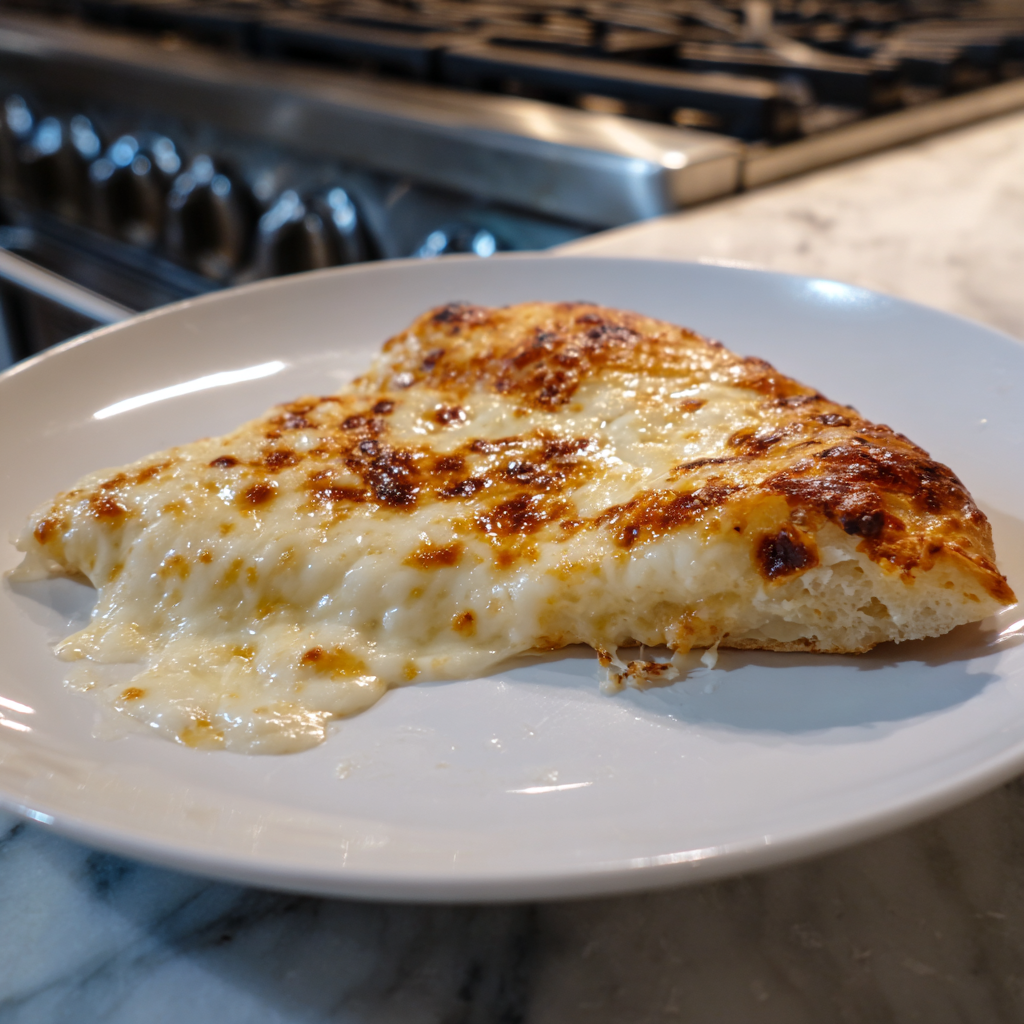
- Just Right: You want a sauce that is thick, viscous, and glossy. It should coat the back of a spoon and hold a trail when you run your finger through it. It needs to be stable enough to sit on top of the dough, creating a creamy barrier.
🥣 Ingredients
To make this liquid gold, you need simple, high-quality ingredients.
- Butter: 2 tablespoons of unsalted butter. This provides the fat for our roux and carries the garlic flavor.
- Garlic: 3-4 cloves, minced finely. Don’t be shy here. This is garlic sauce. If you want a milder flavor, you can use roasted garlic paste.
- Flour: 2 tablespoons of all-purpose flour. This is the thickening agent.
- Milk: 1 cup of whole milk. You can use 2% if you must, but whole milk or half-and-half yields the richest result. Skim milk is not recommended as it lacks the fat structure we need.
- Parmesan Cheese: 1/2 cup freshly grated. Do not use the shaker can stuff! Freshly grated cheese melts smoothly into the sauce, whereas pre-grated often contains anti-caking agents that create a grainy texture.
- Seasoning: 1/2 teaspoon salt, 1/4 teaspoon black pepper, 1/2 teaspoon dried oregano, and 1/2 teaspoon dried basil.
- Optional: A pinch of red pepper flakes for heat.
📝 Instructions
Follow these steps to ensure a lump-free, perfectly thickened sauce.
- Sauté the Aromatics: In a small saucepan, melt the butter over medium heat. Add the minced garlic and sauté for about 1 minute. You want the garlic to become fragrant and soft, but do not let it brown or burn. Burnt garlic will make the entire sauce taste bitter.
- Make the Roux: Sprinkle the flour directly over the butter and garlic. Whisk constantly for 1-2 minutes. This cooks out the raw flour taste. The mixture will look like a bubbling, golden paste. This stage is crucial for stability.
- Add the Liquid: Slowly pour in the milk while whisking vigorously. It is best to add the milk in splashes at first to prevent lumps. Once all the milk is incorporated, the mixture will look thin. Don’t worry.
- Thicken: Bring the mixture to a gentle simmer (not a rolling boil). Continue to whisk. As it heats up, the flour starches will activate and the sauce will begin to thicken. Simmer for 3-5 minutes until it reaches a heavy, viscous consistency. It should look like warm pudding or melted ice cream.
- Melt the Cheese: Remove the saucepan from the heat. This is important—if you add cheese to boiling liquid, it can separate and become oily. Stir in the grated Parmesan cheese, salt, pepper, oregano, and basil. Stir until the cheese is fully melted and the sauce is smooth.
- Cool: Let the sauce cool slightly before spreading it on your pizza dough. If you put boiling hot sauce on raw dough, it can affect the yeast and make the crust soggy.
💡 Expert Tips for the Best Results
The Garlic Infusion
For an even deeper garlic flavor without the texture of minced bits, try steeping crushed garlic cloves in the milk for 15 minutes before starting the recipe, then straining them out. Or, use roasted garlic. Squeeze the soft, caramelized cloves out of a roasted head and mash them into the butter before adding the flour. This gives a sweeter, mellower, and more complex garlic profile.
Viscosity Control
If your sauce becomes too thick (like glue) after adding the cheese, whisk in a tablespoon of milk to loosen it up. If it’s too thin, put it back on low heat for another minute. Remember, the sauce will thicken further as it cools and bakes on the pizza.
Topping Pairings
White sauce pairs differently than red sauce. It loves:
- Greens: Spinach, kale, and arugula.
- Earthiness: Mushrooms (especially truffles or porcini), artichoke hearts.
- Proteins: Grilled chicken, bacon, prosciutto, or sausage.
- Heat: Banana peppers or jalapeños cut through the richness beautifully.
🍕 Variations to Try
- The “Alfredo” Style: Add 2 tablespoons of cream cheese to the finished sauce for an ultra-tangy, cheesecake-like richness.
- Herbed Garden: Stir in fresh chopped parsley and thyme at the very end for a bright, grassy pop of flavor.
- Lemon Zest: Add the zest of half a lemon. It sounds strange, but the acidity brightens up the heavy dairy notes amazingly well.
🥡 Storage and Leftovers
This recipe makes enough sauce for two 12-inch pizzas.
- Refrigerate: Store leftovers in an airtight jar in the fridge for up to 5 days. It will solidify into a block when cold. This is normal!
- Reheat: Microwave gently for 30 seconds or warm on the stove to return it to its viscous, spreadable state.
- Freeze: White sauces can split when frozen and thawed due to the dairy. It is best made fresh, but if you must freeze it, reheat it slowly while whisking to re-emulsify the fats.
🏁 Conclusion
Once you master this White Garlic Pizza Sauce, you might find yourself abandoning the tomato jar for good. It opens up a new realm of pizza possibilities, allowing you to create rich, savory, and sophisticated pies right in your own kitchen. It’s messy, it’s cheesy, and it’s undeniably delicious. So grab that whisk, melt that butter, and get ready for the best pizza night of your life. 🧀🧄
White Garlic Pizza Sauce
Ingredients
Equipment
Method
- Melt butter in a saucepan over medium heat. Add minced garlic and sauté for 1 minute until fragrant.
- Whisk in flour and cook for 1-2 minutes to form a roux, being careful not to brown the garlic.
- Slowly pour in milk while whisking constantly to prevent lumps.
- Simmer sauce for 3-5 minutes until it becomes thick and viscous.
- Remove from heat. Stir in Parmesan cheese, salt, pepper, oregano, and basil until smooth.
- Let cool slightly before spreading on pizza dough.